Health
The Fingernail Change That Could Signal a Serious Health Problem

Health Points
- Clubbed nails develop when fingertips swell and nails curve abnormally around the tips, often indicating reduced oxygen in the blood
- This condition may signal serious underlying health issues including lung disease, heart conditions, liver problems, or inflammatory bowel disease
- Early medical evaluation is critical as treating the underlying cause can sometimes reverse nail clubbing
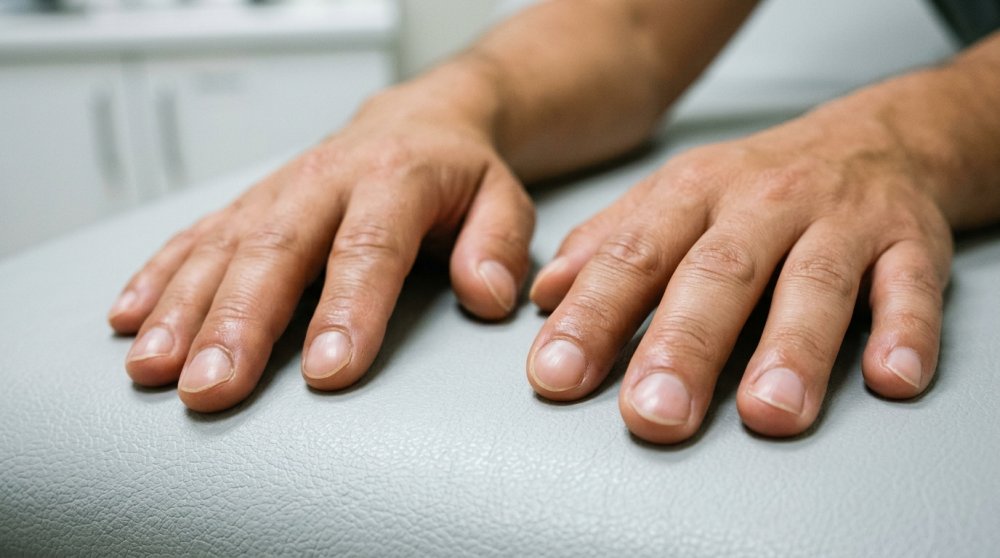
A subtle change in your fingernails might be trying to tell you something important about your health. Nail clubbing, a condition where fingertips swell and nails curve downward around the tips, affects more than just your appearance—it can be an early warning sign of serious medical conditions that require immediate attention.
The condition develops gradually, often over years, making it easy to overlook. Your fingertips become enlarged and the nails start to curve, creating a rounded, bulbous appearance that resembles the end of a drumstick.
“Clubbing is generally painless, but it’s not something to ignore,” notes Dr. Sarah Mitchell, a board-certified dermatologist specializing in nail disorders. “In many cases, it’s your body’s way of signaling that something deeper needs medical evaluation.”
The most common underlying causes involve the lungs and heart. Chronic lung diseases like COPD, lung cancer, cystic fibrosis, and pulmonary fibrosis frequently trigger nail clubbing as oxygen levels in the blood drop over time. Heart conditions that reduce oxygen circulation—including congenital heart defects and endocarditis—can produce the same effect.
Beyond cardiopulmonary issues, liver disease (particularly cirrhosis), inflammatory bowel disease, and certain thyroid conditions have also been linked to clubbed nails. In rare cases, the condition runs in families without any underlying disease, though this accounts for only a small percentage of cases.
“The key is recognizing that clubbing doesn’t happen overnight,” explains Dr. Robert Chen, a pulmonologist with over twenty years of clinical experience. “By the time you notice significant changes, an underlying condition has likely been developing for some time.”
Diagnosis begins with a simple visual examination. Healthcare providers use the Schamroth window test, where patients place the backs of their fingernails together—normally creating a small diamond-shaped window between the nail beds. In clubbing, this window disappears. Additional tests including chest X-rays, CT scans, echocardiograms, and blood work help identify the root cause.
Treatment focuses entirely on addressing the underlying condition rather than the nails themselves. When doctors successfully treat lung disease, heart problems, or other triggering conditions, nail clubbing sometimes reverses—though this depends on how long the condition has been present and the severity of the underlying disease.
“I’ve seen cases where treating the primary condition led to improvement in nail appearance within months,” says Dr. Mitchell. “But the sooner we catch it, the better the outcomes tend to be.”
For those over 40, regular health screenings become increasingly important. Nail clubbing typically develops in middle age or later, when chronic diseases are more likely to emerge. Paying attention to changes in your body—including seemingly minor ones like fingernail appearance—can make a real difference in catching health problems early.
If you notice your fingernails starting to curve downward or your fingertips becoming swollen and bulbous, don’t wait to see if it resolves on its own. Schedule an appointment with your primary care physician for a thorough evaluation. What seems like a cosmetic concern could be your first clue to a treatable medical condition.
The good news is that modern medicine offers effective treatments for many of the conditions associated with nail clubbing. Early intervention gives you the best chance for positive outcomes and, in some cases, may even restore your nails to their normal appearance over time.
