Movement
The Post-Workout Hour That Changes Everything for Men Over 40

Health Points
- Recovery begins the moment your workout ends, and the first 60 minutes are critical for muscle repair and stress reduction
- Simple post-shower wellness rituals can reduce inflammation, improve sleep quality, and accelerate fitness gains
- Men over 40 benefit most from consistent recovery practices that support hormone balance and tissue repair
The workout ends when you complete your final rep, but the real work of building strength and resilience is just beginning. For men over 40, what happens in the hour after exercise may matter just as much as the training itself.
Recovery is no longer optional at this stage of life. Hormonal changes, slower tissue repair, and increased inflammation all mean that the body needs more support to bounce back from physical exertion.
The post-workout window is when muscles begin to rebuild, stress hormones start to normalize, and the body shifts from breakdown to repair. Missing this opportunity can lead to prolonged soreness, poor sleep, and diminished results over time.
Cooling down properly matters more than many realize. A gradual transition from high-intensity movement to rest helps the cardiovascular system return to baseline and prevents blood from pooling in the extremities.
Five to ten minutes of light walking or stretching can significantly reduce muscle stiffness and support lymphatic drainage, which helps clear metabolic waste from tissues.
Hydration is equally critical. Replacing fluids lost through sweat supports kidney function, joint lubrication, and nutrient transport to recovering muscles. Adding a pinch of sea salt or an electrolyte blend can improve absorption and prevent cramping.
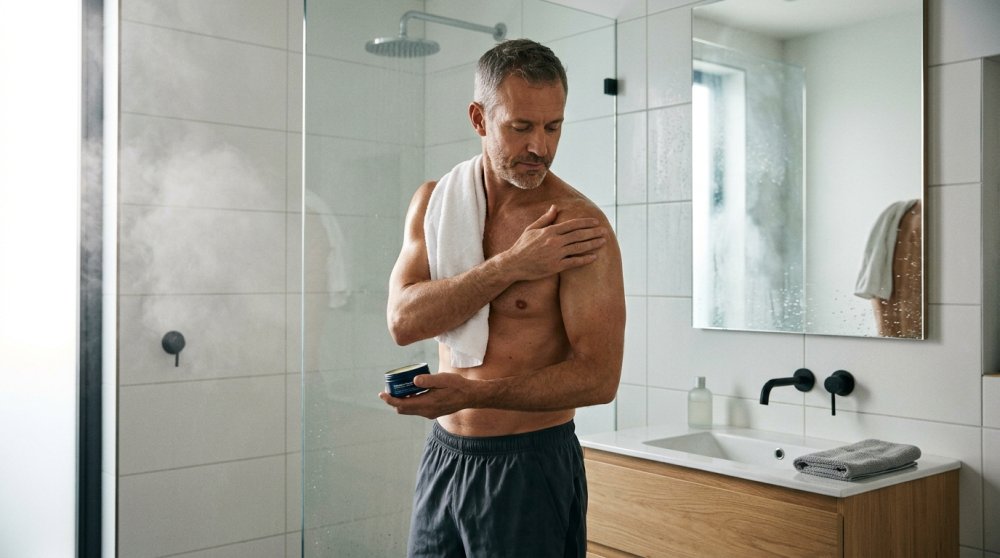
The post-shower period offers another layer of recovery support. Many men overlook this time, but it presents an ideal opportunity to address inflammation and promote relaxation.
Contrast showers, alternating between warm and cool water for 30-second intervals, can stimulate circulation and reduce muscle soreness. The practice has roots in athletic recovery protocols and remains one of the simplest ways to support tissue repair at home.
Applying a high-quality moisturizer or recovery balm while the skin is still slightly damp helps lock in hydration and can deliver anti-inflammatory compounds like arnica or menthol directly to sore areas.
Foam rolling or percussive massage tools used during this window can break up adhesions in connective tissue and improve range of motion. The key is consistency, not intensity—gentle, sustained pressure yields better results than aggressive manipulation.
Nutrition timing also plays a role. Consuming a combination of protein and carbohydrates within 30 to 60 minutes after training supports glycogen replenishment and muscle protein synthesis. This doesn’t require complex supplements—Greek yogurt with fruit, a turkey sandwich, or a protein shake all work well.
Sleep quality begins with daytime recovery habits. Men who prioritize post-workout rituals report falling asleep faster and experiencing deeper rest, which is when the majority of muscle repair and growth hormone release occur.
Stress management techniques like deep breathing or light meditation following a shower can help shift the nervous system from fight-or-flight mode to rest-and-digest, making it easier for the body to focus on repair.
The cumulative effect of these small practices is significant. Over weeks and months, consistent post-workout and post-shower rituals lead to better recovery, reduced injury risk, and more sustainable fitness progress.
For men navigating the physical changes that come with aging, these rituals represent a practical way to honor the body’s needs while continuing to pursue strength and vitality.
