Mindfulness
What Science Really Says About Crystals and Wellness

Health Points
- Scientific studies show no measurable physical health benefits from crystals beyond placebo effects
- The belief in crystal healing can support mindfulness practices and stress reduction through ritualized self-care
- Understanding the difference between spiritual belief and medical evidence helps make informed wellness choices
Crystals have quietly become part of the wellness backdrop. They sit in studio windows, on desks, and in gift shops next to candles.
For many Americans over 40, the rise of crystal culture feels like a return to New Age practices from decades past—now repackaged with modern wellness language. But what does the actual evidence show about their health claims?
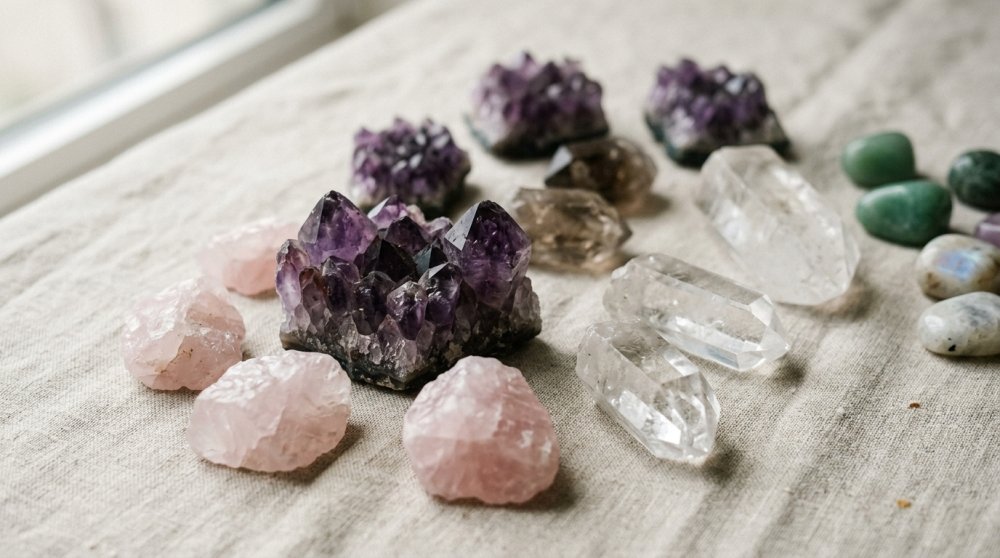
The crystal wellness market has grown substantially, with retailers promoting stones like rose quartz for emotional healing, amethyst for stress relief, and clear quartz for energy balance. Advocates describe vibrational frequencies and energy fields that allegedly interact with the body’s own energy systems.
Yet when researchers have tested these claims under controlled conditions, the results consistently point to one conclusion: there is no scientific evidence that crystals produce measurable physical or mental health effects beyond placebo. Studies examining alleged energy emissions, healing properties, or physiological changes have found no distinguishable difference between genuine crystals and convincing fakes.
That doesn’t necessarily make crystals worthless in a wellness context. The placebo effect itself is a documented phenomenon—when people believe something will help them, that belief can influence their experience of stress, discomfort, or emotional state.
For individuals who incorporate crystals into meditation or mindfulness routines, the stones may serve as tangible anchors for intention-setting and self-reflection. The ritual of selecting, holding, or arranging crystals can create a moment of pause in an otherwise hectic day—a practice that has genuine stress-reduction value regardless of the object’s composition.
The concern arises when crystal use replaces evidence-based medical care. Relying on stones to treat diagnosed conditions, manage chronic pain, or address mental health disorders can delay necessary treatment and potentially worsen outcomes.
Health professionals emphasize the importance of distinguishing between complementary practices that support well-being and alternative treatments positioned as substitutes for conventional medicine. Crystals may fit comfortably in the former category for those who find them personally meaningful.
For older adults navigating an increasingly complex wellness marketplace, the key is informed choice. Understanding that crystals lack scientific support for healing claims doesn’t invalidate their use as objects of beauty, meditation aids, or symbols of personal intention—it simply places them in proper context.
Traditional values of discernment and wisdom apply here. If a practice brings calm without causing harm or financial strain, and doesn’t replace necessary medical care, it may have a place in one’s routine.
The evidence shows crystals are stones—beautiful, ancient, structurally fascinating, but not medicine. What they offer is what the individual brings to them: focus, ritual, and the possibility of a quieter moment in a noisy world.
