Health
Why Your Eyelids Are Suddenly Flaking and What Doctors Say You Should Never Ignore

Health Points
- Eyelid psoriasis affects less than 10% of psoriasis patients but can cause serious eye complications if left untreated
- The delicate eyelid skin makes this condition particularly challenging to treat and requires specialized care
- Dermatologists warn against using standard psoriasis treatments near the eyes without professional guidance due to serious risks
When red, scaly patches appear on the eyelids, many people assume it’s just another case of dry skin or allergies. But dermatologists are urging those over 40 to recognize the signs of a more serious condition that affects a surprising number of Americans—eyelid psoriasis.
This particular form of psoriasis occurs when the immune system mistakenly attacks healthy skin cells on the delicate eyelid area. While it affects fewer than 10% of people with psoriasis, the location makes it especially concerning for eye health and daily comfort.
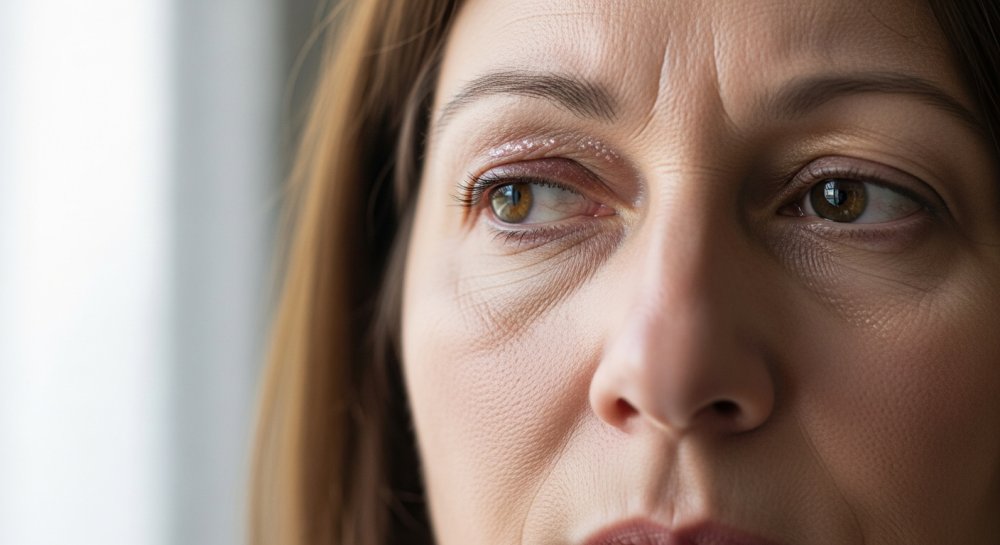
The condition manifests as red, inflamed patches covered with silvery-white scales on the upper or lower eyelids. Patients often experience intense itching, burning sensations, and visible swelling that can interfere with vision and appearance.
Dr. Emma Rodriguez, a board-certified dermatologist at Mount Sinai Hospital, explains the unique challenge this condition presents.
“The skin around the eyes is ten times thinner than the rest of your face, which makes treating eyelid psoriasis incredibly delicate. What works safely on your elbows or knees could cause serious damage to your eyes.”
The condition develops when the body’s immune system accelerates skin cell production in the eyelid area. Instead of shedding gradually over weeks, new cells rush to the surface in just days, creating the characteristic buildup of scales and inflammation.
Beyond the visible symptoms, eyelid psoriasis can lead to more serious complications. The inflammation can spread to the eye itself, potentially causing uveitis—a painful condition that affects the middle layer of the eye. Left untreated, this can result in vision problems or even permanent eye damage.
Dermatologists emphasize that self-diagnosis and treatment can be dangerous with this condition. Many over-the-counter remedies and prescription psoriasis medications contain ingredients far too harsh for the sensitive eye area.
Dr. Michael Chen, an ophthalmologist specializing in inflammatory eye conditions, sees the consequences of delayed treatment regularly.
“By the time patients come to me, many have already tried treating it themselves with steroid creams meant for other body parts. This can thin the eyelid skin even further and increase pressure inside the eye—a risk factor for glaucoma.”
Treatment requires a careful, coordinated approach between dermatologists and eye specialists. Doctors typically start with gentle, diluted topical medications specifically formulated for use near the eyes. These treatments must be applied with extreme precision to avoid contact with the eye itself.
For more stubborn cases, doctors may recommend phototherapy or systemic medications that work throughout the body rather than just topically. These approaches avoid the risks of applying potent creams to such a vulnerable area while still controlling the underlying immune system dysfunction.
Daily management goes beyond medication. Patients are advised to use preservative-free artificial tears to keep the eyes moisturized and reduce irritation. A gentle skincare routine with fragrance-free, hypoallergenic products helps minimize flare-ups.
One often-overlooked trigger is stress, which can worsen all forms of psoriasis including the eyelid variety. Many patients notice their symptoms intensify during periods of high stress or anxiety—something particularly relevant for those juggling work, family, and health concerns in midlife.
Dr. Sarah Williams, a clinical psychologist who works with dermatology patients, addresses this connection.
“We’re seeing more recognition that psoriasis isn’t just a skin condition—it’s connected to overall health and wellbeing. Managing stress through mindfulness, adequate sleep, and support networks can genuinely improve symptoms.”
The condition also carries an emotional toll that shouldn’t be minimized. Visible skin conditions on the face can affect self-esteem and social comfort, especially for those navigating professional environments or social situations where appearance feels important.
Support groups, both in-person and online, have become valuable resources for people managing eyelid psoriasis. Sharing practical tips—from makeup techniques that work with sensitive skin to finding understanding doctors—helps reduce the isolation many patients feel.
Early intervention makes the biggest difference in outcomes. Dermatologists recommend seeing a specialist at the first signs of persistent redness, scaling, or discomfort around the eyelids—especially for anyone with a personal or family history of psoriasis or other autoimmune conditions.
The good news is that with proper treatment and management, most people with eyelid psoriasis can control their symptoms effectively and prevent serious complications. The key is respecting the unique vulnerability of this area and working closely with medical professionals who understand both skin and eye health.
For those already managing psoriasis elsewhere on the body, awareness of this potential complication empowers earlier action. Regular check-ups with a dermatologist create opportunities to catch eyelid involvement before it progresses to more serious stages.
As research into autoimmune conditions continues advancing, new treatment options specifically designed for sensitive areas like eyelids are emerging. These developments offer hope for even better management strategies in the coming years—but only if patients recognize the condition and seek appropriate care rather than attempting to treat it themselves.
