Movement
Why Your Feet Turn Outward When You Walk

Health Points
- Duck-footedness, or out-toeing, occurs when feet point outward during walking or standing and can develop at any age
- The condition often stems from hip rotation issues, tight muscles, or structural differences in bones and joints
- Physical therapy, targeted stretching, and proper footwear can significantly improve walking patterns and reduce discomfort
If you’ve noticed your feet naturally turn outward when you walk, you’re experiencing a common condition called duck-footedness or out-toeing. While it might seem like just a quirky walking style, understanding what causes this pattern can help you address any discomfort and improve your overall mobility.
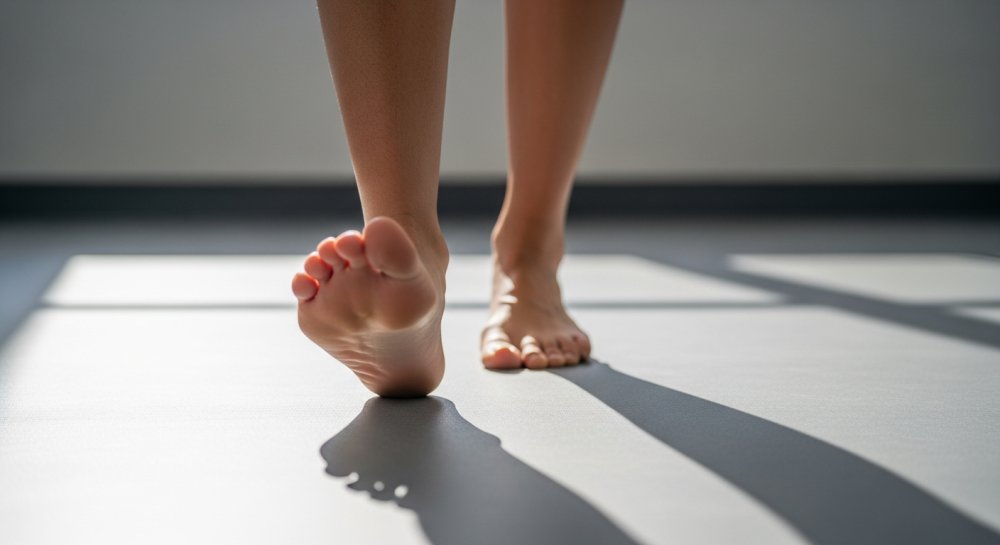
Duck-footedness describes a gait pattern where one or both feet point away from the body’s centerline during walking or standing. The name comes from the resemblance to how ducks waddle, with their feet splayed outward.
“Out-toeing is often noticed by parents in young children, but it can develop or persist into adulthood,” explains physical therapist Dr. Sarah Mitchell, who specializes in gait analysis. “The good news is that many cases can be improved with the right approach.”
Several factors contribute to this walking pattern. External hip rotation is one of the most common causes, where the hip joint naturally rotates outward, causing the entire leg and foot to turn. Tight hip flexors or weak hip muscles can reinforce this pattern over time.
Structural differences in the bones also play a role. Some people are born with femoral retroversion, where the thighbone naturally twists outward. Others may have tibial torsion, an outward twist in the shinbone, or foot structure variations that encourage the foot to roll outward.
“We see duck-footedness across all age groups, though the underlying causes can differ,” notes orthopedic specialist Dr. James Chen. “In children, it’s often developmental and may resolve naturally, while in adults it’s more likely related to muscle imbalances or compensation patterns.”
For many people, mild out-toeing causes no problems and requires no treatment. However, some individuals experience knee pain, hip discomfort, lower back strain, or increased fatigue during walking due to inefficient movement patterns.
Physical therapy offers one of the most effective approaches for managing duck-footedness. A trained therapist can assess your specific case and design exercises to strengthen weak muscles and stretch tight ones. Hip strengthening exercises focus on the gluteus medius and other hip stabilizers, while hip flexor stretches help release tension that pulls the leg into external rotation.
Gait retraining involves learning to walk with proper foot placement through mindful practice and professional guidance. Balance and stability work further supports proper alignment throughout your body.
“I’ve seen remarkable improvements in patients who commit to a targeted exercise program,” says Dr. Mitchell. “It takes consistency, but most people notice changes in how they walk and how they feel within several weeks.”
Footwear choices matter more than many people realize. Supportive shoes with good arch support and proper cushioning can help maintain better alignment. Some individuals benefit from orthotic inserts prescribed by a podiatrist, which provide customized support for their specific foot structure.
Lifestyle adjustments can also make a difference. Being mindful of your posture throughout the day, taking breaks from prolonged sitting, and maintaining a healthy weight to reduce stress on your joints all contribute to improved walking patterns.
In severe cases where duck-footedness causes significant pain or functional limitations, medical intervention may be necessary. This is particularly true if the condition results from structural bone issues or doesn’t respond to conservative treatment. Surgery is rarely needed but may be considered when other options have been exhausted.
The key to successfully managing duck-footedness lies in understanding your individual situation. What works for one person may not be appropriate for another, depending on the underlying cause.
If you’re experiencing pain, difficulty with daily activities, or have concerns about your walking pattern, consulting with a healthcare professional is the best first step. A physical therapist, orthopedic specialist, or podiatrist can evaluate your gait, identify contributing factors, and recommend an appropriate treatment plan.
For parents noticing out-toeing in young children, patience is often the best approach. Many cases resolve naturally as children grow and their bones and muscles develop. However, if the condition is severe, appears suddenly, or causes pain, a pediatric evaluation is warranted.
Remember that minor variations in walking patterns are normal and part of what makes each person’s movement unique. The goal isn’t necessarily to achieve “perfect” alignment but rather to reduce discomfort, improve function, and support long-term joint health.
With proper assessment, targeted exercises, and appropriate support, most people with duck-footedness can walk more comfortably and efficiently, allowing them to stay active and engaged in the activities they enjoy.
