Movement
These Dozen Moves Transform Your Living Room Into a Complete Gym

Health Points
- Bodyweight exercises require no equipment and can be performed in any home setting, making fitness accessible regardless of budget or schedule
- These movements engage multiple muscle groups simultaneously, building functional strength that translates to everyday activities and injury prevention
- Regular bodyweight training improves cardiovascular health, bone density, and metabolic function while reducing age-related muscle loss
For Americans over 40 seeking to maintain strength and vitality without expensive gym memberships or complex equipment, bodyweight exercises offer a practical solution. These twelve fundamental movements provide a complete workout regimen that fits into any living space and schedule.
The beauty of bodyweight training lies in its simplicity and effectiveness. By using your own body as resistance, you develop functional strength that directly improves daily activities—from carrying groceries to playing with grandchildren.
Foundation Movements for Total Body Strength
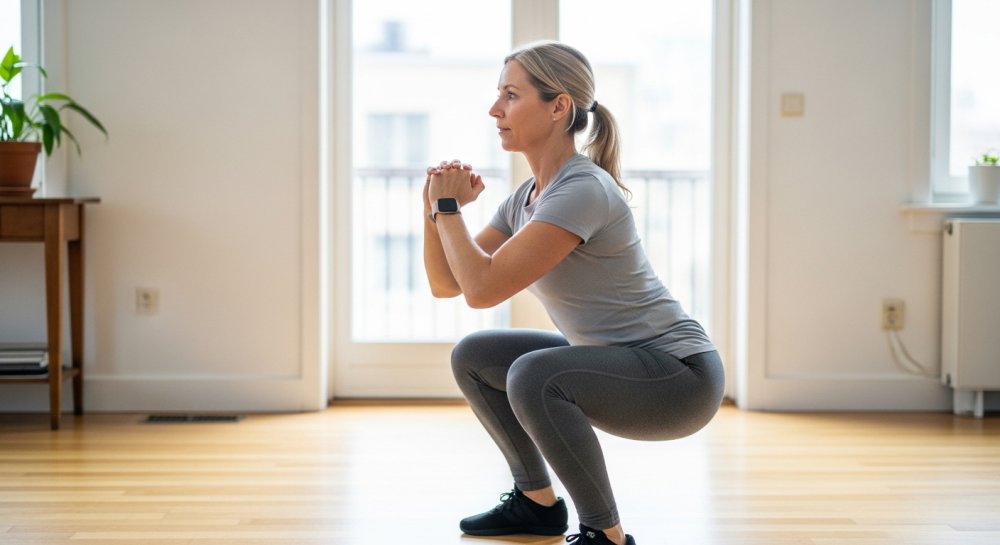
The squat remains the cornerstone of lower body development. This movement strengthens the quadriceps, hamstrings, and glutes while improving balance and core stability. Stand with feet shoulder-width apart, lower your hips back and down as if sitting in a chair, then press through your heels to return to standing.
Push-ups build upper body strength across the chest, shoulders, and triceps. Begin in a plank position with hands slightly wider than shoulder-width. Lower your body until your chest nearly touches the floor, keeping your core engaged and back straight, then press back up. Modifications on your knees make this accessible for all fitness levels.
Lunges develop single-leg strength and balance, crucial for preventing falls as we age. Step forward with one leg, lowering your hips until both knees bend at approximately 90 degrees. The front knee should align with the ankle, not extending past the toes. Push back to the starting position and alternate legs.
Core Strengthening Essentials
The plank builds core endurance without the spine stress of traditional sit-ups. Rest on your forearms and toes, maintaining a straight line from head to heels. Engage your abdominal muscles and hold this position, starting with 20-30 seconds and gradually increasing duration.
Mountain climbers combine core work with cardiovascular conditioning. From a plank position, drive one knee toward your chest, then quickly switch legs in a running motion. This dynamic movement elevates heart rate while strengthening the entire midsection.
Bicycle crunches target the obliques and rectus abdominis. Lie on your back with hands behind your head, bring one knee toward your chest while rotating your opposite elbow to meet it, then switch sides in a pedaling motion.
Upper Body and Flexibility Work
Tricep dips utilize a sturdy chair or bench to strengthen the back of the arms. Sit on the edge, place hands beside your hips, walk feet forward, and lower your body by bending elbows to 90 degrees before pressing back up.
The bridge strengthens glutes and lower back while opening tight hip flexors—especially beneficial for those who sit extensively. Lie on your back with knees bent and feet flat, lift your hips toward the ceiling, squeeze your glutes at the top, then lower with control.
Burpees deliver full-body conditioning and cardiovascular benefits. From standing, drop into a squat with hands on the floor, jump feet back into a plank, perform a push-up, jump feet back to hands, then explosively jump up. This challenging movement can be modified by stepping instead of jumping.
Balance and Mobility Components
Single-leg deadlifts improve balance while strengthening hamstrings and glutes. Stand on one leg, hinge forward at the hips while extending the opposite leg behind you, reach toward the floor, then return to standing. This movement enhances stability and proprioception.
Wall sits build isometric leg strength and mental toughness. Lean against a wall and slide down until thighs are parallel to the floor, as if sitting in an invisible chair. Hold this position, working up to 60 seconds or longer.
Superman holds strengthen the often-neglected lower back muscles. Lie face down, simultaneously lift arms and legs off the ground, hold briefly at the top, then lower with control. This movement counterbalances the forward-hunched posture many develop from desk work and device use.
Creating Your Routine
Begin with three sessions per week, allowing rest days for recovery. Select 6-8 exercises from this list, performing 10-15 repetitions of each movement (or holding for 20-30 seconds for static exercises like planks). Complete 2-3 rounds of your selected exercises.
Progress comes through consistency rather than intensity. As movements become easier, increase repetitions, add additional rounds, or slow down the tempo to increase time under tension. The goal is sustainable improvement, not overnight transformation.
Listen to your body and modify as needed. Joint discomfort signals the need for form adjustment or exercise substitution. Building strength at 40, 50, 60, and beyond requires patience and respect for your body’s signals.
These twelve exercises provide everything needed for a comprehensive home fitness program. No equipment, no commute, no excuses—just consistent effort and the knowledge that you’re investing in your long-term health and independence.
