Health
Why Thick, Scaly Skin Patches Might Be More Than Just Dryness

Health Points
- Hyperkeratosis causes thickened skin patches due to excess keratin buildup, often appearing on hands, feet, and joints
- Common types include corns, calluses, and warts, with eczema and psoriasis also triggering the condition
- Most cases respond well to gentle exfoliation and moisturizers, though persistent patches warrant medical evaluation
If you’ve noticed unusually thick, rough patches of skin that don’t respond to your regular moisturizer, you might be dealing with hyperkeratosis—a condition that affects millions of Americans over 40.
Hyperkeratosis occurs when the body produces too much keratin, the protective protein that forms the outer layer of skin. While the name sounds intimidating, most forms are harmless and treatable, though they can signal underlying health issues that deserve attention.
The condition manifests in several recognizable forms. Corns and calluses develop from repeated friction, typically on feet and hands. Warts result from viral infections. Eczema and psoriasis can also trigger keratin overproduction, creating scaly, thickened areas that may crack or become uncomfortable.
“The skin is trying to protect itself,” explains dermatologists who treat the condition regularly. “When an area experiences repeated pressure or irritation, it responds by building up extra layers.”
Age plays a significant role in hyperkeratosis development. As skin naturally becomes drier and less elastic after 40, it’s more vulnerable to the friction and pressure that trigger keratin buildup. Genetics, sun exposure, inflammatory skin conditions, and certain medications can all contribute to the problem.
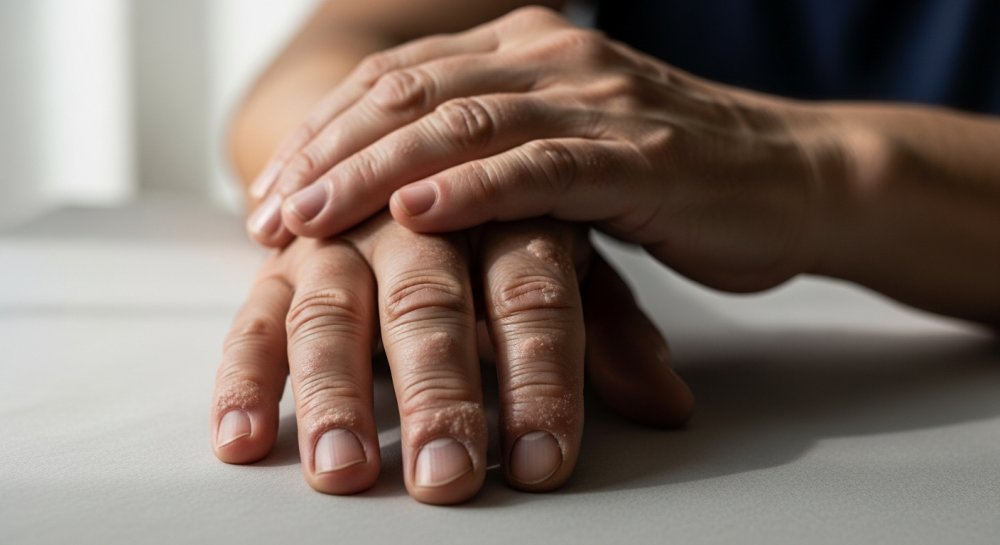
Most people first notice hyperkeratosis as rough, raised patches that feel different from surrounding skin. The areas may appear lighter or darker than normal skin tone. They’re typically painless unless they crack or develop in pressure points like the soles of feet.
Home treatment starts with gentle care. Regular exfoliation using a pumice stone or soft brush helps remove excess buildup without damaging healthy skin. Rich moisturizers containing urea or lactic acid can soften thickened areas. Protecting skin from friction—through proper footwear or gloves during repetitive tasks—prevents new patches from forming.
Medical intervention becomes necessary when patches grow rapidly, bleed, change color dramatically, or don’t respond to home care after several weeks. Dermatologists can prescribe stronger topical treatments, perform professional removal procedures, or investigate whether the hyperkeratosis signals an underlying condition requiring attention.
For corns and calluses, properly fitted shoes make a remarkable difference. Many people unknowingly wear footwear that’s too tight or poorly constructed, creating constant friction points. Investing in quality shoes with adequate cushioning protects feet and prevents recurrence.
Prevention strategies focus on skin protection and maintenance. Daily moisturizing keeps skin supple and less prone to thickening. Wearing gloves during gardening, housework, or other hand-intensive activities reduces friction. Addressing dry skin promptly—rather than waiting for severe symptoms—helps maintain the skin’s natural protective barrier.
The outlook for most hyperkeratosis cases is excellent with proper care. Simple lifestyle adjustments and consistent skin maintenance typically resolve minor cases within weeks. Even stubborn patches generally respond well to medical treatment when needed.
Understanding that thickened skin represents the body’s protective response rather than a serious disease helps put the condition in perspective. While hyperkeratosis warrants attention—especially if it persists or worsens—it’s usually manageable with straightforward interventions that fit easily into daily routines.
The key is recognizing when rough patches need more than moisturizer and seeking appropriate care before minor irritations become persistent problems.
