Movement
The 10 Strength Moves That Preserve Your Independence After 50

Health Points
- Strength training twice weekly can reduce age-related muscle loss by up to 30%, helping maintain mobility and independence
- Simple bodyweight exercises like squats and planks effectively build muscle without expensive equipment or gym memberships
- Starting a strength routine at any age provides benefits, with proper form and gradual progression being more important than intensity
Getting older doesn’t mean accepting weakness, frailty, or dependence on others for daily tasks. While muscle loss naturally accelerates after age 40—a condition called sarcopenia—research shows that consistent strength training can dramatically slow or even reverse this decline.
The stakes are high: maintaining muscle mass directly correlates with better balance, bone density, metabolic health, and the ability to perform everyday activities like carrying groceries, climbing stairs, or playing with grandchildren. Yet many Americans over 50 avoid resistance training, mistakenly believing it’s unsafe or ineffective at their age.
Physical therapists and exercise physiologists recommend ten fundamental strength exercises that target all major muscle groups while remaining accessible for older adults. These movements form the foundation of functional fitness—the kind that keeps you living independently and actively for decades.
Lower Body Foundations
Squats remain the gold standard for lower body strength, engaging the quadriceps, hamstrings, glutes, and core simultaneously. Start by sitting back into a chair and standing up repeatedly, using your leg muscles rather than momentum. As strength improves, progress to air squats without the chair support.
Lunges develop single-leg stability crucial for walking and preventing falls. Step forward with one foot, lowering your back knee toward the ground while keeping your front knee aligned over your ankle. Hold onto a counter or wall initially if balance is challenging.
Glute bridges strengthen the posterior chain often weakened by prolonged sitting. Lying on your back with knees bent and feet flat, press through your heels to lift your hips toward the ceiling, squeezing your glutes at the top. This exercise also supports lower back health.
Calf raises target the lower leg muscles essential for walking and balance. Standing with feet hip-width apart, rise onto your toes, hold briefly, then lower with control. Use a wall or sturdy surface for balance support as needed.
Upper Body Essentials
Push-ups build chest, shoulder, and triceps strength while engaging the core. Modified versions against a wall or kitchen counter make this exercise accessible regardless of current fitness level. The key is maintaining a straight line from head to heels throughout the movement.
Rows strengthen the back muscles that counter rounded shoulders and poor posture—common concerns as we age. Using resistance bands or light dumbbells, pull your elbows back while squeezing your shoulder blades together. This movement also supports spine health.
Overhead presses develop shoulder strength needed for reaching high shelves or lifting objects. Start with light weights or even soup cans, pressing overhead with control and lowering back to shoulder height. Avoid this exercise if you have rotator cuff issues without consulting a healthcare provider.
Core Stability
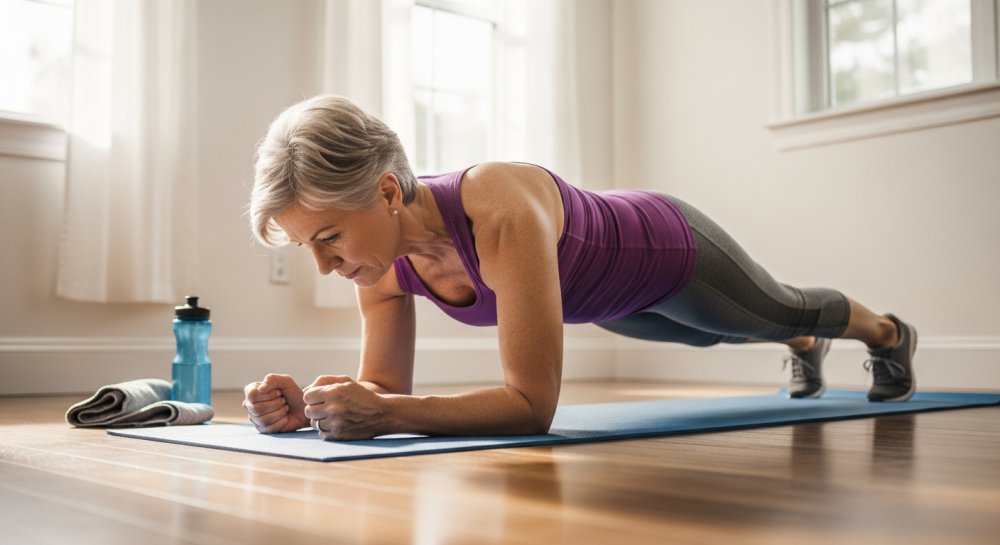
Planks create total-body tension while specifically targeting the abdominal and lower back muscles that stabilize the spine. Begin with 10-15 second holds on your forearms and knees, gradually progressing to full planks on toes as strength improves. Quality matters more than duration.
Bird dogs improve balance and coordination while strengthening the core and glutes. From hands and knees, extend opposite arm and leg simultaneously, maintaining a neutral spine. This exercise enhances the connection between upper and lower body movements.
Dead bugs offer a gentler core exercise performed lying on your back. Extending opposite arm and leg while keeping your lower back pressed to the floor challenges deep abdominal muscles without straining the neck or spine.
Getting Started Safely
Beginning a strength training program requires attention to proper form over weight or repetitions. Physical therapists recommend starting with bodyweight-only versions of these exercises, performing 8-12 repetitions for 2-3 sets, twice weekly with at least one rest day between sessions.
Gradual progression prevents injury while building confidence. Add resistance through bands, light dumbbells, or additional repetitions only after mastering correct movement patterns. Pain should never accompany strength training—discomfort in the working muscle is expected, but joint pain signals improper form or excessive load.
Warming up before strength training prepares muscles and joints for work. Five to ten minutes of light movement like walking or arm circles increases blood flow and reduces injury risk. Similarly, gentle stretching after exercise maintains flexibility.
Beyond the Physical Benefits
Research consistently demonstrates that strength training provides cognitive benefits alongside physical improvements. Regular resistance exercise correlates with better memory, executive function, and reduced risk of cognitive decline. The mental discipline required for consistent training also builds resilience and confidence.
Metabolic advantages extend beyond muscle building. Strength training increases resting metabolic rate, improves insulin sensitivity, and supports healthy blood sugar regulation—particularly important given the increased diabetes risk with age. Muscle tissue remains more metabolically active than fat, burning calories even at rest.
Bone density improvements from resistance training reduce osteoporosis risk and fracture likelihood. The mechanical stress of strength exercises signals bones to maintain or increase density, directly combating age-related bone loss that particularly affects women after menopause.
Making It Sustainable
Long-term adherence to strength training requires finding an approach that fits individual preferences and lifestyle. Some people thrive with structured gym programs, while others prefer home workouts following along with videos. The best program is one you’ll actually maintain consistently.
Tracking progress provides motivation beyond the scale. Recording weights lifted, repetitions completed, or simply how daily activities feel easier demonstrates tangible improvement. Many older adults find they can do things at 60 they struggled with at 50 once they commit to regular strength training.
Working with a qualified personal trainer or physical therapist, especially when starting, ensures proper form and appropriate exercise selection for individual health conditions. This investment in professional guidance prevents injury and accelerates progress.
The evidence is clear: strength training represents one of the most powerful interventions for healthy aging. These ten exercises provide a comprehensive starting point accessible to most older adults. The question isn’t whether you’re too old to start—it’s whether you can afford not to.
