Nutrition
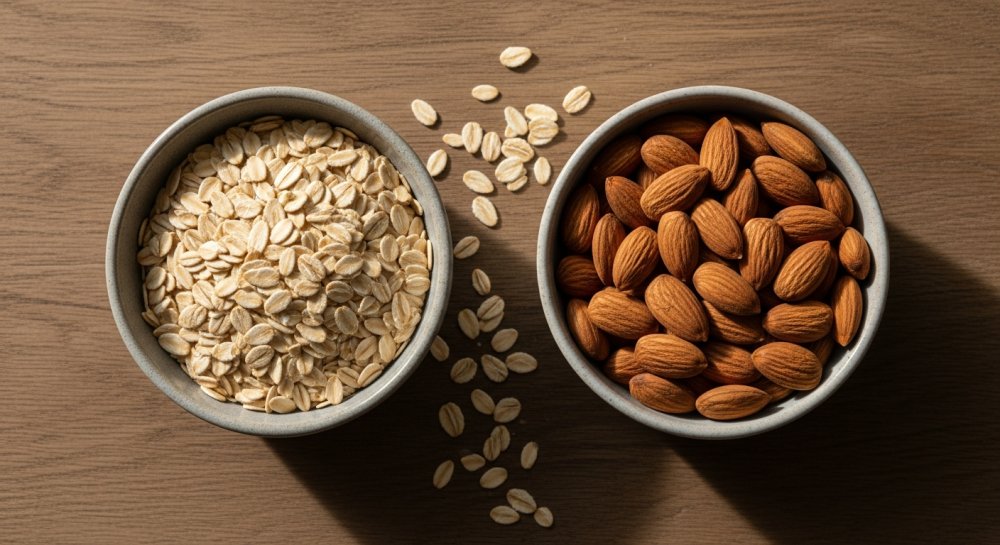
A Registered Dietitian Settles the Oats vs Almonds Debate for Good

Health Points
- Both oats and almonds provide unique nutritional benefits, but serve different dietary purposes in a balanced eating plan
- Oats offer sustained energy through complex carbohydrates and fiber, while almonds provide heart-healthy fats and protein
- The choice between oats and almonds depends on individual health goals, dietary needs, and what nutrients are missing from your current diet
For health-conscious adults navigating the grocery store aisles, the choice between oats and almonds can feel overwhelming. Both foods have earned their superfood status, but they deliver nutrition in distinctly different ways.
Understanding which option best fits your personal health goals requires looking beyond trendy food labels. The nutritional profiles of these pantry staples reveal important differences that matter for your daily wellness routine.
The Nutritional Breakdown
Oats stand out as a carbohydrate powerhouse, providing the complex carbs your body needs for sustained energy throughout the day. A half-cup serving of dry oats delivers approximately 27 grams of carbohydrates, 4 grams of fiber, and 5 grams of protein. The soluble fiber in oats, known as beta-glucan, has been extensively studied for its cholesterol-lowering properties.
Almonds take a different nutritional approach entirely. An ounce of almonds—about 23 nuts—contains 6 grams of protein, 14 grams of heart-healthy fats, and 3.5 grams of fiber. The fat content in almonds is predominantly monounsaturated fat, the same type found in olive oil and praised for supporting cardiovascular health.
When Oats Take the Lead
For individuals seeking steady energy release and digestive support, oats emerge as the superior choice. The complex carbohydrates in oats break down slowly, preventing blood sugar spikes and crashes that leave you reaching for snacks mid-morning.
Registered dietitians frequently recommend oats for active adults who need reliable fuel for exercise and daily activities. The B vitamins in oats support energy metabolism, while the iron content helps transport oxygen throughout your body—particularly important for women over 40 who face increased iron needs.
Oats also excel in versatility. Whether prepared as overnight oats, baked into breakfast bars, or blended into smoothies, they adapt to countless recipes while maintaining their nutritional integrity.
The Almond Advantage
Almonds shine when protein and healthy fats are the priority. For individuals following lower-carbohydrate eating patterns or managing blood sugar concerns, almonds provide satisfaction without the carbohydrate load.
The vitamin E content in almonds deserves special attention—just one ounce provides 37% of the daily recommended intake. This powerful antioxidant supports skin health and immune function, both increasingly important as we age. The magnesium in almonds also supports bone health, a critical concern for maintaining mobility and independence in later years.
Research has consistently linked regular almond consumption to improved cholesterol profiles and reduced cardiovascular disease risk. The combination of healthy fats, fiber, and plant sterols creates a nutritional package that actively supports heart health.
Making the Right Choice for Your Health
Rather than declaring a universal winner, nutrition experts suggest evaluating your individual circumstances. Are you fueling up before a morning workout? Oats provide the sustained carbohydrate energy your muscles need.
Looking for a satisfying afternoon snack that won’t derail dinner? Almonds deliver protein and healthy fats that keep hunger at bay without excessive calories.
Your current diet composition matters significantly. If your meals already include adequate healthy fats from sources like avocados and olive oil, adding oats brings complementary nutrients. Conversely, if your diet leans heavily on refined carbohydrates, incorporating more almonds can help balance your macronutrient intake.
Combining Both Foods Strategically
Many nutrition professionals advocate for including both oats and almonds in your regular rotation. The foods complement each other beautifully—think oatmeal topped with sliced almonds, or almond butter stirred into overnight oats.
This combination approach provides the steady energy from oats alongside the satiating fats and protein from almonds. The result is a more complete nutritional profile that supports sustained energy, heart health, and overall wellness.
For weight management, this pairing proves particularly effective. The fiber from both foods promotes fullness, while the protein in almonds helps maintain muscle mass—crucial for maintaining metabolism as we age.
Practical Considerations
Cost and accessibility factor into sustainable healthy eating habits. Oats generally offer more servings per dollar, making them budget-friendly for daily consumption. Almonds carry a higher price point but remain economical when purchased in bulk and portioned appropriately.
Food sensitivities must be considered as well. While oats are naturally gluten-free, cross-contamination during processing means those with celiac disease should seek certified gluten-free varieties. Almond allergies, though less common than other tree nut allergies, require complete avoidance for affected individuals.
The environmental impact of food choices increasingly concerns health-conscious consumers. Oats require significantly less water to produce than almonds, particularly relevant given California’s almond-growing regions face ongoing drought challenges.
The Bottom Line
Both oats and almonds deserve places in a health-promoting diet, each offering distinct nutritional advantages. Oats excel as a complex carbohydrate source providing sustained energy and digestive support. Almonds deliver heart-healthy fats, protein, and vital nutrients that support cardiovascular and bone health.
The most effective approach involves matching these foods to your specific health goals, dietary preferences, and nutritional needs. Rather than choosing one over the other, consider how each food can support different aspects of your wellness journey.
Consulting with a registered dietitian can provide personalized guidance based on your health history, current diet, and wellness objectives. These professionals can help you determine optimal serving sizes and frequencies that align with your individual needs—because the best nutritional choice is always the one that supports your unique path to better health.
