Movement
Why This Simple 10-Minute Core Routine Could Transform Your Daily Life

Health Points
- Functional core exercises like bird dogs and farmer carries train muscles used in everyday activities like carrying groceries and getting off the floor
- Core strength extends beyond the ‘six-pack’ abs to include deep stabilizing muscles that support your spine and improve balance
- Starting with basic movements and proper form matters more than intensity, especially for adults over 40 seeking sustainable fitness
Forget the endless crunches targeting magazine-cover abs. The most valuable core work happens when you train your midsection for what it actually does every day—keeping you steady while reaching for high shelves, protecting your back when lifting grandchildren, and helping you rise from the floor with ease.
Physical therapists and trainers now emphasize functional core training that mimics real-world movements rather than isolated muscle work. These exercises build the kind of strength that shows up in daily tasks, not just in the mirror.
“Your core is so much more than your abs,” explains certified personal trainer Sarah Johnson. “It includes all the muscles that stabilize your spine and pelvis—that’s your foundation for every movement you make.”
The exercises that deliver the most practical benefits focus on stability, rotation, and anti-rotation—the patterns your body uses when carrying groceries, twisting to look behind you while backing up the car, or maintaining balance on uneven ground.
The Essential Ten
Dead bugs top the list for building foundational core control. Lying on your back with knees bent at 90 degrees, you slowly extend opposite arm and leg while keeping your lower back pressed to the floor. This teaches your core to resist unwanted movement—exactly what it needs when you’re navigating stairs or reaching overhead.
Bird dogs work similar patterns from a hands-and-knees position. Extending one arm forward while reaching the opposite leg back challenges balance and coordination while strengthening the muscles that protect your spine during everyday bending and lifting.
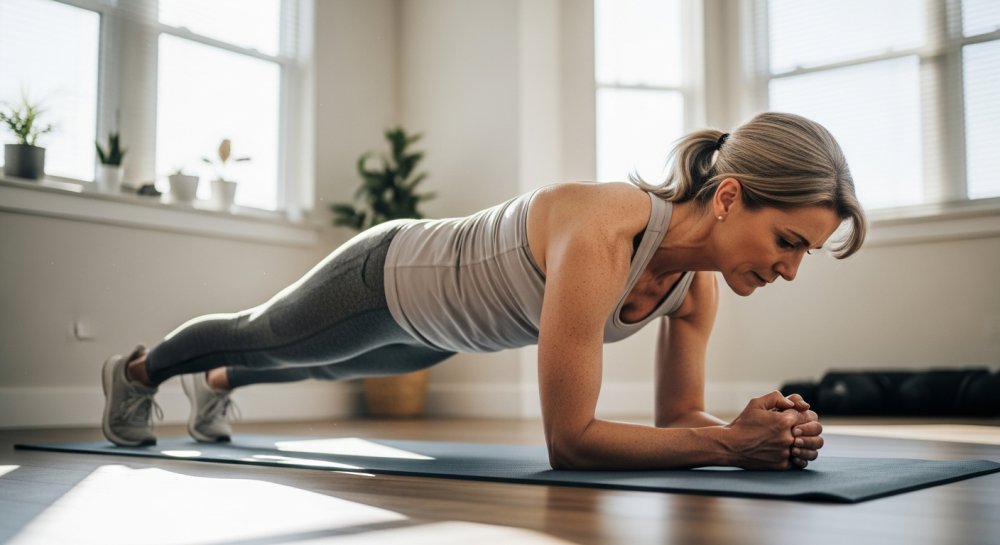
Planks remain a cornerstone for good reason. Holding your body rigid in a push-up position—whether on hands or forearms—trains the endurance your core needs for maintaining good posture throughout the day. Side planks add lateral stability crucial for activities like carrying a heavy bag on one shoulder.
Farmer carries might be the most directly functional exercise on the list. Simply walking while holding weights at your sides trains exactly what your body does when carrying shopping bags or luggage. The uneven load challenges your core to keep you upright and balanced.
“I tell my clients over 40 that farmer carries are non-negotiable,” says physical therapist Michael Chen. “They build the exact strength patterns you need to stay independent and injury-free.”
Pallof presses use a resistance band or cable to create rotational force that your core must resist. Standing sideways to the anchor point, you press your hands straight out from your chest while fighting the band’s pull to twist your torso. This anti-rotation strength protects your back during asymmetrical movements.
Movement Over Muscle
Mountain climbers add a cardiovascular element while training core stability under movement. From a plank position, you alternate driving knees toward your chest—mimicking the stabilization needed when moving quickly or changing direction.
Russian twists target rotational strength through a different angle. Seated with feet lifted, you rotate your torso side to side, teaching controlled rotation useful for activities from golf swings to reaching for your seatbelt.
Bridges strengthen the posterior chain—glutes, hamstrings, and lower back—that works in concert with your front core muscles. Lying on your back with knees bent, you lift your hips toward the ceiling, building the strength needed for standing from a seated position.
Walking lunges integrate core stability with lower body strength and balance. Each step forward requires your midsection to keep your spine aligned and your body stable—precisely what happens when navigating uneven terrain or climbing stairs.
Woodchops complete the functional picture. Using a weight or medicine ball, you rotate from high to low or low to high across your body, training the diagonal movement patterns used in countless daily activities from raking leaves to putting away dishes.
Starting Smart
For adults over 40, the key to sustainable core training lies in starting with proper form rather than intensity. Many fitness experts recommend beginning with bodyweight versions of these exercises, focusing on control and breathing before adding resistance.
“You don’t need to do all ten exercises every day,” notes trainer Lisa Martinez. “Pick three or four, rotate them through the week, and focus on quality over quantity.”
A practical approach involves performing each chosen exercise for 30-60 seconds or 8-12 repetitions, completing 2-3 rounds. The entire routine takes 10-15 minutes but delivers benefits that extend far beyond the workout itself.
Research supports the functional approach. Studies show that exercises engaging multiple muscle groups in coordinated patterns improve balance, reduce fall risk, and decrease lower back pain more effectively than isolated core work.
The real measure of success isn’t how defined your midsection looks but how strong and capable you feel during everyday activities. Can you get down on the floor to play with grandchildren and rise easily? Do you finish yard work without back pain? Can you carry your luggage through the airport without strain?
That’s the kind of core strength that matters most—the kind that keeps you active, independent, and pain-free well into your later years. And it starts with just ten simple exercises that train your body for real life.
