Movement
These Three Moves Changed Everything About How I Age

Health Points
- Compound exercises like squats, deadlifts, and pull-ups activate multiple muscle groups simultaneously, maximizing efficiency and hormone response for muscle growth
- Building and maintaining muscle mass after 40 directly impacts metabolic health, bone density, and independence in later years
- Consistent strength training with these fundamental movements supports longevity by improving balance, reducing fall risk, and maintaining functional strength
When it comes to staying strong and healthy well into your golden years, not all exercises are created equal. While any movement is better than none, three specific exercises stand out for their remarkable ability to build muscle and support a longer, more vibrant life.
The power trio—squats, deadlifts, and pull-ups—may sound intimidating, but these fundamental movements offer unmatched benefits for adults over 40 looking to maintain their independence and vitality.
“These compound exercises engage multiple muscle groups at once, which creates a metabolic effect you simply can’t get from isolation movements,” explains Dr. Stuart Phillips, a professor of kinesiology at McMaster University who has spent decades researching muscle health and aging.
Squats reign as the king of lower body exercises for good reason. This movement pattern—which we use every time we sit down and stand up—strengthens the quadriceps, hamstrings, glutes, and core while improving balance and coordination.
For mature adults, maintaining leg strength directly correlates with reduced fall risk and preserved mobility. Research shows that people who can squat comfortably well into their senior years maintain better quality of life and independence than those who lose this fundamental movement pattern.
“The squat is essentially a longevity exercise,” says Dr. Phillips. “Your ability to get up and down from a chair or the floor without assistance is one of the strongest predictors of healthy aging.”
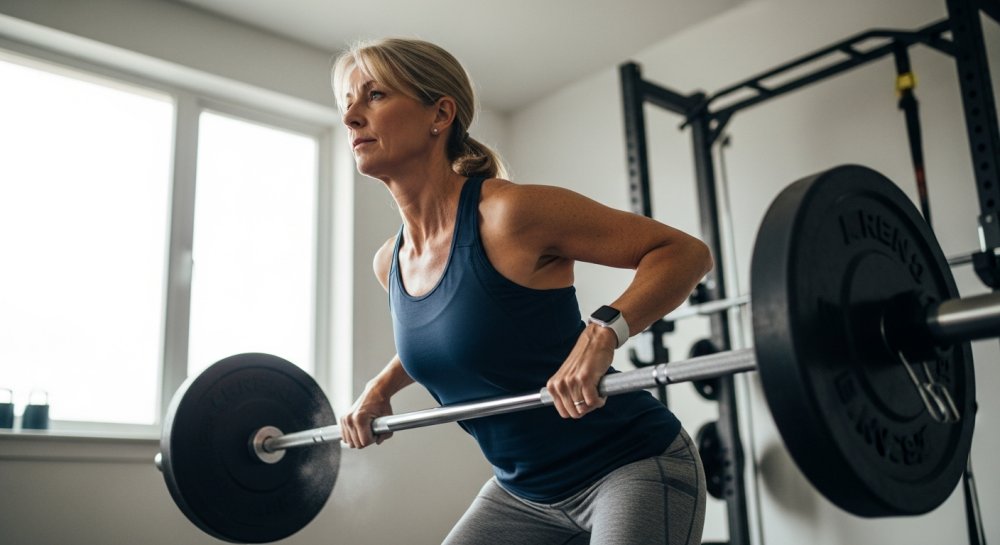
Deadlifts, often misunderstood as dangerous, are actually one of the safest and most functional exercises when performed correctly. This hip-hinge movement strengthens the entire posterior chain—the muscles along the back of your body including the hamstrings, glutes, and lower back.
These muscles are crucial for maintaining good posture, preventing back pain, and performing everyday tasks like picking up groceries or grandchildren. The deadlift also provides exceptional bone-density benefits, particularly important for women navigating menopause-related bone loss.
Pull-ups round out the trio by targeting the upper body in a way few other exercises can match. This vertical pulling movement builds the back, shoulders, and arms while improving grip strength—a often-overlooked marker of overall health and longevity.
Studies have established grip strength as a powerful predictor of cardiovascular health and all-cause mortality. People with stronger grips tend to live longer, healthier lives, making pull-ups or their modifications valuable investments in your future.
“Grip strength is like a window into your overall muscle health,” notes Dr. Phillips. “When someone can maintain good grip strength as they age, it usually indicates they’re maintaining muscle mass throughout their body.”
The beauty of these three exercises lies in their efficiency. Rather than spending hours in the gym targeting individual muscles, these compound movements work multiple muscle groups simultaneously, providing comprehensive strength development in less time.
This efficiency matters especially for busy adults balancing work, family, and other responsibilities. A well-designed program focusing primarily on these three movement patterns can be completed in 30-45 minutes, two to three times per week.
For those new to strength training or returning after a hiatus, modifications make these exercises accessible at any fitness level. Squats can begin as sit-to-stand movements from a chair. Deadlifts can start with light dumbbells or even a broomstick to practice the hip-hinge pattern. Pull-ups can be modified using resistance bands or a rowing variation.
The hormonal response triggered by these exercises also contributes to their effectiveness for building muscle. Compound movements that engage large muscle groups stimulate greater release of growth hormone and testosterone—natural hormones that support muscle development and fat loss.
This hormonal benefit becomes increasingly important after 40, when natural hormone levels begin declining. Strategic strength training helps maintain more favorable hormone profiles, supporting better body composition and energy levels.
Beyond muscle building, these exercises provide crucial benefits for bone health. The loading patterns created by squats, deadlifts, and pull-ups signal bones to maintain or increase density, combating the natural bone loss that accelerates with age.
For women especially, who face heightened osteoporosis risk after menopause, consistent strength training with these movements represents one of the most effective non-pharmaceutical interventions for maintaining skeletal health.
The metabolic benefits extend well beyond the gym. Muscle tissue is metabolically active, burning calories even at rest. Building and maintaining muscle through these exercises helps counteract the metabolic slowdown that typically accompanies aging, making weight management easier and supporting better blood sugar control.
Getting started requires patience and proper form over ego-driven weight selection. Working with a qualified trainer for even a few sessions can establish correct movement patterns and prevent the injuries that often sideline enthusiastic beginners.
“The key is progressive overload done sensibly,” advises Dr. Phillips. “You don’t need to lift extremely heavy weights to see benefits. Consistent, gradual progression with good form will get you much further than sporadic heroic efforts.”
Recovery becomes equally important as the training itself, particularly for mature exercisers. These demanding exercises require adequate rest between sessions—typically 48-72 hours—allowing muscles to repair and grow stronger.
Nutrition also plays a supporting role in maximizing results. Adequate protein intake, distributed throughout the day, provides the building blocks muscles need to respond to training stimulus. Most research suggests adults over 40 benefit from slightly higher protein intake than younger adults, roughly 0.6-0.8 grams per pound of body weight daily.
The longevity benefits of these three exercises extend beyond physical health. Maintaining strength and functional capacity preserves independence, reduces caregiver burden, and supports continued participation in activities that bring joy and meaning to life.
Whether it’s traveling comfortably, playing with grandchildren, or simply maintaining the ability to live independently in your own home, the functional strength built through squats, deadlifts, and pull-ups pays dividends that compound over decades. Starting today—regardless of your current fitness level—sets the foundation for a stronger, more capable tomorrow.
