Movement
Age-Based Plank Hold Times That Track Real-World Strength

Health Points
- Plank duration norms vary by decade, giving adults a practical yardstick for core strength.
- Regular practice supports posture, balance, and everyday movement without requiring special equipment.
- Short, consistent sessions can yield measurable improvements over time.
Core endurance is one of the simplest fitness markers to check at home. A timed plank requires only body weight and a flat surface, yet it reflects how well the midsection supports daily tasks such as lifting groceries or rising from a chair.
Researchers have compiled average hold times across adult age groups. These benchmarks are not finish lines; they are reference points that help people gauge whether their routine is maintaining functional strength.
“Consistency matters more than perfection,” notes physical therapist Dana Jones. “Five focused sessions each week will move the needle faster than one marathon effort.”
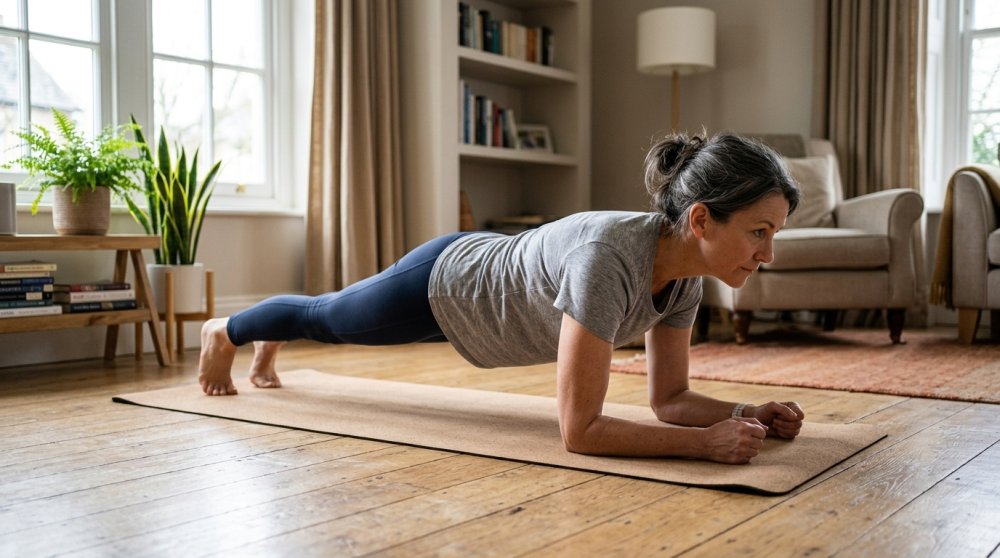
Form stays the same regardless of age: shoulders stacked above elbows, hips level, and the neck relaxed. Beginners can start on their knees, then progress to full plank once thirty-second holds feel steady.
Breathing should remain calm and even. Short, shallow breaths often signal that the body is nearing its limit, giving an early cue to reset rather than risk lower-back sag.
Adding gentle movement—lifting one foot a few inches—can increase difficulty without extra equipment. Such tweaks keep the exercise fresh while respecting the same safety principles.
Rest and recovery matter as much as effort. A day of brisk walking or stretching complements plank work and prevents the overuse that sidelines many well-intentioned routines.
Because the test is so accessible, families can track progress together. Celebrating small gains—an extra ten seconds or smoother breathing—builds confidence across generations.
