Movement
Core Strength After Forty: A Month-Long Plank Plan

Health Points
- Planks build core stability without high-impact strain on joints.
- Daily practice over 30 days can improve posture and balance.
- Older adults gain extra benefit by focusing on proper form rather than long holds.
Strengthening the midsection becomes increasingly important as years advance. A plank routine that respects the body’s current limits can deliver steady gains without risking strain. This month-long plan offers a clear path forward for anyone ready to add consistency to their routine.
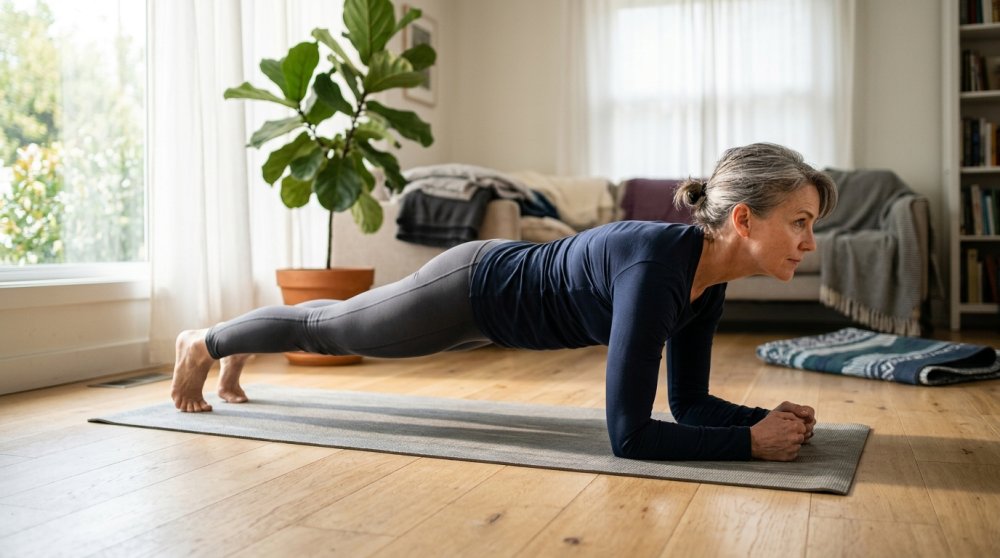
Begin each session by checking alignment from head to heels. Keep shoulders directly over wrists and engage the abdominal muscles before lowering into position. Short, controlled holds performed daily often produce more reliable progress than occasional long efforts.
“Form always matters more than time on the clock,” notes physical therapist Dr. Elena Vargas. She encourages participants to reset whenever hips sag or shoulders creep forward.
Week one focuses on building the habit with 20-second holds, three rounds each morning. Rest 30 seconds between rounds and finish with gentle cat-cow stretches to keep the spine mobile. By day seven most adults notice they can complete the sequence without rushing.
Week two adds a single modification: lift one foot an inch off the floor for the final ten seconds of each round. Alternate feet daily to balance the workload. The small shift recruits additional stabilizers while remaining joint-friendly.
“Consistency beats intensity at any age,” says Vargas. She reminds readers that visible muscle definition is secondary to the functional strength gained from steady practice.
Week three introduces forearm planks on two nonconsecutive days. Switching between full and forearm positions challenges the shoulders and forearms in new ways. Keep sessions brief—30 seconds per round—and stop if wrists protest.
Week four combines the skills learned earlier into a simple circuit: 30 seconds standard, 20 seconds single-foot lift, 20 seconds forearm. Three rounds total still take less than ten minutes yet deliver a noticeable training effect.
Track progress in a small notebook rather than on a phone timer. Note the date, perceived effort, and any stiffness the next morning. Patterns quickly emerge and guide future adjustments.
Finish every session with a slow walk around the room and a tall glass of water. Hydration and light movement help the body recover between training days. Over the course of the month, most readers report steadier posture during daily tasks such as carrying groceries or gardening.
