Nutrition
Six Hidden Smoothie Mistakes Nutritionists Say Derail Your Diet

Health Points
- Blending fruit destroys fiber structure, causing rapid blood sugar spikes that trigger fat storage and increased hunger
- Common smoothie additions like honey, juice, and flavored yogurt can add 300-500 extra calories without satisfying appetite
- Protein and healthy fats are essential smoothie components that most people skip, leading to energy crashes within two hours
That morning smoothie ritual might be working against your weight loss goals in ways you never suspected. While smoothies seem like the perfect healthy choice, nutrition experts warn that common preparation mistakes transform these blended drinks into calorie bombs that actually promote weight gain.
The frozen fruit sitting in your freezer, the tablespoon of honey you add for sweetness, even the order you add ingredients to the blender—all of these seemingly innocent choices can sabotage your efforts to shed pounds. Understanding these pitfalls helps you make smarter decisions that support your health journey.
The Fiber Destruction Problem
Blending whole fruits fundamentally changes how your body processes them. When you eat an apple whole, the intact fiber slows sugar absorption and keeps you satisfied longer. Blend that same apple into a smoothie, and the fiber structure breaks down, allowing sugars to hit your bloodstream rapidly.
Registered dietitian Sarah Mitchell explains the metabolic consequences.
“When fiber is pulverized in a blender, your body treats the fruit sugar almost like table sugar—it spikes your blood glucose, triggers an insulin response, and within an hour or two, you’re hungrier than before you drank it.”
This blood sugar roller coaster sets off a chain reaction. Your pancreas releases insulin to manage the sugar spike, but often overcompensates, dropping blood sugar too low. That crash triggers intense cravings for more quick-energy foods, typically carbohydrates or sweets.
The solution isn’t eliminating fruit entirely. Instead, limit smoothies to one serving of whole fruit—about one cup of berries or half a banana. Consider eating a second piece of fruit whole alongside your smoothie rather than blending it in.
Sneaky Calorie Additions
The smoothie bowl trend has made this problem worse. What starts as a reasonable 200-calorie base transforms into a 600-calorie meal when topped with granola, coconut flakes, nut butter drizzles, and additional fruit.
Fruit juice ranks among the worst smoothie additions. A half-cup of orange juice adds 60 calories and 12 grams of sugar without any fiber or satiety benefit. Flavored yogurts contribute another 100-150 calories, mostly from added sugars.
Even natural sweeteners carry consequences. One tablespoon of honey contains 64 calories, maple syrup has 52, and agave nectar packs 60. These calories add up quickly, especially since most people pour without measuring.
Nutritionist David Park sees this pattern repeatedly in his practice.
“People come to me confused about why they’re gaining weight when they’re ‘only having a healthy smoothie for breakfast.’ Then we calculate the actual calories—sometimes over 700—and suddenly it makes sense.”
Track every ingredient for one week. Write down quantities and look up calorie counts. Most people discover their “light” breakfast contains more calories than a full meal with eggs, toast, and vegetables.
The Missing Protein Factor
Fruit-only smoothies lack the protein necessary to maintain stable energy and prevent muscle loss during weight reduction. Without adequate protein, your body may break down muscle tissue for amino acids, which actually slows your metabolism long-term.
Protein serves multiple weight loss functions. It requires more energy to digest than carbohydrates, slightly boosting calorie burn. It triggers the release of hormones that signal fullness to your brain. Perhaps most importantly, it slows the absorption of sugars from fruit.
Aim for 20-30 grams of protein per smoothie. One scoop of quality protein powder typically provides 20-25 grams. Greek yogurt offers about 15-20 grams per cup. Cottage cheese, though unusual, blends surprisingly well and delivers 25 grams per cup.
Plant-based options include hemp seeds (10 grams per 3 tablespoons), silken tofu (10 grams per half cup), and nut butters (7-8 grams per 2 tablespoons). Combine sources to reach your target amount.
Forgetting Healthy Fats
Low-fat diet advice from the 1990s still influences how many people build smoothies today. They skip fats entirely, not realizing these nutrients are essential for vitamin absorption and sustained energy.
Vitamins A, D, E, and K are fat-soluble—meaning your body cannot absorb them without dietary fat present. That spinach and kale in your green smoothie provides excellent nutrition, but without fat, you’re literally flushing many of those vitamins away.
Registered dietitian Lisa Chen emphasizes this often-overlooked point.
“I see clients eating incredibly nutrient-dense smoothies but showing deficiency symptoms because they’re not absorbing what they consume. Adding just one tablespoon of healthy fat changes everything.”
Healthy fat sources include avocado (quarter of a medium fruit adds creaminess and 80 calories), chia seeds (one tablespoon provides 60 calories and omega-3s), flaxseed oil (120 calories per tablespoon but only need one teaspoon), and nut butters (95 calories per tablespoon).
These fats also slow gastric emptying, keeping you fuller longer and preventing the mid-morning energy crash that leads to snacking.
Liquid Calories Don’t Register
Your brain processes liquid calories differently than solid food. Research consistently shows that people don’t compensate for liquid calories by eating less later—they consume the same amount of solid food regardless of how many calories they drank.
This phenomenon occurs because chewing and swallowing solid food triggers satiety signals that drinking bypasses. The mechanical act of eating—the jaw movement, the swallowing, the food moving through your esophagus—all send messages to your brain that you’re consuming nourishment.
When you drink a 500-calorie smoothie, your brain doesn’t register the same fullness as eating a 500-calorie meal with eggs, vegetables, and whole grain toast. You’ll likely eat a full lunch just a few hours later, not accounting for the smoothie calories at all.
Consider making your smoothie thicker and eating it with a spoon rather than drinking it. This simple change increases consumption time and may help your brain better recognize the calories. Alternatively, pair your smoothie with a small amount of solid food like a handful of nuts or a hard-boiled egg.
Timing and Frequency Issues
Drinking smoothies as snacks between meals adds extra calories without replacing anything in your diet. Many people consume their regular three meals plus two smoothie “snacks,” not realizing each smoothie should be counted as a full meal.
The best time for a smoothie is within an hour after exercise, when your muscles are primed to absorb nutrients efficiently. Post-workout, your body directs calories toward muscle recovery rather than fat storage, and insulin sensitivity is elevated, helping manage blood sugar more effectively.
If you’re having a smoothie as a meal replacement, ensure it contains all three macronutrients—protein, healthy fats, and complex carbohydrates. A carbohydrate-only smoothie won’t sustain you until the next meal.
Nutritionist Michael Torres offers practical guidance for his clients.
“I tell people to think of their smoothie as a meal they happen to drink, not as a beverage. Would you eat two breakfasts? Then don’t drink a smoothie and eat breakfast. Choose one.”
Limit smoothies to once daily, and track them in any food diary or app you use. The calories count just as much as solid food, even though they may not feel as satisfying.
Building a Better Smoothie
A weight-loss-friendly smoothie balances all nutrients while keeping calories reasonable. Start with a base of unsweetened almond milk or water—not fruit juice. Add one cup of leafy greens like spinach or kale for volume and nutrients without many calories.
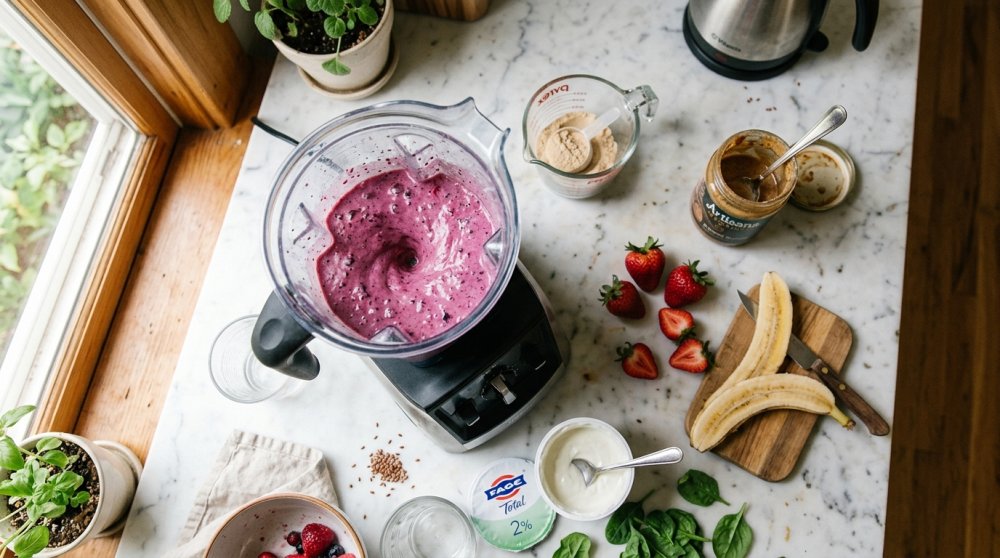
Include one serving of whole fruit, preferably berries, which have less sugar than tropical fruits. Add 20-30 grams of protein from powder, Greek yogurt, or cottage cheese. Include one tablespoon of healthy fat from avocado, nut butter, or seeds.
If you need additional sweetness, try a few drops of vanilla extract or a pinch of cinnamon rather than honey or sugar. Frozen cauliflower or zucchini adds creaminess and volume with minimal calories—you won’t taste it alongside fruit and other ingredients.
Measure ingredients rather than estimating. Keep a set of measuring cups near your blender. This small habit change prevents portion creep, where tablespoons gradually become quarter-cups without you noticing.
The goal isn’t perfection but awareness. Understanding how your smoothie choices affect your body empowers you to make adjustments that align with your health goals. Small changes to your blending habits can make the difference between a breakfast that supports weight loss and one that works against it.
