Nutrition
The Surprising Foods Pediatricians Say Every Child Needs Daily

Health Points
- Children’s nutrition requirements differ from adults, with higher needs for calcium, iron, and protein to support rapid growth
- Establishing regular meal patterns and limiting processed foods early creates lifelong healthy eating behaviors
- Whole foods provide essential vitamins, minerals, and nutrients that support both physical development and cognitive function
Every parent wants their child to grow up healthy and strong. But with busy schedules and conflicting nutrition advice, knowing exactly what to put on your child’s plate can feel overwhelming.
The foundation for lifelong health begins in childhood, and the foods children eat today shape their physical growth, brain development, and even their relationship with food for decades to come. Understanding which nutrients matter most—and how to make them appealing to young eaters—can make all the difference.
Children aren’t just small adults when it comes to nutrition. Their growing bodies have unique requirements that change as they develop from infancy through adolescence.
Calcium and vitamin D work together to build strong bones during critical growth periods. Iron supports cognitive development and prevents anemia, which can affect learning and energy levels. Protein provides the building blocks for muscles, organs, and immune function.
Whole grains supply steady energy and fiber that keeps digestion running smoothly. Fruits and vegetables deliver antioxidants, vitamins, and phytonutrients that protect cells and support immune health. Healthy fats from sources like avocados, nuts, and fish are essential for brain development, especially during the early years.
Creating consistent meal and snack times helps regulate appetite and blood sugar levels throughout the day. Children thrive on routine, and regular eating patterns prevent the energy crashes and mood swings that come from irregular fueling.
Family meals offer more than just nutrition—they provide opportunities to model healthy eating behaviors and develop positive attitudes toward food. Research shows children who eat with their families consume more fruits and vegetables and have better overall diet quality.
Making nutritious foods the default choice, rather than keeping processed snacks readily available, shapes preferences over time. When whole foods are the norm, children develop a taste for natural flavors and textures rather than relying on added sugars and salt.
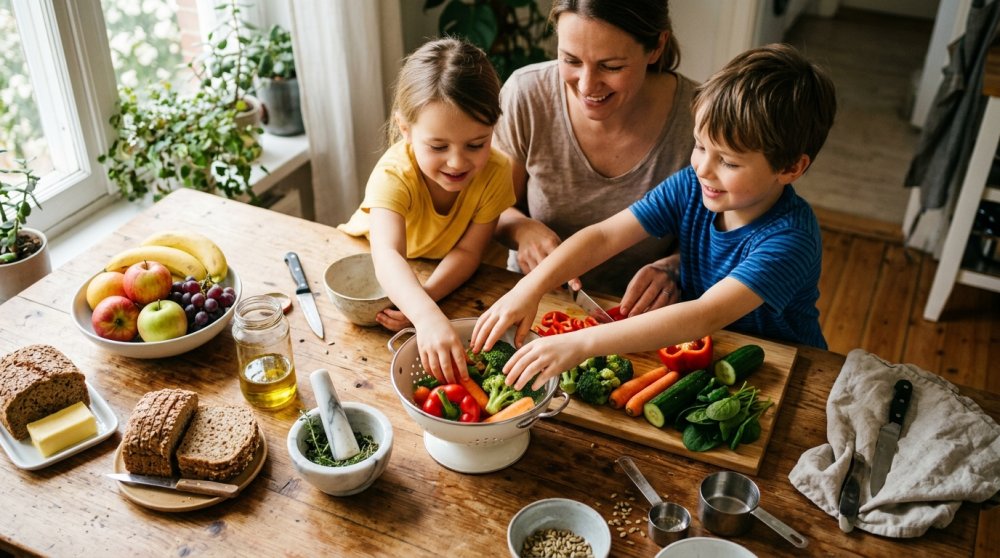
Involving children in food preparation, even in age-appropriate ways, increases their willingness to try new foods. Letting young children wash vegetables, older kids measure ingredients, or teens plan a meal builds both skills and investment in eating well.
Breakfast sets the tone for the entire day. A balanced morning meal improves concentration, memory, and academic performance. Combining protein, complex carbohydrates, and fruit provides sustained energy without the mid-morning crash.
Hydration matters just as much as food. Water should be the primary beverage, with milk providing calcium and vitamin D. Limiting juice to small portions and avoiding sugary drinks protects dental health and prevents empty calories from displacing nutrient-dense foods.
Portion sizes for children differ from adult servings, and forcing kids to clean their plates can override natural hunger cues. Offering appropriate amounts and allowing children to request more when genuinely hungry teaches them to listen to their bodies.
Colorful plates naturally provide a wider range of nutrients. The pigments in red peppers, orange carrots, green broccoli, and purple berries signal different beneficial compounds that work together to support health.
Sneaking vegetables into foods can work temporarily, but openly serving and discussing them builds genuine acceptance. Children who see adults enjoying vegetables are more likely to develop the same preferences.
Growth spurts increase appetite naturally, and providing nutritious options during these hungry phases supports proper development. Keeping cut vegetables, fruit, cheese, and whole grain crackers easily accessible makes healthy snacking convenient.
Special occasions and treats have their place in a balanced approach to eating. Teaching children that all foods can fit within a healthy pattern—without labeling items as “good” or “bad”—prevents the restriction-binge cycle that can develop from overly rigid rules.
The eating habits established in childhood don’t just affect growth and development now. They create patterns that persist into adulthood, influencing long-term health outcomes, disease risk, and quality of life.
By prioritizing whole foods, establishing regular meal patterns, and creating a positive food environment, parents give their children the nutritional foundation they need to thrive today and build healthy futures.
