Health
The Natural Remedy That Could Transform Your Sleep Tonight

Health Points
- Simple lifestyle changes like sleeping position adjustments and maintaining healthy weight can significantly reduce snoring without medical intervention
- Natural remedies including proper hydration, nasal strips, and humidifiers offer effective relief for many chronic snorers
- Avoiding alcohol and sedatives before bed helps keep airways open and reduces nighttime breathing disruptions
Millions of Americans struggle with snoring each night, disrupting not only their own sleep but often their partner’s rest as well. The good news? You don’t necessarily need expensive treatments or medical devices to find relief.
Before reaching for over-the-counter solutions or scheduling a doctor’s appointment, several home remedies may help reduce or eliminate snoring naturally. These time-tested approaches address the root causes of snoring and can make a meaningful difference in sleep quality.
One of the most effective strategies involves changing your sleep position. Sleeping on your back allows the tongue and soft palate to collapse to the back of the throat, creating that familiar rumbling sound.
Side sleeping keeps airways more open throughout the night. If you tend to roll onto your back while asleep, try placing a body pillow behind you or sewing a tennis ball into the back of your pajama top to discourage the position change.
Maintaining a healthy weight plays a crucial role in snoring prevention. Extra tissue around the neck can narrow airways, making snoring more likely.
Even modest weight loss can reduce fatty tissue in the back of the throat and decrease or eliminate snoring. This approach works particularly well for people who began snoring after gaining weight.
Proper hydration throughout the day helps reduce snoring by preventing secretions in the nose and soft palate from becoming sticky. When you’re dehydrated, these secretions can cause more snoring.
Women should aim for about 11 cups of water daily, while men should target around 16 cups. This includes water from all beverages and food sources.
Opening nasal passages can make a significant difference for many snorers. When airways are narrowed due to congestion or structural issues, fast-moving air creates snoring sounds.
A hot shower before bed helps open nasal passages naturally. You can also keep a bottle of saltwater rinse in the shower to flush out your nose while the water is still warm.
Nasal strips, which adhere to the outside of the nose, lift and open nasal passages mechanically. These over-the-counter strips provide relief for many people without requiring any medication.
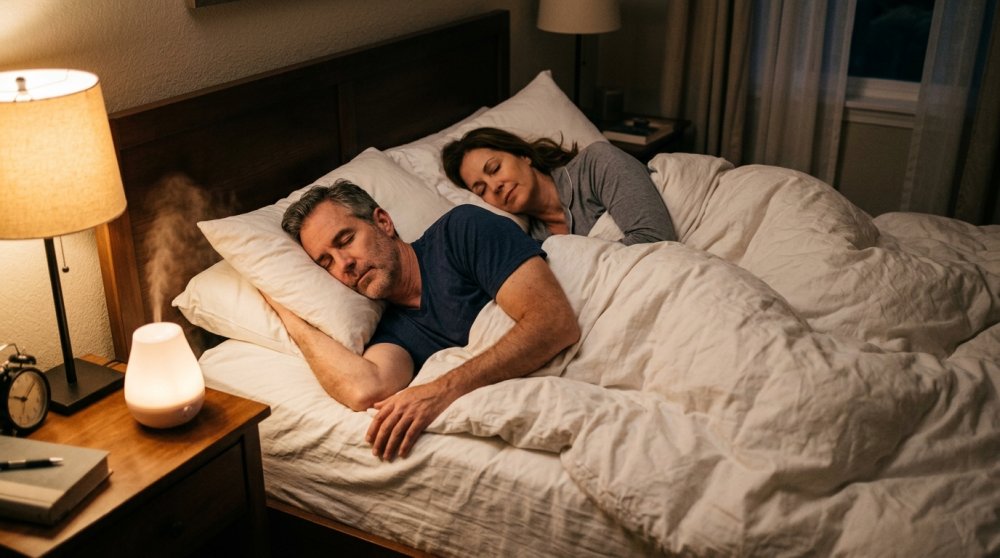
Dry air contributes to snoring by irritating membranes in the nose and throat. Adding moisture to bedroom air with a humidifier can soothe these tissues and reduce snoring.
Some people add essential oils like eucalyptus or peppermint to their humidifiers, though research on their effectiveness remains limited. The moisture itself provides the primary benefit.
Avoiding alcohol and sedative medications before bedtime can dramatically reduce snoring. These substances relax the muscles in the throat, making airway obstruction more likely.
Alcohol consumption within four to five hours of sleep increases snoring risk substantially. People who don’t normally snore often do so after drinking alcohol.
While these home remedies help many people, persistent snoring sometimes signals a more serious condition called sleep apnea. This disorder causes breathing to stop and start repeatedly during sleep and requires medical attention.
If snoring continues despite trying these natural approaches, or if you experience daytime fatigue, morning headaches, or gasping during sleep, consult your healthcare provider. These symptoms may indicate sleep apnea or other underlying health issues that need professional treatment.
The beauty of these home remedies lies in their simplicity and safety. They cost little to nothing, carry no side effects, and can be implemented immediately.
Many people find that combining several of these strategies—such as side sleeping, using a humidifier, and staying well-hydrated—yields the best results. Small changes to evening routines and sleep habits can restore peaceful nights for both snorers and their partners.
