Nutrition
Nine Ingredients That Transform Your Salad Into a Lasting Meal

Health Points
- Adding protein and fiber to salads helps maintain steady blood sugar and prolongs the feeling of fullness between meals
- Nutrient-dense toppings like chickpeas, nuts, and eggs provide essential vitamins and minerals alongside hunger-fighting macronutrients
- Combining multiple protein and fiber sources creates satisfying meals that support healthy weight management and digestive wellness
For many health-conscious Americans over 40, salads represent a reliable path to better nutrition. Yet too often, a bowl of greens leaves us hungry an hour later, reaching for snacks we’d rather avoid. The solution lies not in eating more salad, but in choosing smarter toppings that work with our bodies’ natural hunger signals.
The key to a satisfying salad centers on two nutritional powerhouses: protein and fiber. These nutrients work together to slow digestion and maintain stable blood sugar levels, helping us feel content longer after meals.
Registered dietitians consistently recommend certain ingredients that deliver both nutrients without unnecessary calories or processed additives. These whole-food options align with traditional approaches to nutrition that prioritize natural ingredients over manufactured diet products.
Chickpeas: The Mediterranean Staple
A half-cup serving of chickpeas provides approximately 6 grams of protein and 5 grams of fiber. These legumes have sustained populations around the Mediterranean for centuries, offering not just satiety but also folate, iron, and magnesium.
Roasted chickpeas add a satisfying crunch to salads while delivering nutrients our bodies recognize and process efficiently. Unlike highly processed croutons or fried toppings, chickpeas support digestive health and provide sustained energy.
Hard-Boiled Eggs: Nature’s Protein Package
One large hard-boiled egg contains about 6 grams of high-quality protein along with essential nutrients including vitamin D, B vitamins, and choline. Eggs have earned their place as a breakfast staple, but they serve equally well atop a lunch or dinner salad.
The protein in eggs includes all nine essential amino acids our bodies need but cannot produce. This complete protein profile makes eggs particularly valuable for maintaining muscle mass, which naturally declines as we age.
Almonds and Walnuts: Heart-Healthy Crunch
A quarter-cup of almonds delivers approximately 6 grams of protein and 4 grams of fiber, along with vitamin E and healthy monounsaturated fats. Walnuts provide similar benefits with the added advantage of omega-3 fatty acids, which support brain and heart health.
Nuts require minimal preparation—simply chop and sprinkle. Their natural oils contribute to the absorption of fat-soluble vitamins found in salad vegetables, making the entire meal more nutritious.
Black Beans: Fiber Champions
Black beans stand out for their impressive fiber content: a half-cup serving provides about 8 grams of fiber alongside 7 grams of protein. This combination makes them particularly effective at promoting fullness and supporting digestive regularity.
These beans also deliver anthocyanins, the same beneficial compounds found in blueberries and other dark-colored foods. Traditional diets across Latin America have long recognized black beans as a cornerstone of healthy eating.
Grilled Chicken: Lean and Versatile
Three ounces of grilled chicken breast contains approximately 26 grams of protein with minimal fat. This lean protein source has become a salad staple for good reason—it’s filling, flavorful, and provides the building blocks our bodies need for tissue repair and immune function.
Choosing grilled over fried preparation keeps calories reasonable while delivering maximum protein benefit. The neutral flavor of chicken allows the vegetables and other toppings to shine through.
Sunflower Seeds: Small but Mighty
A quarter-cup of sunflower seeds provides about 6 grams of protein and 3 grams of fiber, along with significant amounts of vitamin E and selenium. These small seeds pack nutritional power that belies their size.
Sunflower seeds offer an alternative for those with tree nut allergies while still providing the satisfying crunch and healthy fats that make salads more enjoyable and filling.
Quinoa: The Complete Grain
One cup of cooked quinoa delivers 8 grams of protein and 5 grams of fiber. Unlike most plant proteins, quinoa contains all essential amino acids, making it a complete protein source comparable to animal products.
This ancient grain adds substance to salads, transforming them from side dishes into main courses. Its mild, slightly nutty flavor complements both robust and delicate vegetables.
Edamame: Young Soybeans
A half-cup of shelled edamame provides approximately 9 grams of protein and 4 grams of fiber. These young soybeans also offer folate, vitamin K, and iron in a low-calorie package.
Edamame’s bright green color and firm texture add visual appeal and satisfying bite to salad bowls. The soybeans can be used fresh or frozen, making them a convenient option for busy households.
Pumpkin Seeds: Autumn’s Gift
Also known as pepitas, pumpkin seeds deliver about 5 grams of protein per quarter-cup along with magnesium, zinc, and healthy fats. These nutrients support immune function and bone health—concerns that become increasingly important after 40.
The subtle flavor of pumpkin seeds allows them to enhance rather than overpower other salad ingredients. They toast beautifully, developing a richer taste and even more satisfying crunch.
Building a Balanced Bowl
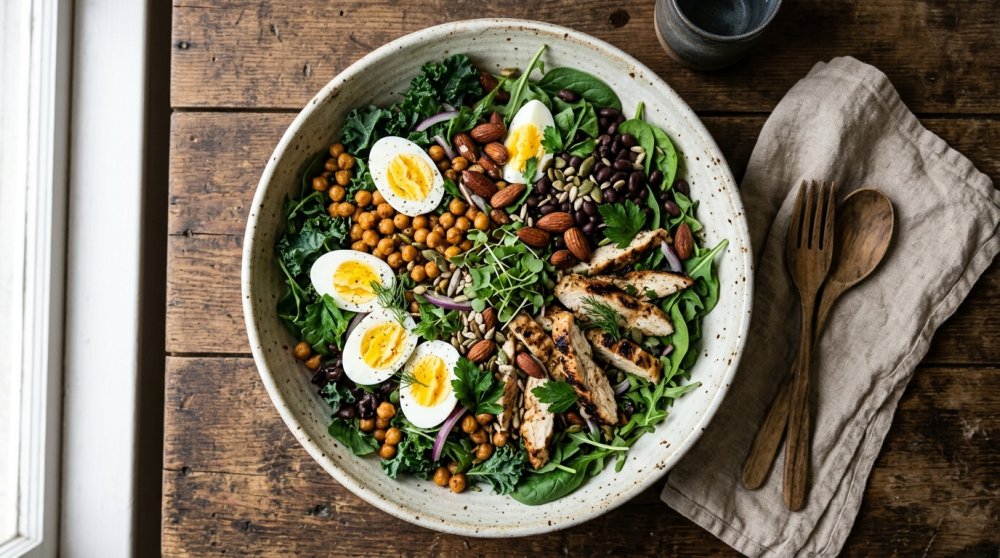
The most effective approach combines multiple protein and fiber sources in one meal. A salad featuring mixed greens, chickpeas, sliced almonds, and grilled chicken, for example, provides a spectrum of nutrients and textures that satisfy both nutritionally and sensually.
This strategy aligns with traditional wisdom about varied diets while supporting modern understanding of how different nutrients work together. The fiber feeds beneficial gut bacteria, the protein maintains muscle mass, and the combination keeps hunger at bay.
Starting with a base of dark, leafy greens ensures adequate vitamin and mineral intake. Adding two or three of these protein-and-fiber-rich toppings transforms that base into a complete meal that supports healthy weight, stable energy, and long-term wellness.
For Americans committed to maintaining vitality through their middle years and beyond, these salad additions represent simple, practical steps toward better health. They require no special equipment, fit within most budgets, and align with time-tested nutritional principles that have sustained healthy populations for generations.
