Movement
Why Experts Say This Low-Impact Workout Could Transform Your Core Strength After 40

Health Points
- Pilates builds lean muscle and core strength without high-impact stress on aging joints
- Regular practice improves posture, balance, and flexibility — key factors in fall prevention for adults over 40
- Mind-body connection in Pilates reduces stress while strengthening stabilizer muscles often neglected in traditional workouts
For adults navigating the challenges of staying fit beyond 40, finding a workout that builds strength without punishing the body can feel impossible. Yet one century-old practice is experiencing a renaissance among health-conscious Americans seeking sustainable fitness solutions.
Pilates, developed in the early 20th century by German physical trainer Joseph Pilates, emphasizes controlled movements, proper breathing, and core engagement. The method has gained renewed attention as research continues to validate what practitioners have long claimed: meaningful physical transformation without the joint damage associated with high-impact exercise.
The appeal centers on five evidence-backed health benefits that resonate particularly with those prioritizing longevity and wellness in their middle years.
Core Strength That Protects Your Spine
Unlike abdominal exercises that isolate surface muscles, Pilates targets deep stabilizers surrounding the spine. These muscles — the transverse abdominis, multifidus, and pelvic floor — create an internal support system that protects against back pain and injury.
Research published in the Journal of Orthopaedic & Sports Physical Therapy found that participants with chronic low back pain who practiced Pilates experienced significant pain reduction and functional improvement. For adults facing the postural consequences of desk work and age-related muscle loss, this internal reinforcement offers practical daily relief.
The controlled movements require constant core engagement, training these muscles to activate properly during everyday activities. Over time, this neuromuscular patterning translates into better lifting mechanics, improved posture, and reduced strain on vulnerable lower back structures.
Flexibility Without Forcing
Traditional stretching often involves passive holds that can strain cold muscles. Pilates integrates flexibility work into strength-building movements, warming tissues while gradually increasing range of motion.
The method emphasizes spinal articulation — moving the vertebrae sequentially rather than as a rigid unit. This controlled segmentation maintains and improves the mobility necessary for pain-free movement as intervertebral discs naturally lose hydration with age.
Hip flexibility also improves through Pilates leg circles, side-lying leg lifts, and controlled hip hinges. Enhanced hip mobility reduces compensatory stress on the lower back and knees, joints particularly vulnerable to wear in middle age.
Balance Training That Prevents Falls
Fall prevention becomes increasingly important after 40, when declining proprioception (body position awareness) and muscle strength create injury risks. Pilates addresses both factors simultaneously.
Many exercises require maintaining stability on unstable surfaces or in asymmetrical positions. Single-leg standing work, plank variations, and teaser poses challenge the neuromuscular system to make rapid micro-adjustments that keep the body upright.
A study in Age and Ageing demonstrated that older adults who participated in Pilates showed improved balance scores and reduced fall risk compared to control groups. These protective benefits compound over time as the nervous system becomes more efficient at preventing loss of balance before it occurs.
Lean Muscle Without Bulk
For those seeking functional strength rather than muscle mass, Pilates builds lean, elongated muscles through eccentric contractions. Movements emphasize controlled lengthening under tension rather than the shortening contractions typical of traditional weight training.
This approach creates strength throughout a muscle’s full range of motion rather than just at peak contraction. The result is practical power for daily activities — carrying groceries, climbing stairs, lifting grandchildren — without the joint stress or muscle imbalances sometimes created by isolated strength training.
The low-impact nature makes it sustainable for adults managing arthritis, prior injuries, or cardiovascular considerations that make high-intensity training inadvisable. Resistance comes from body weight, springs, or light resistance bands, allowing precise load calibration.
Mind-Body Connection That Reduces Stress
Pilates demands complete concentration on breath coordination, precise movement execution, and body position awareness. This focused attention creates a moving meditation that interrupts stress response patterns.
Research in Complementary Therapies in Medicine found that regular Pilates practice reduced cortisol levels and improved psychological wellbeing. Participants reported decreased anxiety and enhanced mood — benefits that extended beyond workout sessions.
The breathing patterns taught in Pilates activate the parasympathetic nervous system, counteracting the chronic stress state many adults experience. Deep diaphragmatic breathing coupled with controlled movement creates physiological relaxation while building physical strength.
Getting Started Safely
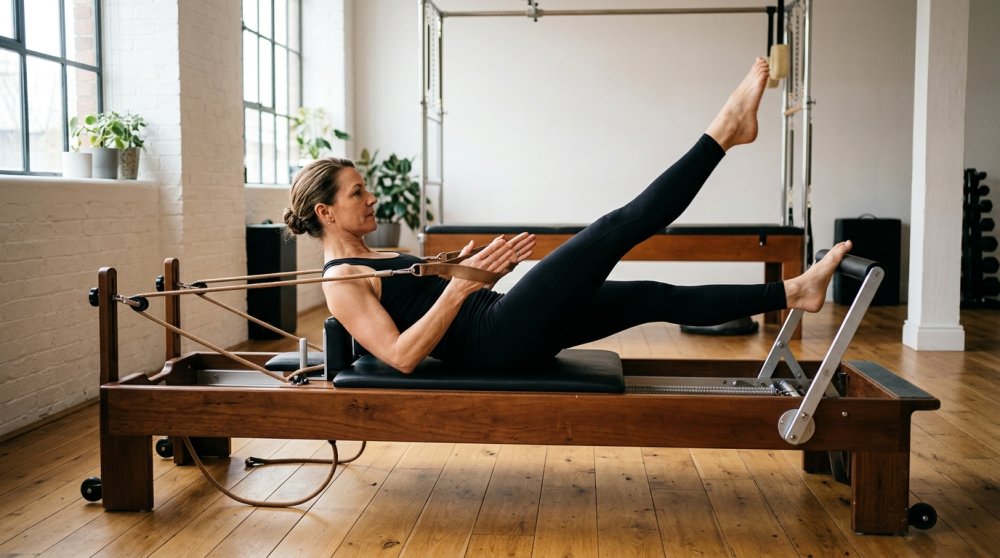
For adults new to Pilates, beginning with qualified instruction ensures proper form and prevents compensatory patterns. Many fitness centers offer mat classes, while specialized studios provide equipment-based sessions using reformers, Cadillac units, and other apparatus.
Mat work requires no equipment and can be practiced at home, making it accessible for those with schedule or budget constraints. However, the precision required for benefit means at least initial professional guidance is advisable.
Starting with two to three sessions weekly allows adaptation while minimizing soreness. As with any new exercise program, those with existing health conditions should consult healthcare providers before beginning.
The sustainability of Pilates — its low injury risk and adaptability across fitness levels — makes it particularly valuable for adults seeking long-term wellness solutions. Unlike high-impact activities that become increasingly difficult to maintain safely with age, Pilates can progress alongside practitioners for decades.
For those prioritizing strength, flexibility, and functional fitness in their middle years and beyond, this time-tested method offers evidence-backed benefits without compromise to joint health or overall wellbeing.
