Movement
This 20-Minute Pilates Routine Strengthens Your Entire Body Without Equipment

Health Points
- A 20-minute full-body Pilates workout can be performed at home without any equipment
- The routine targets core strength, flexibility, and muscle endurance through controlled movements
- Pilates exercises engage multiple muscle groups simultaneously while being gentle on joints
For those seeking an efficient, equipment-free workout that strengthens the entire body, a 20-minute Pilates routine offers remarkable benefits. This time-tested exercise method continues to gain popularity among fitness enthusiasts of all ages, particularly those looking for low-impact alternatives to traditional gym workouts.
Pilates focuses on controlled, deliberate movements that engage the core while simultaneously working other muscle groups. The beauty of this approach lies in its accessibility—no special equipment is required, making it perfect for home practice.
The workout begins with foundational movements designed to activate the core and establish proper breathing patterns. These preliminary exercises prepare the body for more challenging sequences while reducing the risk of injury. Proper form remains essential throughout each movement.
Core engagement serves as the foundation for every Pilates exercise. By maintaining tension in the abdominal muscles, practitioners protect their lower back while maximizing the effectiveness of each movement. This mind-body connection distinguishes Pilates from many other fitness modalities.
A typical 20-minute session includes exercises targeting the abdominals, back, hips, and legs. Movements flow smoothly from one to the next, maintaining an elevated heart rate while building strength. The continuous nature of the workout provides both cardiovascular and muscular benefits.
The hundred, a classic Pilates exercise, involves lying on your back with legs extended at a 45-degree angle while pumping the arms vigorously. This movement warms up the body and engages the deep abdominal muscles. Five breaths in and five breaths out constitute one set.
Single-leg stretches challenge balance and coordination while strengthening the hip flexors and core. Alternating legs in a controlled manner ensures both sides of the body receive equal attention. Maintaining a lifted head and shoulders intensifies the abdominal work.
Rolling exercises massage the spine while testing core strength and control. These movements require smooth, fluid motion rather than momentum. Practitioners with back concerns should approach these exercises cautiously or skip them entirely.
The bridge exercise targets the glutes, hamstrings, and lower back. By lifting the hips toward the ceiling while keeping shoulders grounded, this movement builds posterior chain strength. Adding single-leg variations increases the challenge significantly.
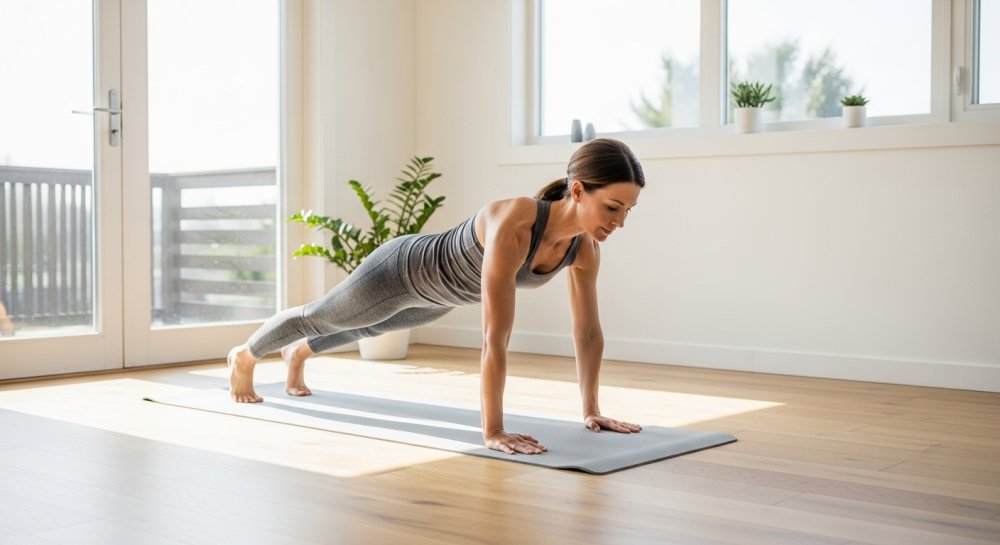
Plank variations provide exceptional full-body conditioning. From traditional planks to side planks and plank with leg lifts, these positions engage every major muscle group. Proper alignment prevents unnecessary strain on the wrists and shoulders.
The swan exercise strengthens the back extensors while opening the chest and shoulders. This gentle backbend counteracts the forward-leaning posture many people adopt throughout their day. Controlled movement prevents hyperextension of the lower back.
Side-lying leg lifts tone the outer thighs and hips while challenging core stability. Keeping the body in perfect alignment—stacked shoulders and hips—ensures maximum benefit. Small, controlled movements prove more effective than large, momentum-driven kicks.
The teaser represents one of Pilates’ most challenging exercises, combining core strength with balance and control. Lifting both the upper body and legs simultaneously creates a V-shape position. Modifications allow practitioners at different fitness levels to participate safely.
Breathing properly throughout the workout enhances its effectiveness. Pilates employs lateral breathing, expanding the ribcage sideways rather than letting the belly rise. This technique maintains core engagement while providing adequate oxygen to working muscles.
Flexibility improvements accompany the strength gains from regular Pilates practice. The controlled stretching inherent in many movements gradually increases range of motion. This dual benefit makes Pilates particularly valuable for maintaining mobility as we age.
Joint health receives special consideration in Pilates programming. The low-impact nature of the exercises protects joints while building the surrounding musculature. This approach proves especially beneficial for individuals managing arthritis or previous injuries.
Mental focus required during Pilates practice provides stress relief beyond the physical benefits. The concentration needed to maintain proper form and breathing creates a meditative quality. Many practitioners report feeling mentally refreshed after sessions.
Consistency matters more than intensity when beginning a Pilates practice. Performing the 20-minute routine three to four times weekly produces noticeable results within several weeks. Gradual progression prevents burnout and reduces injury risk.
Modifications make Pilates accessible to people at various fitness levels. Beginners can reduce repetitions, decrease range of motion, or add supportive props. Advanced practitioners increase difficulty by adding resistance bands or incorporating more complex variations.
The investment in learning proper technique pays dividends in long-term results. While Pilates appears simple, subtle adjustments dramatically affect its effectiveness. Consider taking initial guidance from qualified instructors through online classes or videos.
Recovery time between Pilates sessions typically proves shorter than after high-impact workouts. The controlled nature of the movements causes less muscle damage and inflammation. This allows for more frequent training without overexertion.
Combining Pilates with other forms of exercise creates a well-rounded fitness program. The core strength and body awareness developed through Pilates enhance performance in walking, swimming, cycling, and resistance training. Cross-training prevents plateaus and maintains engagement.
Age presents no barrier to beginning Pilates practice. The scalable nature of the exercises accommodates various physical capabilities and limitations. Many individuals discover Pilates later in life and wish they had started sooner.
Space requirements remain minimal for home Pilates practice. A yoga mat provides cushioning, though even this proves optional. The ability to exercise effectively in limited space removes common obstacles to maintaining consistent fitness routines.
Long-term adherence to Pilates often exceeds that of more intense workout programs. The gentle yet effective nature prevents burnout while still delivering results. Building this sustainable practice supports lifelong health and wellness.
