Nutrition
The One Step Nutrition Experts Say Most People Skip With Canned Beans

Health Points
- Rinsing canned beans can reduce sodium content by up to 41%, helping manage blood pressure and heart health
- A simple 3-minute rinse removes excess salt and lectins that may cause digestive discomfort
- Draining and rinsing also helps preserve the nutritional benefits of beans while making them easier to digest
Canned beans are a pantry staple for good reason—they’re affordable, convenient, and packed with protein and fiber. But there’s one crucial step most people overlook before adding them to recipes or eating them straight from the can.
Nutrition experts say that simple step is rinsing. And it could make a significant difference for your health, especially if you’re watching your sodium intake or dealing with digestive issues.
“Rinsing canned beans is one of the easiest ways to instantly improve their nutritional profile,” says registered dietitian Sarah Thompson, who specializes in heart-healthy eating. “Most people don’t realize just how much sodium is sitting in that canning liquid.”
The numbers are striking. A typical can of beans contains between 300 and 600 milligrams of sodium per serving, much of it concentrated in the liquid used for preservation. Research shows that draining and rinsing canned beans for just three minutes can reduce sodium content by 36% to 41%.
For adults over 40, this simple habit becomes even more important. The American Heart Association recommends no more than 2,300 milligrams of sodium daily, with an ideal limit of 1,500 milligrams for those managing high blood pressure or cardiovascular concerns—conditions that become more common with age.
“Every little reduction in sodium adds up throughout the day,” Thompson notes. “If you’re using canned beans in multiple meals per week, rinsing them can help you stay within healthy sodium ranges without sacrificing convenience.”
Beyond sodium reduction, rinsing serves another important purpose: removing lectins and oligosaccharides. These naturally occurring compounds can cause gas, bloating, and digestive discomfort in some people. While cooking breaks down most lectins, traces can remain in the canning liquid.
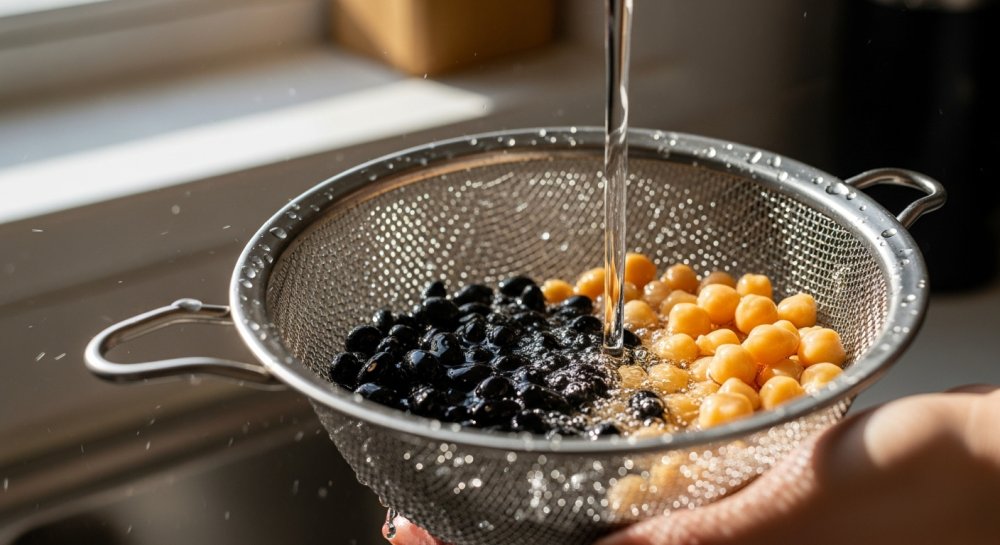
Registered dietitian nutritionist Michael Chen explains the process simply. “Place your beans in a fine-mesh strainer or colander, run cold water over them for two to three minutes, and gently stir them with your hand or a spoon. You’ll see cloudy water drain away—that’s the excess sodium and starches leaving.”
The technique works for all varieties: black beans, kidney beans, chickpeas, white beans, and pinto beans all benefit equally from a quick rinse.
Some home cooks worry that rinsing removes nutrients along with sodium. While it’s true that small amounts of water-soluble vitamins like folate may wash away, the loss is minimal compared to the health benefits of sodium reduction. The beans retain their protein, fiber, iron, and most of their vitamin content.
“The nutritional trade-off heavily favors rinsing,” Chen says. “You’re removing something potentially harmful while keeping the vast majority of beneficial nutrients intact.”
There is one exception to the rinsing rule: recipes that specifically call for the bean liquid, sometimes called aquafaba. This starchy liquid can be used as an egg substitute in baking or to create vegan meringues. In these cases, the recipe is designed with the liquid’s sodium content in mind.
For everyday cooking—soups, salads, tacos, grain bowls—rinsing remains the best practice. The beans will taste fresher, blend better with other flavors, and support rather than compromise your health goals.
Making rinsing a habit takes almost no extra time but delivers measurable benefits for cardiovascular health and digestive comfort. For anyone looking to make small, sustainable improvements to their diet, this may be one of the simplest changes with the biggest payoff.
As Thompson puts it simply: “Open, drain, rinse, enjoy. Four steps to healthier beans every single time.”
