Movement
The Wall Sit Test Everyone Over 40 Should Try

Health Points
- Wall sits test lower body strength and muscular endurance, key indicators of functional fitness as we age
- Average adults should aim to hold a wall sit for 20-30 seconds, while fit individuals can maintain the position for 60 seconds or longer
- This simple exercise requires no equipment and can reveal important information about your cardiovascular health and injury risk
A simple test against your living room wall might reveal more about your health than you’d expect. The wall sit — that uncomfortable exercise where you lean back against a wall with knees bent at 90 degrees — has emerged as a reliable measure of lower body strength and overall fitness.
Health experts say the duration you can hold this position offers valuable insights into muscular endurance, functional fitness, and even cardiovascular health. For those wondering if they measure up, the benchmarks vary based on fitness level and age.
According to fitness professionals, the average adult should be able to maintain a proper wall sit for 20 to 30 seconds. Those with above-average fitness typically hold the position for 45 to 60 seconds. Elite athletes and highly trained individuals often exceed 90 seconds, with some maintaining the pose for two minutes or more.
The wall sit primarily engages the quadriceps, glutes, and core muscles — all critical for daily activities like climbing stairs, getting up from chairs, and maintaining balance. These movements become increasingly important for maintaining independence as we age.
Physical therapists frequently use the wall sit test to assess injury risk and functional mobility. Poor performance may indicate muscle imbalances or weaknesses that could lead to falls or other injuries. The exercise also serves as a practical screening tool for knee health and joint stability.
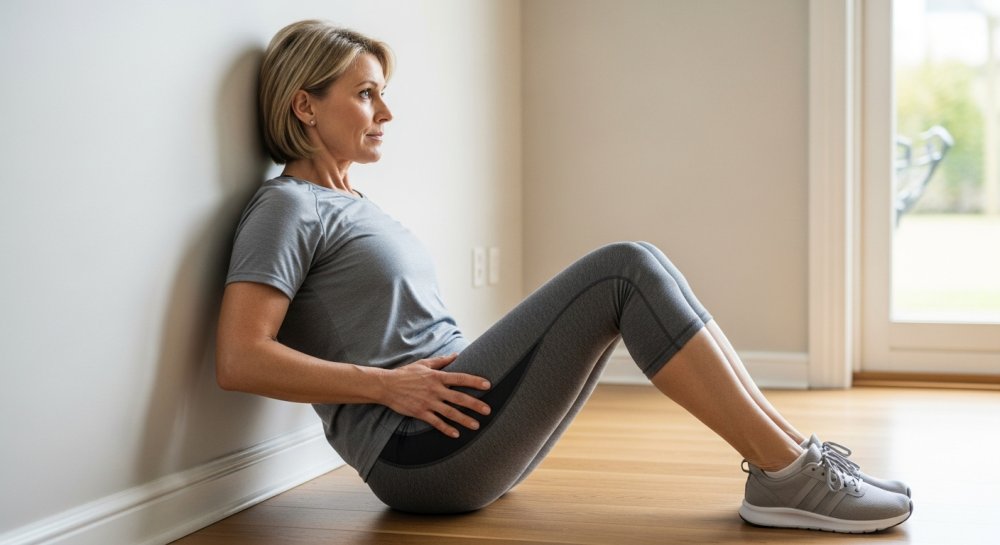
To perform the test correctly, stand with your back flat against a wall and feet shoulder-width apart. Slide down until your thighs are parallel to the floor and your knees form a 90-degree angle. Your knees should align directly above your ankles, not extending past your toes.
Keep your back pressed firmly against the wall throughout the hold, with arms either at your sides or crossed over your chest. Breathe normally and maintain the position until muscle fatigue forces you to stop. Time yourself to establish your baseline.
For those over 40, maintaining lower body strength through exercises like wall sits becomes particularly important. Research shows that leg strength correlates strongly with longevity and quality of life in older adults. Strong legs support cardiovascular health, bone density, and metabolic function.
If your initial test reveals room for improvement, the good news is that wall sit endurance responds quickly to training. Fitness experts recommend practicing the exercise three times per week, gradually increasing hold times by 5 to 10 seconds each week.
Begin with whatever duration you can manage, even if it’s just 10 seconds. Rest for 60 to 90 seconds between sets, and complete three to four sets per session. Consistency matters more than intensity when building endurance.
Beyond raw hold time, form quality matters significantly. A properly executed 30-second wall sit provides more benefit than a poorly performed 60-second attempt. Watch for common mistakes like allowing knees to drift inward, lifting heels off the floor, or arching the lower back away from the wall.
The wall sit also offers a convenient way to strengthen muscles without placing excessive stress on joints. Unlike squats or lunges that involve movement through ranges of motion, the isometric nature of wall sits builds strength while minimizing impact — particularly beneficial for those managing arthritis or recovering from injuries.
Physical therapists note that improvements in wall sit duration often translate to better performance in daily activities. Patients who increase their hold times typically report easier stair climbing, reduced knee pain, and improved balance during routine tasks.
For variety and progressive challenge, consider adding small adjustments once you can comfortably hold the basic position for 60 seconds. Lifting one foot slightly off the ground, holding light weights, or positioning a medicine ball between your knees all increase difficulty while targeting slightly different muscle groups.
The test’s simplicity makes it accessible for nearly everyone, regardless of fitness background or access to gym equipment. A wall and a timer are the only requirements, making it easy to track progress over time and maintain accountability.
Health professionals emphasize that wall sit performance represents just one piece of the fitness puzzle. A comprehensive approach to wellness includes cardiovascular exercise, flexibility work, and attention to nutrition and sleep. However, the wall sit provides a quick, practical snapshot of functional strength.
Before beginning any new exercise program, including wall sit training, consult with a healthcare provider — especially if you have existing knee problems, high blood pressure, or other medical concerns. While generally safe, the exercise does create temporary increases in blood pressure due to sustained muscle contraction.
For those who discover their wall sit endurance falls below average, view it as an opportunity rather than a setback. The body responds remarkably well to consistent training, particularly for individuals just beginning a strength routine. Measurable improvements often appear within just a few weeks of regular practice.
Taking the wall sit test today establishes a baseline for tracking future progress. Whether you’re maintaining current fitness levels or working to regain strength, this simple measure offers concrete feedback and motivation to keep moving forward.

Dennis
May 20, 2026 at 5:07 pm
Want to learn more fitness exercises