Movement
Six Movements Could Transform Your Shoulder Health After 40

Health Points
- Physical therapists recommend six specific shoulder exercises to build strength and prevent common injuries in adults over 40
- Strong shoulders support daily activities from lifting groceries to reaching overhead, while weak rotator cuffs increase injury risk
- Experts suggest starting with light resistance and gradually progressing to maintain joint health and mobility
As we age, maintaining shoulder strength becomes increasingly important for everyday independence and injury prevention. Physical therapists have identified six key exercises that can help adults over 40 build resilience in this vulnerable joint complex.
The shoulder joint allows remarkable range of motion but relies heavily on surrounding muscles for stability. Without proper conditioning, the rotator cuff and supporting structures become susceptible to tears, impingement, and chronic pain that can limit basic activities.
“The shoulder is one of the most mobile joints in the body, which also makes it one of the most unstable,” explains certified physical therapist Dr. Michael Reynolds. “Strengthening the muscles that support it is essential for maintaining function as we get older.”
The six recommended exercises target different muscle groups around the shoulder complex. External rotation exercises strengthen the rotator cuff, while scapular retraction movements improve posture and upper back support.
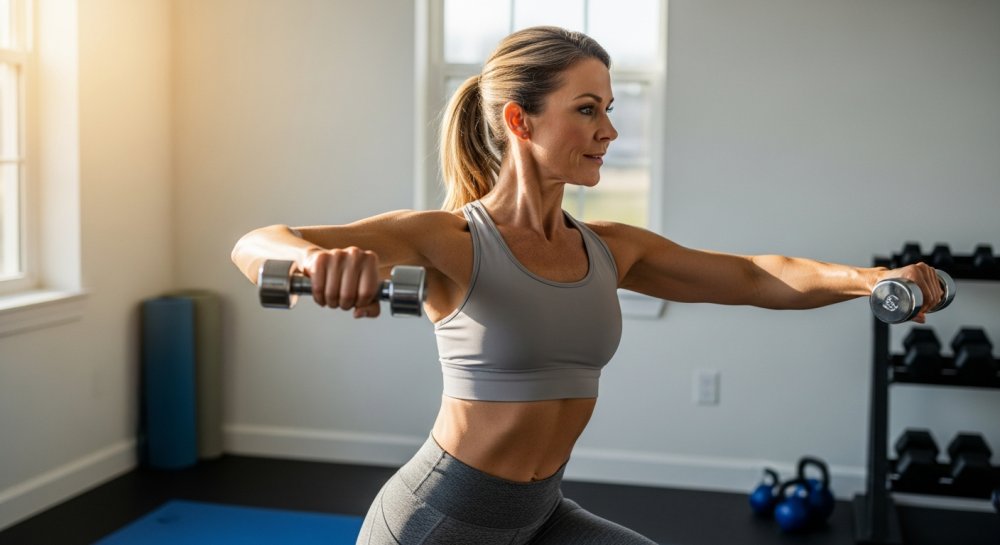
Overhead presses build deltoid strength for lifting tasks, and front raises address the anterior shoulder muscles. Lateral raises target the middle deltoids, and rows strengthen the posterior chain that often weakens with age.
Physical therapists emphasize starting with light resistance bands or small weights, particularly for those new to strength training. Proper form matters more than heavy loads when building foundational shoulder stability.
“Many people rush into heavy weights and end up compensating with other muscles, which defeats the purpose,” notes Dr. Sarah Chen, a sports medicine specialist. “Slow, controlled movements with lighter resistance produce better results for joint health.”
The exercises can be performed two to three times weekly, allowing adequate recovery between sessions. Each movement should be completed for 10-15 repetitions, focusing on smooth motion through the full range without pain.
Warning signs to watch for include sharp pain, clicking sensations, or weakness when performing overhead activities. These symptoms may indicate underlying issues requiring professional evaluation before continuing an exercise program.
Beyond structured exercise, physical therapists recommend integrating shoulder-friendly habits into daily routines. Maintaining good posture while sitting, taking breaks from repetitive overhead work, and avoiding sleeping positions that compress the shoulder all contribute to long-term joint health.
For adults managing existing shoulder conditions like arthritis or previous injuries, consulting with a physical therapist can help modify these exercises appropriately. Individual limitations should guide intensity and progression rather than generic recommendations.
“Prevention is always easier than rehabilitation,” Dr. Reynolds adds. “Taking time now to strengthen your shoulders can mean the difference between independence and limitation later in life.”
The commitment to shoulder health pays dividends in maintaining quality of life. Strong, stable shoulders support not only physical activities but also confidence in performing daily tasks without fear of injury or pain.
