Health
Why Dermatologists Are Turning to This Surprising Treatment for Stubborn Psoriasis

Health Points
- Phototherapy uses controlled UV light exposure to slow overactive skin cell growth in psoriasis patients
- Three main types of light therapy offer different wavelengths and intensities for varying severity levels
- Clinical studies show 50-90% skin clearance rates when combined with proper medical supervision
For the millions of Americans living with psoriasis, the search for relief often feels endless. But an established treatment that harnesses the power of light is gaining renewed attention from dermatologists nationwide.
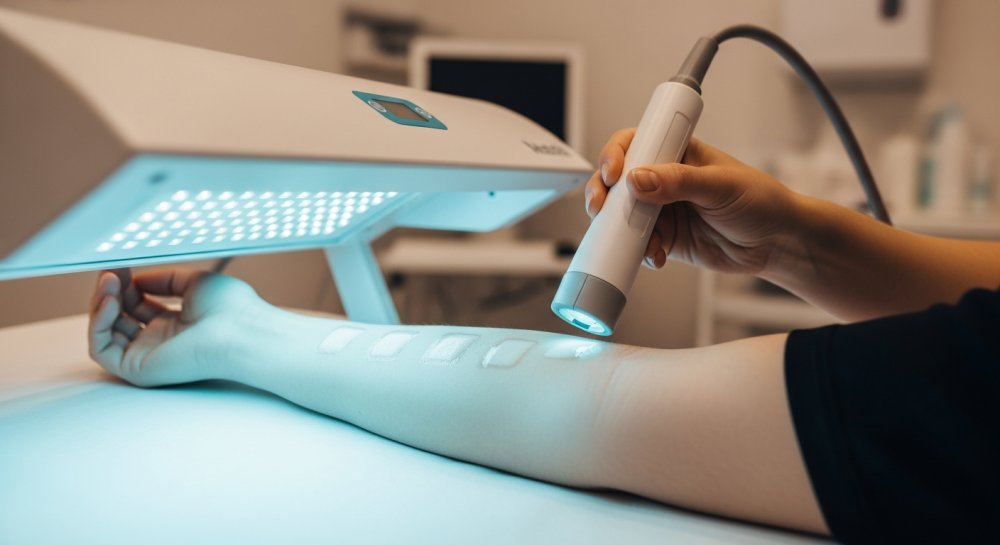
Light therapy, also called phototherapy, exposes affected skin to carefully controlled doses of ultraviolet light. The treatment works by slowing the rapid skin cell turnover that creates the thick, scaly patches characteristic of psoriasis.
“We’ve been using phototherapy for decades because it addresses the root immune response,” says Dr. Rachel Morrison, a board-certified dermatologist at a leading skincare center. “For many patients, it offers significant improvement without the systemic side effects of oral medications.”
Three primary types of phototherapy exist for psoriasis treatment. Narrowband UVB therapy represents the most common approach, using specific ultraviolet B wavelengths to target inflammation. Broadband UVB delivers a wider spectrum of light, though it’s less frequently prescribed today. PUVA therapy combines psoralen medication with UVA light exposure for more severe cases.
Treatment typically begins with two to three sessions weekly at a medical facility. Each session lasts just minutes, with exposure times gradually increasing as skin builds tolerance. Most patients notice improvement within four to six weeks of consistent treatment.
The effectiveness varies by individual, but clinical data reveals promising outcomes. Studies indicate that narrowband UVB therapy achieves 50-75% skin clearance in most patients. For those with more resistant psoriasis, combination approaches can push clearance rates above 90%.
“The beauty of phototherapy is its targeted action,” Dr. Morrison explains. “We’re essentially retraining the immune system’s response in the skin without affecting the entire body.”
Safety considerations remain paramount. Sessions require medical supervision to prevent overexposure and monitor for side effects. Short-term effects may include mild sunburn-like reactions or increased skin dryness. Long-term risks involve premature skin aging and a slight increase in skin cancer risk with extended use.
Home phototherapy units have become available for patients with access challenges or scheduling constraints. These devices require a prescription and proper training. Insurance coverage varies but often includes phototherapy when medicated creams prove insufficient.
The commitment level differs significantly from topical treatments. Patients must maintain consistent appointment schedules and protect treated skin from additional sun exposure. Missing sessions can delay results or reduce effectiveness.
Recent technological advances have refined treatment protocols. Targeted phototherapy devices now deliver light exclusively to affected areas, minimizing exposure to healthy skin. This precision approach reduces treatment time while maintaining effectiveness.
For individuals over 40, phototherapy offers particular advantages. Older adults often manage multiple health conditions and take various medications. Light therapy’s localized action means fewer drug interactions and reduced strain on organs that process systemic medications.
“Many of my mature patients prefer phototherapy because it doesn’t add to their medication regimen,” notes Dr. Morrison. “They’re already managing enough pills and want treatments that work without complicating their health routine.”
Seasonal patterns affect treatment planning. Some patients use phototherapy during winter months when reduced sun exposure typically worsens symptoms. Others maintain year-round schedules for consistent control.
Combining phototherapy with other treatments often yields superior results. Moisturizers applied before sessions help light penetrate more effectively. Certain topical medications work synergistically with light exposure. Dermatologists customize these combinations based on individual response patterns.
The psychological benefits extend beyond physical improvement. Visible skin clearing restores confidence and reduces the self-consciousness that often accompanies psoriasis. Regular appointments also provide ongoing professional monitoring and support.
Not every patient qualifies as an ideal candidate. Those with lupus or certain genetic conditions that increase sun sensitivity should explore alternative options. A history of skin cancer may preclude phototherapy or require modified protocols.
The financial investment varies widely. Facility-based treatments typically cost $50-150 per session before insurance. Home units range from $2,000-5,000 upfront but eliminate ongoing appointment fees.
Patient persistence determines ultimate success. Unlike a topical cream applied at home, phototherapy demands schedule adherence and transportation to medical facilities. This commitment level challenges some individuals but proves manageable for motivated patients.
“The patients who do best are those who view it like physical therapy,” Dr. Morrison observes. “It requires showing up consistently, but the results justify the investment of time.”
Maintenance protocols follow initial clearing. Reduced frequency sessions help sustain improvements while minimizing cumulative UV exposure. Some patients transition to as-needed treatments during flare-ups.
The therapy’s track record spans generations of dermatological practice. While newer biologic medications dominate headlines, phototherapy remains a cornerstone treatment valued for its proven effectiveness and favorable safety profile when properly administered.
For those exploring treatment options, consultation with a board-certified dermatologist provides personalized assessment. They can evaluate psoriasis severity, review medical history, and determine whether phototherapy aligns with individual health goals and lifestyle constraints.
