Movement
The Upper Body Workout That Transforms Strength After 40

Health Points
- Chest exercises strengthen the pectoralis major and minor muscles while engaging shoulders, triceps, and core for functional everyday movement
- Regular chest training improves posture, supports joint stability, and enhances activities from pushing open doors to lifting groceries
- A balanced routine incorporating bodyweight moves, dumbbells, and resistance bands delivers measurable strength gains at any fitness level
Building upper body strength becomes increasingly important as we age, and chest exercises offer some of the most effective ways to maintain functional fitness. The chest muscles — comprising the pectoralis major and pectoralis minor — work in coordination with shoulders, triceps, and core to power everyday movements we often take for granted.
“Strong chest muscles are essential for maintaining independence and quality of life,” explains certified personal trainer Jessica Matthews. “These exercises don’t just build muscle; they support better posture, protect shoulder joints, and make daily tasks significantly easier.”
The beauty of chest training lies in its versatility. Whether you’re working out at home or in a gym, exercises can be modified to match your current fitness level. Bodyweight movements like push-ups provide an excellent starting point, while dumbbells and resistance bands add progressive challenge as strength improves.
Push-ups remain the gold standard for chest development. This classic exercise requires no equipment and can be performed anywhere. Standard push-ups engage the entire chest, but variations target different areas: incline push-ups emphasize the lower chest, while decline versions shift focus upward.
“The key to effective push-ups is maintaining proper form,” notes physical therapist Dr. Michael Chen. “Keep your body in a straight line from head to heels, lower until your chest nearly touches the ground, and push back up with control.”
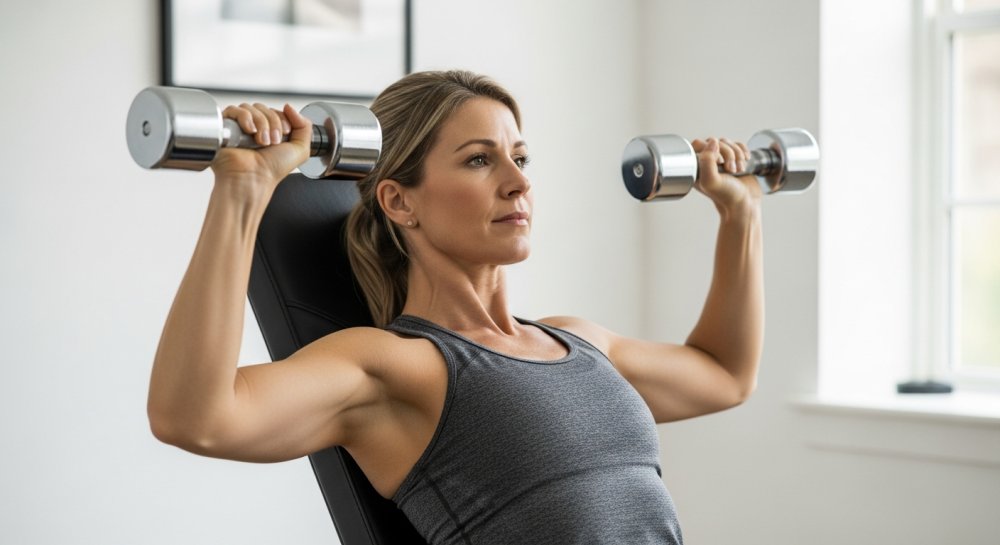
Dumbbell chest presses offer exceptional muscle-building benefits. Lying on a bench or stability ball, pressing dumbbells upward works the chest while requiring stabilizer muscles to balance the weights. This exercise allows for a greater range of motion than barbell pressing, promoting better muscle development and joint health.
Chest flyes isolate the pectoral muscles through a wide arc of motion. Using dumbbells or cables, this movement stretches and contracts the chest fibers in a way that pressing exercises cannot replicate. The exercise is particularly effective for developing the inner chest and improving muscle definition.
Resistance band chest presses provide constant tension throughout the movement, stimulating muscle growth while being gentle on joints. Bands are portable, affordable, and ideal for home workouts or travel. The resistance increases as the band stretches, maximizing muscle engagement at the top of each repetition.
Dips target the lower chest with remarkable efficiency. Using parallel bars or even a sturdy chair, this bodyweight exercise builds serious strength. Leaning slightly forward during dips shifts emphasis to the chest rather than the triceps.
“Dips are among the most challenging chest exercises, but they deliver outstanding results,” says strength coach Amanda Rodriguez. “Start with assisted variations if needed, and progress gradually to full bodyweight dips.”
Cable crossovers allow precise targeting of chest muscles from multiple angles. Adjusting the cable height changes which portion of the chest receives primary stimulation. High-to-low crossovers emphasize the lower chest, while low-to-high movements target the upper region.
Incline dumbbell presses specifically develop the upper chest, an area that often receives insufficient attention. Setting a bench to a 30-45 degree angle and pressing dumbbells overhead creates balanced chest development and improves overall upper body aesthetics.
Medicine ball push-ups add an element of instability that engages core muscles more intensely than standard push-ups. Placing one or both hands on a medicine ball challenges balance while building chest strength, improving functional fitness for real-world activities.
Plate presses offer a unique squeeze component that intensifies muscle contraction. Holding a weight plate between your palms and pressing it away from your chest while squeezing engages the inner chest fibers in a way traditional presses cannot match.
Plyometric push-ups develop explosive power by incorporating a jumping element. Pushing off the ground with enough force to lift your hands creates fast-twitch muscle fiber recruitment, boosting both strength and athletic performance.
Creating an effective chest workout requires balancing these exercises thoughtfully. Fitness experts recommend performing chest exercises 2-3 times weekly, allowing adequate recovery between sessions. Each workout should include 3-4 different exercises, with 3-4 sets of 8-12 repetitions per movement.
“Recovery is when muscles actually grow stronger,” emphasizes exercise physiologist Dr. Sarah Thompson. “Training chest every day prevents proper recovery and limits your progress. Give muscles at least 48 hours between sessions.”
Proper breathing technique enhances performance and safety. Exhale during the exertion phase — the push in push-ups or the press in chest presses — and inhale during the lowering phase. This breathing pattern stabilizes the core and maintains blood pressure at healthy levels.
Warming up before chest training prevents injury and improves performance. Five to ten minutes of light cardio increases blood flow to muscles, while dynamic stretches prepare joints for the work ahead. Arm circles, shoulder rolls, and light band pulls make excellent warm-up movements.
Progressive overload — gradually increasing the challenge over time — drives continuous improvement. This might mean adding repetitions, increasing weight, reducing rest periods, or trying more difficult exercise variations. Small, consistent increases yield sustainable results without overwhelming the body.
Form always trumps weight or repetition count. Performing exercises with proper technique prevents injury and ensures targeted muscles receive appropriate stimulation. If maintaining good form becomes impossible, reduce the weight or take a longer rest period.
Incorporating chest exercises into a comprehensive fitness program delivers benefits that extend far beyond appearance. Stronger chest muscles improve posture by counteracting the forward shoulder slouch common in modern sedentary lifestyles. This postural improvement reduces neck and back pain while projecting confidence.
Functional strength gained from chest training translates directly to everyday activities. Pushing open heavy doors, lifting children or grandchildren, moving furniture, and carrying grocery bags all become easier with stronger chest muscles. This practical strength helps maintain independence as we age.
“The goal isn’t to become a bodybuilder,” clarifies personal trainer Marcus Johnson. “The goal is to build enough strength to live life fully, without limitation. Chest exercises are a cornerstone of that functional fitness.”
Bone density improves with resistance training, including chest exercises. Weight-bearing movements stimulate bone formation, reducing osteoporosis risk — a particular concern for adults over 40. Stronger bones mean reduced fracture risk and better overall skeletal health.
Metabolic benefits accompany muscle development. Muscle tissue burns more calories at rest than fat tissue, so building chest muscles contributes to a healthier metabolism and easier weight management. This metabolic advantage compounds over time, supporting long-term health goals.
Starting a chest exercise routine requires no special equipment or gym membership. Bodyweight exercises performed consistently deliver measurable improvements in strength and function. As fitness improves, minimal equipment like resistance bands or adjustable dumbbells expands exercise options without breaking the budget.
Consistency matters more than perfection. Training chest muscles twice weekly with proper form and progressive challenge produces better results than sporadic intense sessions. Building the habit creates the foundation for lasting strength gains and improved health.
