Movement
The Upper Body Strength Secret Most People Over 40 Are Missing

Health Points
- Chest exercises strengthen not just the pectoral muscles but also shoulders, back, and core for better posture and daily function
- Proper form and controlled movements matter more than heavy weights, especially for preventing injury after 40
- A mix of push-up variations, dumbbell exercises, and resistance band moves can build strength at any fitness level
Building a strong chest isn’t just about aesthetics—it’s about functional strength that makes everyday activities easier and helps protect your body as you age. From carrying groceries to pushing open heavy doors, chest strength plays a crucial role in daily life.
The chest muscles, primarily the pectoralis major and minor, work in tandem with your shoulders, back, and core to stabilize your upper body. Strengthening this muscle group can improve posture, reduce shoulder pain, and enhance overall upper body power.
Whether you’re new to strength training or returning after a break, these 10 exercises offer options for every fitness level. The key is starting where you are and progressing gradually.
Push-Up: The Foundation Exercise
The classic push-up remains one of the most effective bodyweight exercises for chest development. It engages multiple muscle groups simultaneously while requiring no equipment.
Begin in a plank position with hands slightly wider than shoulder-width apart. Lower your body until your chest nearly touches the floor, keeping your core tight and back straight. Push back up to the starting position.
If standard push-ups feel too challenging, start with wall push-ups or knee push-ups. The movement pattern matters more than the difficulty level.
Dumbbell Chest Press: Building Strength
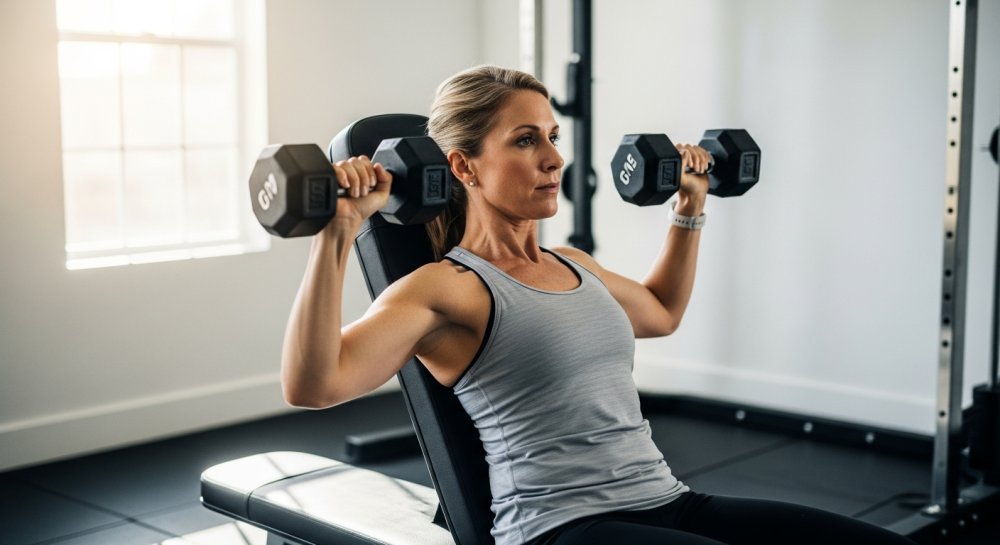
The dumbbell chest press allows for a greater range of motion than barbell exercises and helps identify and correct strength imbalances between sides. Lie on a bench or stability ball with a dumbbell in each hand.
Position the weights at chest level with elbows bent at 90 degrees. Press the dumbbells upward until your arms are fully extended, then lower them back down with control.
Start with lighter weights to master the form before increasing resistance. Your shoulders should remain stable throughout the movement.
Chest Fly: Isolating the Pectorals
The chest fly specifically targets the pectoral muscles with minimal involvement from the triceps. This isolation exercise helps develop chest width and definition.
Lying on a bench, hold dumbbells above your chest with a slight bend in your elbows. Lower the weights out to the sides in a wide arc until you feel a stretch across your chest. Bring the weights back together above your chest, maintaining the slight elbow bend throughout.
Control is crucial here—resist the temptation to use momentum. Think of hugging a large tree rather than pressing.
Resistance Band Chest Press: Joint-Friendly Alternative
Resistance bands provide variable tension that’s easier on the joints while still building strength effectively. Anchor a resistance band behind you at chest height.
Hold one end in each hand and step forward to create tension. From a staggered stance, press your hands forward until your arms are extended. Return to the starting position with control.
Bands are particularly valuable for those with joint concerns or anyone traveling without access to weights. They also allow for exercise anywhere.
Incline Push-Up: Adjustable Difficulty
Incline push-ups reduce the percentage of body weight you’re lifting, making them ideal for beginners or as a warm-up exercise. Place your hands on an elevated surface like a bench, countertop, or sturdy chair.
Perform the push-up motion with the same form as floor push-ups. The higher the surface, the easier the exercise becomes.
This variation is excellent for building confidence and strength before progressing to floor push-ups. It also shifts emphasis slightly to the lower chest.
Decline Push-Up: Increased Challenge
Once standard push-ups become manageable, decline push-ups elevate the difficulty by placing your feet on a raised surface. This shifts more weight to your upper body and emphasizes the upper chest and shoulders.
Position your feet on a bench or step while your hands remain on the floor. Maintain a straight line from head to heels as you perform the push-up.
Start with a low elevation and gradually increase height as strength improves. Proper form remains the priority.
Diamond Push-Up: Triceps and Inner Chest
The diamond push-up places hands close together directly under the chest, forming a diamond shape with the thumbs and index fingers. This hand position shifts emphasis to the triceps and inner chest.
Lower yourself until your chest nearly touches your hands, then push back up. This variation requires significant arm strength.
If full diamond push-ups are too challenging, perform them from your knees. The narrow hand position is what matters most.
Dumbbell Pullover: Chest and Back
The dumbbell pullover uniquely engages both the chest and the latissimus dorsi muscles of the back. Lie perpendicular on a bench with only your upper back and shoulders supported.
Hold a single dumbbell with both hands above your chest. Lower the weight back over your head in an arc until you feel a stretch, then return to starting position.
Keep a slight bend in your elbows throughout. This exercise also enhances shoulder mobility and ribcage expansion.
Cable Crossover: Constant Tension
Cable crossovers provide constant tension throughout the entire range of motion, maximizing muscle engagement. Set the cable pulleys to upper positions.
Standing in the center with one foot forward, grasp the handles with arms extended to the sides. Bring your hands together in front of your chest in a hugging motion.
The cables maintain resistance even at the contracted position, which differs from free weights. Focus on squeezing the chest muscles at the end of each repetition.
Isometric Chest Squeeze: No Equipment Needed
Isometric exercises build strength through static muscle contraction without joint movement. Press your palms together at chest level with elbows pointing outward.
Squeeze as hard as possible for 30-60 seconds, maintaining steady pressure. You can perform this anywhere—at your desk, in line, or during TV commercials.
While less intense than dynamic exercises, isometric holds improve mind-muscle connection and can be valuable additions to any routine. They’re also useful for active recovery days.
Building Your Routine
For balanced chest development, include a mix of pressing movements, flies, and push-up variations. Beginners should start with 2-3 exercises performed twice weekly, allowing at least 48 hours between chest workouts for recovery.
Aim for 2-3 sets of 8-12 repetitions for each exercise. As movements become easier, progress by increasing resistance, adding repetitions, or trying more challenging variations.
Always warm up before strength training and cool down afterward. Listen to your body—discomfort in the muscles is normal, but sharp joint pain signals you should stop and reassess your form or weight selection.
Consistency matters more than intensity. A sustainable routine you’ll actually maintain delivers better results than sporadic intense sessions. Building upper body strength is a gradual process that rewards patience and persistence.
