Health
What Families Wish They’d Known Before Bringing a Parent With Dementia Home

Health Points
- Early-stage dementia care at home requires balancing safety with independence to preserve dignity and autonomy
- Establishing daily routines and memory aids helps reduce confusion and anxiety in loved ones with cognitive decline
- Family caregivers benefit from clear communication strategies and community support networks before symptoms progress
When a parent receives a dementia diagnosis, the news reshapes family life in ways most people don’t expect. Even when symptoms appear mild at first, the shift touches every corner of daily routine—from meal planning to medication management to the hundreds of small decisions that suddenly require a second thought.
For families choosing to provide care at home during the early stages, the learning curve is steep. But with the right preparation and practical strategies, it’s possible to create an environment that supports both safety and quality of life.
Start With the Home Environment
The physical space where your loved one lives plays a crucial role in their wellbeing. Simple modifications can reduce confusion and prevent accidents before they happen.
Remove clutter from walkways and ensure all rooms have adequate lighting, especially hallways and bathrooms. Consider installing nightlights along paths to the bathroom—wandering at night is common in dementia patients, and well-lit routes reduce fall risk. Label drawers and cabinets with large-print signs or pictures to help with daily tasks like finding clothes or kitchen items.
Safety measures matter too. Secure medications in locked cabinets, remove or disable stove knobs when not in use, and install grab bars in the bathroom. These changes don’t need to feel institutional—they’re simply practical adjustments that allow your parent to move through their home with confidence.
Build Predictable Daily Routines
Consistency provides comfort when memory becomes unreliable. Establishing regular patterns for meals, bathing, activities, and bedtime helps reduce the anxiety that often accompanies cognitive decline.
Keep mealtimes at the same hour each day. Use the same plates and utensils to build automatic recognition. Plan activities during the time of day when your loved one typically feels most alert—for many people with dementia, that’s morning hours.
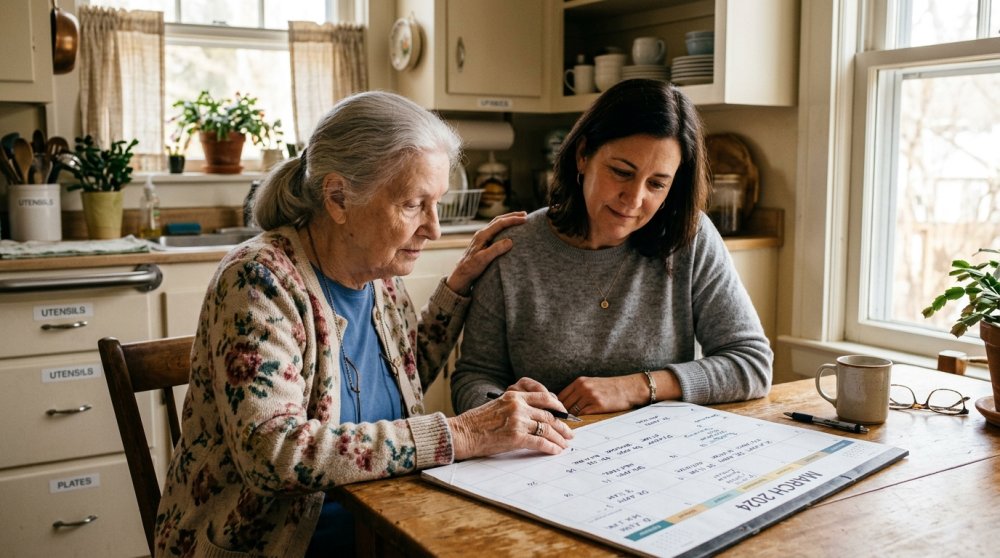
Visual schedules can reinforce routine. A large calendar with clearly marked daily activities, posted in a central location, serves as both a memory aid and a source of reassurance. Include familiar, enjoyable activities whenever possible—gardening, listening to music from their younger years, or looking through photo albums together.
Master Communication Techniques
How you speak matters as much as what you say. People in early-stage dementia often understand more than they can express, which makes clear, respectful communication essential.
Use simple sentences with one idea at a time. Instead of “Would you like to wear the blue sweater or the gray cardigan today?” try “Let’s put on this blue sweater.” Make eye contact and speak slowly, allowing time for processing. Avoid arguing about confused memories—redirect gently instead.
Body language communicates powerfully too. A calm tone, relaxed posture, and gentle touch on the arm or shoulder convey safety even when words fail. If your parent becomes frustrated or agitated, step back and try again later rather than forcing the issue.
Encourage Independence Where Possible
The impulse to help with everything is natural, but maintaining autonomy preserves dignity and can actually slow functional decline. Look for tasks your loved one can still do, even if they take longer or need prompting.
Break activities into simple steps. For dressing, lay out clothes in the order they’ll be put on. For meals, prepare ingredients but let them help stir or set the table. These small contributions maintain a sense of purpose and accomplishment.
Accept that things won’t be perfect—and that’s okay. If breakfast takes an extra twenty minutes or the sweater goes on backwards, the process matters more than the outcome.
Build Your Support Network Now
Caregiving is demanding work that gets harder over time. The families who manage best are those who seek help early, before exhaustion and stress become overwhelming.
Connect with local Alzheimer’s Association chapters for education programs, support groups, and resource guides. Many communities offer adult day programs that provide social interaction for your parent and respite time for you. Look into respite care services—even a few hours per week gives caregivers necessary breathing room.
Talk openly with other family members about sharing responsibilities. Designate specific roles: one person manages medical appointments, another handles finances, a third coordinates with community services. Clear division of duties prevents resentment and burnout.
Plan for Future Changes
Early-stage dementia won’t stay early-stage. Having difficult conversations now, while your parent can still participate in decisions, makes transitions smoother later.
Discuss and document preferences for future care. Complete advance directives, update legal documents, and organize financial information while your loved one can still provide input. Talk about what matters most to them—staying home as long as possible, particular routines they want maintained, or people they want involved in their care.
These conversations are hard, but they’re also gifts. They ensure your parent’s voice guides their care even after they can no longer clearly express their wishes.
Watch for Your Own Warning Signs
Caregiver burnout is real and serious. Pay attention to your own physical and emotional health with the same care you give your parent.
Warning signs include persistent exhaustion, withdrawal from friends and activities you once enjoyed, frequent illness, changes in appetite or sleep patterns, and feelings of hopelessness or irritability. If you notice these symptoms, seek help immediately—from your doctor, a counselor, or a caregiver support group.
Taking care of yourself isn’t selfish; it’s essential. You cannot provide good care from an empty tank. Regular breaks, adequate sleep, exercise, and maintaining social connections all contribute to your capacity to care for your loved one over the long term.
Home care during early-stage dementia presents real challenges, but it also offers meaningful opportunities. With preparation, support, and practical strategies, families can create an environment where their loved one feels safe, valued, and connected—for as long as home care remains possible.
