Nutrition
The Foods That Actually Help Your Digestive Discomfort

Health Points
- High-fiber foods can provide natural relief for hemorrhoids by softening stool and reducing straining during bowel movements
- Aim for 25-35 grams of fiber daily through whole foods like fruits, vegetables, and whole grains
- Adequate hydration is essential when increasing fiber intake to maximize digestive benefits
For the millions of Americans dealing with hemorrhoids, relief can often be found right in the kitchen. This common yet uncomfortable condition affects three out of four adults at some point in their lives, but dietary changes can make a meaningful difference.
Hemorrhoids develop when veins in the lower rectum and anus become swollen and inflamed, often due to straining during bowel movements. The discomfort ranges from mild itching to significant pain, but a high-fiber diet offers a natural path to relief by promoting softer, easier-to-pass stools.
Medical experts recommend adults consume between 25 and 35 grams of fiber daily, yet most Americans fall far short of this goal. The good news is that simple dietary adjustments can help bridge this gap while supporting overall digestive health.
Eight Fiber-Rich Foods for Natural Relief
Beans and Legumes
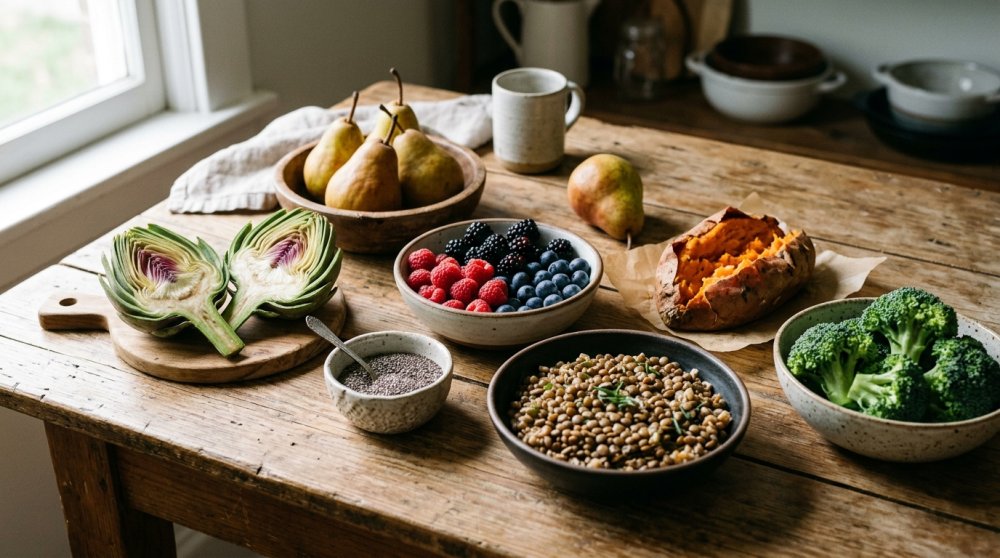
Black beans, lentils, and chickpeas pack a powerful fiber punch, with a single cup of cooked lentils providing nearly 16 grams. These versatile staples can be added to soups, salads, and side dishes.
Whole Grains
Oatmeal, brown rice, and whole wheat bread provide both soluble and insoluble fiber that supports digestive regularity. Starting the day with a bowl of oatmeal topped with fruit offers an excellent fiber foundation.
Berries
Raspberries lead the pack with 8 grams of fiber per cup, while strawberries and blackberries also contribute significantly. These antioxidant-rich fruits make perfect snacks or breakfast additions.
Broccoli and Cruciferous Vegetables
Broccoli, Brussels sprouts, and cauliflower deliver both fiber and important nutrients that support overall health. Steamed or roasted, these vegetables are easy to incorporate into meals.
Pears and Apples
With their skins intact, these familiar fruits provide substantial fiber along with natural sweetness. A medium pear contains about 6 grams of fiber, making it an ideal afternoon snack.
Flaxseeds and Chia Seeds
Just two tablespoons of ground flaxseed add nearly 4 grams of fiber to smoothies, yogurt, or oatmeal. These tiny seeds also provide omega-3 fatty acids for added health benefits.
Sweet Potatoes
A medium sweet potato with skin offers around 4 grams of fiber plus vitamins A and C. Baked, roasted, or mashed, sweet potatoes are both nutritious and satisfying.
Artichokes
One medium artichoke provides an impressive 10 grams of fiber, making it one of the highest-fiber vegetables available. While less common than other options, artichokes are worth adding to your rotation.
Hydration Is Key
Increasing fiber intake without adequate water can actually worsen digestive issues rather than improve them. Fiber works by absorbing water in the digestive tract, creating softer, bulkier stools that pass more easily.
Health professionals recommend drinking at least eight glasses of water daily when following a high-fiber diet. This combination allows fiber to work effectively while supporting overall bodily functions.
Additional Lifestyle Considerations
While dietary changes form the foundation of hemorrhoid management, other habits also play important roles. Regular physical activity promotes healthy digestion and reduces time spent sitting, which can aggravate symptoms.
Responding promptly to the urge to have a bowel movement prevents stool from hardening, making passage easier. Delaying can lead to increased straining, which worsens hemorrhoid discomfort.
For those new to high-fiber eating, gradual increases help the digestive system adjust without causing bloating or gas. Adding a few grams of fiber each day allows the body to adapt comfortably.
When symptoms persist despite dietary improvements, consulting a healthcare provider ensures proper diagnosis and treatment. While most hemorrhoids respond well to conservative measures, some cases require medical intervention.
The path to digestive comfort often begins with simple, wholesome food choices that our grandparents would recognize. By embracing fiber-rich whole foods and staying well-hydrated, many people find significant relief from hemorrhoid discomfort while supporting their overall health and well-being.
