Nutrition
The Pre-Workout Snack Debate That Changes Everything for Your Energy

Health Points
- Carbohydrates provide immediate fuel for workouts while protein supports muscle building and recovery afterward
- Combining both nutrients optimizes performance, with timing and personal goals determining ideal ratios
- Simple strategies like pairing apple slices with peanut butter deliver balanced pre-exercise nutrition
For anyone who’s ever stood in front of the refrigerator wondering what to eat before a workout, the answer might be simpler than expected. The longstanding debate between protein and carbohydrates as the superior pre-workout fuel has a nuanced answer that depends on individual fitness goals and the type of exercise planned.
Registered dietitians emphasize that carbohydrates serve as the body’s preferred energy source during physical activity. They break down into glucose, which muscles use for immediate fuel during both cardio sessions and strength training.
“Carbs are king when it comes to fueling your workout,” explains nutrition expert Sarah Thompson, RD. “Your muscles rely on stored glycogen, which comes from carbohydrates, to power through intense exercise.”
Protein plays a different but equally important role in the fitness equation. While it doesn’t provide the quick energy burst that carbs deliver, protein supports muscle repair and growth after exercise. For those focused on building strength or recovering from intense training, adequate protein intake becomes essential.
The sweet spot for most active adults lies in combining both macronutrients. A balanced pre-workout snack that includes moderate carbohydrates with a smaller amount of protein can optimize performance while setting the stage for recovery.
Timing matters significantly in this nutritional strategy. Eating 30 minutes to two hours before exercise allows the body to digest and convert food into usable energy. Closer to workout time, lighter carbohydrate-focused options work best, while meals eaten further in advance can include more substantial protein.
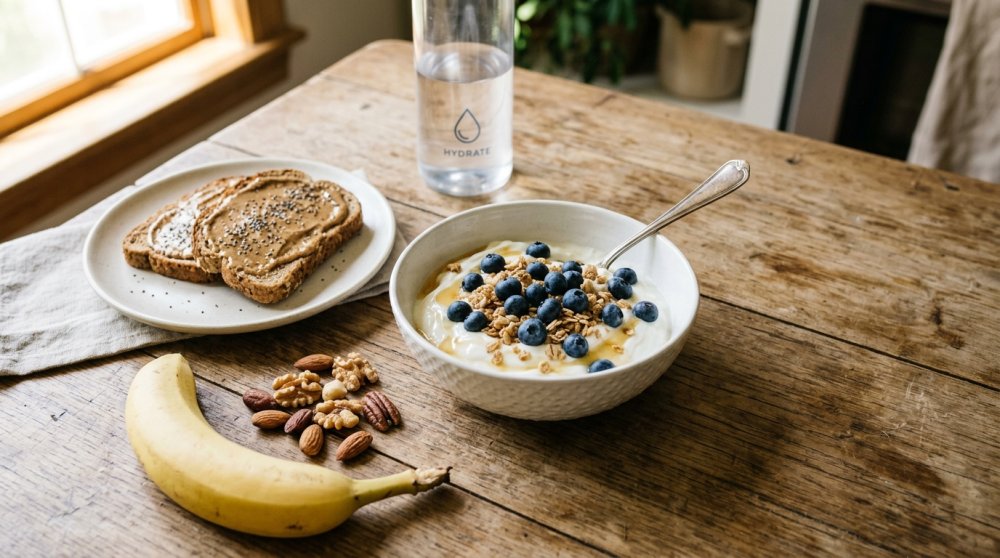
Practical examples of balanced pre-workout snacks include Greek yogurt with berries, whole grain toast with almond butter, or a banana with a small handful of nuts. These combinations provide the carbohydrates needed for energy while incorporating enough protein to support muscles during and after activity.
“Think of carbs as the gas in your tank and protein as the mechanic that keeps your engine running smoothly,” notes fitness nutritionist Michael Chen, MS, RDN. “You need both, but in different amounts depending on what you’re doing.”
For endurance activities like distance running or cycling, the emphasis naturally shifts more heavily toward carbohydrates. These longer-duration exercises deplete glycogen stores more rapidly, making adequate carbohydrate intake crucial for maintaining performance.
Strength training enthusiasts may benefit from slightly higher protein ratios in their pre-workout nutrition, though carbohydrates remain important for powering through sets and maintaining intensity. The protein supports the muscle-building process that begins during the workout itself.
Individual digestive tolerance also plays a role in determining the ideal pre-workout snack. Some people feel energized after eating, while others experience discomfort during exercise if they’ve eaten too close to workout time. Experimentation helps identify personal preferences and optimal timing.
Hydration works hand-in-hand with proper pre-workout nutrition. Even mild dehydration can significantly impair exercise performance, making adequate fluid intake just as important as food choices.
The quality of carbohydrates and proteins selected matters beyond just their macronutrient classification. Whole food sources like fruits, whole grains, lean meats, and dairy products provide additional vitamins and minerals that support overall health and athletic performance.
For morning exercisers who prefer working out on an empty stomach, the body can rely on stored energy for shorter, moderate-intensity sessions. However, fueling properly the night before becomes more critical in these situations.
“Your body is incredibly adaptable,” adds Thompson. “What works perfectly for one person might not suit another, so pay attention to how different foods affect your energy levels and performance.”
The bottom line reflects a both-and rather than either-or approach. Rather than choosing between protein and carbohydrates, successful pre-workout nutrition incorporates both macronutrients in proportions that support individual goals, exercise types, and personal digestive comfort.
This balanced perspective empowers people to make informed choices that enhance their fitness routines while supporting long-term health. The best pre-workout snack isn’t about following rigid rules but understanding how different nutrients serve the body during physical activity.
