Health
The Unexpected Skin Condition Linked to Digestive Health

Health Points
- Ulcerative colitis can trigger skin rashes in up to 15% of patients, with symptoms appearing before or during digestive flare-ups
- The most common skin manifestation, erythema nodosum, presents as painful red bumps typically on the shins and forearms
- Early recognition and treatment of ulcerative colitis-related skin conditions can prevent complications and improve quality of life
When most people think about ulcerative colitis, they envision digestive symptoms—cramping, urgent bathroom trips, and intestinal discomfort. But for thousands of Americans living with this inflammatory bowel disease, the condition extends far beyond the gut, manifesting in an unexpected place: the skin.
Health experts say that between 5% and 15% of people with ulcerative colitis develop skin rashes as part of their disease. These aren’t typical rashes that can be dismissed with over-the-counter cream. They’re distinct inflammatory skin conditions that often signal what’s happening inside the body.
“The skin is really a window into the overall inflammatory state of the body,” explains Dr. Jennifer Lai, a gastroenterologist at the University of California San Francisco. “When we see these skin manifestations, it tells us that the inflammation from ulcerative colitis isn’t confined to the colon—it’s systemic.”
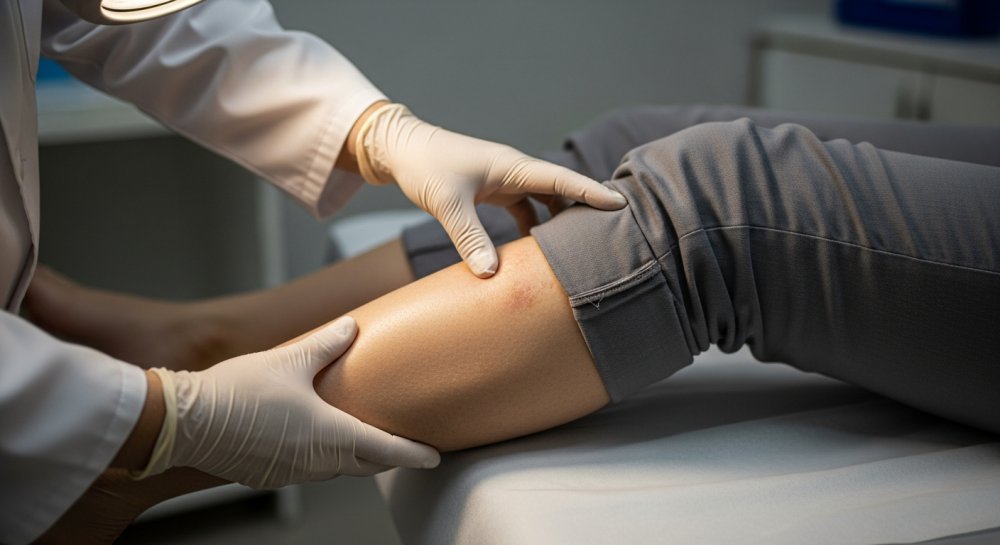
The most common skin condition associated with ulcerative colitis is erythema nodosum, which affects approximately 2-4% of patients. This condition presents as tender, red or purple bumps, typically appearing on the shins and forearms. The nodules can range from the size of a dime to a silver dollar and are often painful to the touch.
“Patients describe them as feeling like deep bruises,” notes Dr. Michael Chen, a dermatologist at Johns Hopkins Medicine. “The bumps usually develop during an ulcerative colitis flare-up, and they tend to resolve when the intestinal inflammation is brought under control.”
Another skin manifestation, pyoderma gangrenosum, is less common but more serious. This condition starts as small pustules that rapidly evolve into painful ulcers with violaceous borders. These ulcers can occur anywhere on the body but most frequently appear on the legs.
Unlike erythema nodosum, pyoderma gangrenosum doesn’t always correlate with active bowel disease. It can appear even when ulcerative colitis symptoms are well-managed, making it particularly challenging for both patients and physicians.
Sweet’s syndrome, technically known as acute febrile neutrophilic dermatosis, represents another potential skin complication. This rare condition causes fever along with painful red or purple papules and plaques, usually on the arms, hands, face, and neck.
“What makes these conditions particularly important to recognize is that they require specific treatment approaches,” emphasizes Dr. Sarah Mitchell, a rheumatologist at Massachusetts General Hospital. “Simply treating the rash topically won’t address the underlying inflammatory process.”
Treatment typically involves managing the underlying ulcerative colitis more aggressively. This might include adjusting medications such as corticosteroids, immunomodulators, or biologic therapies. In some cases, dermatologists and gastroenterologists work together to develop a comprehensive treatment plan.
For patients with erythema nodosum, supportive care includes rest, elevation of the affected limbs, and compression stockings. Anti-inflammatory medications may help reduce pain and swelling. The nodules typically heal without scarring over several weeks.
Pyoderma gangrenosum demands more intensive treatment. High-dose corticosteroids, either topical or systemic, are often necessary. Advanced cases may require immunosuppressive medications or biologic agents specifically targeting the inflammatory pathways.
Beyond these primary conditions, people with ulcerative colitis may also experience other skin issues. Psoriasis occurs more frequently in this population than in the general public. Mouth ulcers, technically part of the oral mucosa rather than skin, affect up to 10% of patients.
“The key message for patients is that any new skin changes should be reported to their healthcare team,” advises Dr. Lai. “These aren’t just cosmetic concerns—they’re important clinical signs that may indicate the need for treatment adjustment.”
Research continues to explore the connection between inflammatory bowel disease and skin manifestations. Scientists believe that shared inflammatory pathways and immune system dysfunction create susceptibility to both intestinal and dermatologic symptoms.
The good news is that modern treatments for ulcerative colitis, particularly biologic medications, often improve both digestive and skin symptoms simultaneously. These targeted therapies work by blocking specific proteins involved in the inflammatory cascade.
For the estimated 900,000 Americans living with ulcerative colitis, understanding the full spectrum of potential symptoms—including those affecting the skin—empowers better self-advocacy and earlier intervention. Recognizing a concerning rash could be the first step toward preventing a more serious flare-up.
“We’ve come a long way in understanding that ulcerative colitis is truly a systemic disease,” reflects Dr. Chen. “By recognizing and treating these extraintestinal manifestations, we can significantly improve patients’ overall quality of life.”
Anyone experiencing persistent or concerning skin changes alongside known or suspected ulcerative colitis should consult both their gastroenterologist and a dermatologist for comprehensive evaluation and care.
