Health
The Hydration Strategy Flight Attendants Actually Use on Long-Haul Routes

Health Points
- Airplane cabin humidity levels drop to 10-20%, far below the recommended 40-60% for indoor environments
- Experts recommend drinking 8 ounces of water for every hour spent in flight to counteract dehydration
- Strategic timing of hydration and electrolyte balance can prevent jet lag symptoms and travel fatigue
Long-haul flights present a unique challenge to maintaining proper hydration. The pressurized cabin environment, combined with recycled air and reduced humidity, creates conditions that accelerate fluid loss from the body. Understanding how to combat these effects can transform your travel experience and help you arrive at your destination feeling refreshed rather than depleted.
The low humidity in airplane cabins — often dropping to levels comparable to desert climates — affects more than just your skin. Dr. Jennifer Ashton, board-certified physician and medical correspondent, explains the broader impact on the body.
“When you’re flying at altitude in a pressurized cabin, you’re losing moisture with every breath you take, and most people don’t realize how quickly that adds up over a six or eight-hour flight.”
Starting your hydration strategy before you even board can make a significant difference. Drinking 16-20 ounces of water in the two hours before your flight helps establish a baseline. Many frequent travelers make the mistake of restricting fluids to avoid bathroom trips, but this approach backfires by leaving the body already depleted when facing the dehydrating cabin environment.
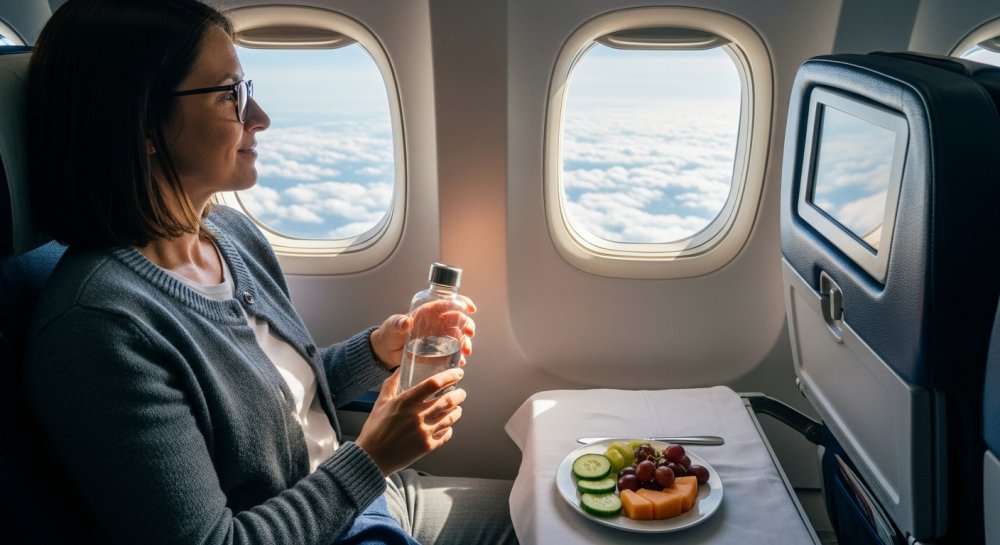
Once onboard, flight attendants and seasoned travelers recommend bringing an empty reusable water bottle through security and filling it at a water fountain near your gate. This ensures you have immediate access to hydration without waiting for beverage service. Most flight crews will happily refill bottles throughout the flight when asked.
The type of beverages you consume matters as much as the quantity. While it’s tempting to accept every drink offered during service, alcohol and caffeinated beverages actually worsen dehydration. Each alcoholic drink consumed at altitude has a more pronounced diuretic effect than it would on the ground.
Sports nutritionist and hydration expert Amy Goodson addresses the electrolyte component that many travelers overlook.
“Plain water is good, but for flights longer than three hours, adding electrolytes helps your body actually retain that hydration rather than just passing it through.”
Electrolyte packets or tablets designed for travel can be added to your water bottle. These supplements contain sodium, potassium, and magnesium — minerals lost through increased respiration and reduced humidity exposure. Unlike sugary sports drinks, travel-specific electrolyte formulas provide the benefits without excess calories or artificial ingredients.
Timing your water intake strategically throughout the flight helps maintain consistent hydration levels. Rather than drinking large amounts at once, consuming 6-8 ounces every hour allows for better absorption. Setting a phone reminder can help you stay on schedule, especially during overnight flights when you might sleep through several hours.
Foods with high water content provide supplementary hydration while also offering nutrients. Bringing snacks like cucumber slices, grapes, oranges, or melon can contribute to your fluid intake. These whole foods also provide fiber and vitamins that processed airline snacks typically lack.
The skin provides visible evidence of hydration status during flights. Applying a hydrating facial mist or moisturizer helps combat the drying effects externally, but these products work best when internal hydration is also maintained. Many dermatologists recommend the combination approach for travelers concerned about skin health.
Limiting sodium intake during the flight helps prevent fluid retention and bloating. Airline meals and snacks often contain high sodium levels as a flavor enhancement. Bringing your own low-sodium options gives you control over this factor while still maintaining proper electrolyte balance through supplements if needed.
Dr. Michael Breus, a clinical psychologist specializing in sleep medicine, connects hydration to the quality of rest possible on long flights.
“Dehydration interferes with your natural sleep architecture and can make jet lag worse when you land, so staying hydrated is actually a key strategy for adjusting to new time zones.”
Monitoring the color of your urine provides a simple hydration assessment tool. Pale yellow indicates proper hydration, while dark yellow or amber suggests you need to increase fluid intake. Checking this at the beginning, middle, and end of your flight helps you adjust your strategy in real time.
For travelers concerned about frequent bathroom trips, aisle seats eliminate the inconvenience of disturbing seatmates. The benefits of proper hydration — including reduced fatigue, clearer thinking, better mood, and faster recovery from travel — far outweigh the minor inconvenience of additional trips down the aisle.
The investment in strategic hydration pays dividends in how you feel both during the flight and in the days following arrival. Whether traveling for business or leisure, maintaining fluid balance supports your body’s ability to handle the stress of air travel and helps you make the most of your time at your destination.
