Nutrition
Why These Common Nuts and Seeds Could Be Your Secret Weapon Against Fatigue

Health Points
- Magnesium deficiency affects up to half of Americans and can cause fatigue, muscle cramps, and mood changes
- Certain nuts and seeds provide up to 37% of your daily magnesium needs in just one ounce
- Adding these foods to your diet may help regulate blood pressure, blood sugar, and support bone health
For Americans over 40 dealing with persistent fatigue or muscle cramps, the solution might be simpler than expected. A critical mineral that many overlook could be missing from daily diets, and common pantry staples offer an easy fix.
Magnesium plays a vital role in over 300 bodily processes, from energy production to heart health. Yet research shows nearly half of all Americans don’t get enough of this essential nutrient.
The good news is that certain nuts and seeds pack impressive amounts of magnesium into small servings. These whole foods provide natural nutrition without pills or supplements.
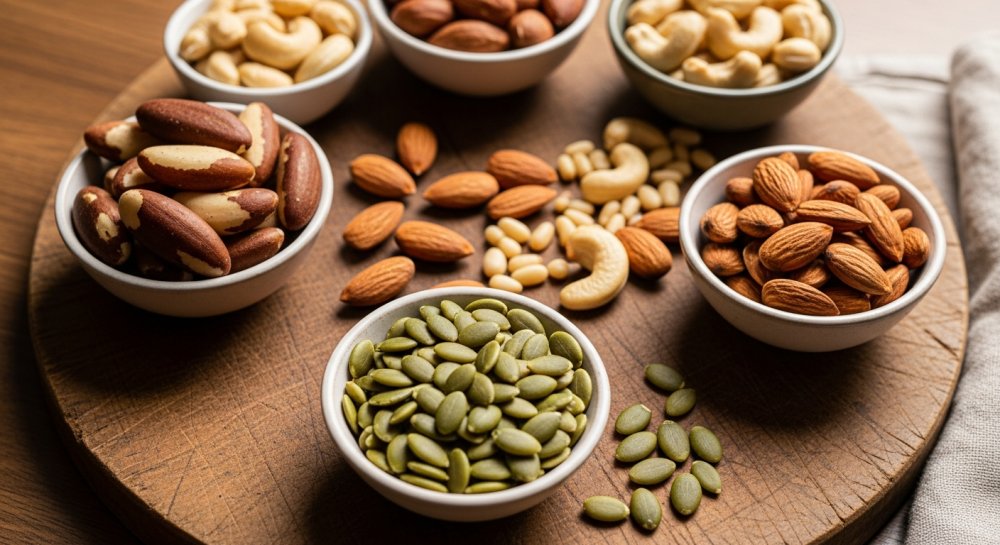
Pumpkin seeds top the list with a remarkable 156 milligrams per ounce—that’s 37% of the daily recommended intake for adults. Brazil nuts follow closely behind, offering 107 milligrams per ounce, which equals 25% of daily needs.
Cashews, almonds, and pine nuts also rank high, each providing between 70-80 milligrams per ounce. Even common sunflower seeds deliver a respectable 37 milligrams in the same serving size.
For those watching their health, magnesium deficiency symptoms often mimic other conditions. Early signs include muscle twitches, mental changes, fatigue, and weakness. More severe deficiency can lead to numbness, personality changes, abnormal heart rhythms, and seizures.
Certain groups face higher risk of deficiency. People with gastrointestinal diseases, type 2 diabetes, and alcohol dependence often struggle to maintain healthy magnesium levels. Older adults naturally absorb less magnesium from food and lose more through kidney function.
The mineral’s benefits extend well beyond preventing deficiency. Studies link adequate magnesium intake to lower blood pressure, reduced inflammation, and better blood sugar control. It also supports bone density—a particular concern for those entering their golden years.
Incorporating these magnesium-rich foods requires minimal effort. Sprinkle pumpkin seeds on morning oatmeal, add cashews to stir-fries, or simply keep a small container of mixed nuts as an afternoon snack.
One ounce represents about a small handful—roughly 23 almonds, 18 cashews, or a quarter cup of pumpkin seeds. This modest portion can make a measurable difference in daily magnesium intake.
For maximum benefit, choose raw or dry-roasted varieties without added salt or sugar. The natural oils in nuts and seeds provide healthy fats that help the body absorb fat-soluble vitamins.
While nuts and seeds offer excellent magnesium sources, variety matters. Rotating between different options ensures a broader range of nutrients and prevents taste fatigue.
Those concerned about calories should note that while nuts are energy-dense, research shows people who regularly eat them tend to maintain healthier weights. The protein, fiber, and healthy fats promote satiety and reduce overeating at meals.
For anyone experiencing persistent symptoms of deficiency, consulting a healthcare provider remains important. Blood tests can confirm magnesium status, and doctors can recommend appropriate supplementation if dietary changes alone prove insufficient.
The path to better health often lies in simple, time-tested foods rather than complicated solutions. These nutrient-dense nuts and seeds have sustained human health for millennia—and they remain just as valuable today.
