Movement
Five Gentle Exercises That Lower Blood Pressure Without Breaking a Sweat

Health Points
- Strength training and isometric exercises can reduce blood pressure more effectively than traditional cardio workouts
- Activities like wall sits, planks, and weightlifting help blood vessels relax and improve circulation
- Just 30 minutes of moderate exercise most days can significantly improve cardiovascular health for adults over 40
For Americans concerned about their cardiovascular health, new research offers encouraging news: you don’t need to run marathons or join intense spin classes to improve your blood pressure. In fact, some of the most effective exercises for heart health are surprisingly simple movements you can do at home.
A comprehensive review published in the British Journal of Sports Medicine analyzed data from over 15,000 participants across 270 studies. The findings challenge conventional wisdom about exercise and blood pressure control.
The research reveals that isometric exercises—movements where muscles contract without changing length—proved most effective at lowering both systolic and diastolic blood pressure readings. These gentle but powerful exercises include wall sits, planks, and hand-grip exercises that don’t require expensive equipment or gym memberships.
Dr. Jamie Edwards, lead researcher from Canterbury Christ Church University in England, explained the science behind these findings.
“When you perform isometric exercises, you create tension in specific muscles without movement. This unique type of muscular work triggers beneficial changes in how your blood vessels function,” Edwards said.
The study found that traditional aerobic exercises like running, walking, and cycling still provide meaningful benefits—reducing systolic blood pressure by an average of 4.49 mmHg and diastolic pressure by 2.53 mmHg. However, isometric exercises delivered even better results, with reductions of 8.24 mmHg systolic and 4.00 mmHg diastolic.
For context, these improvements are comparable to the effect of some blood pressure medications. A reduction of just 5 mmHg in systolic blood pressure can lower the risk of heart attack or stroke by approximately 10 percent.
Strength training with weights also showed impressive results, reducing systolic pressure by 4.55 mmHg and diastolic by 3.04 mmHg. The benefits extend beyond the cardiovascular system—resistance training helps maintain muscle mass, bone density, and metabolic health as we age.
Dr. Edwards noted that the combination of different exercise types may offer the greatest benefits.
“We’re not suggesting people abandon their current exercise routines. Rather, adding isometric exercises to an existing program that includes walking, swimming, or other activities creates a more comprehensive approach to blood pressure management,” he said.
The American Heart Association recommends at least 150 minutes of moderate-intensity aerobic activity or 75 minutes of vigorous activity per week, plus muscle-strengthening activities at least two days weekly. For those over 40, this balanced approach supports healthy aging while protecting cardiovascular function.
Simple isometric exercises to try include:
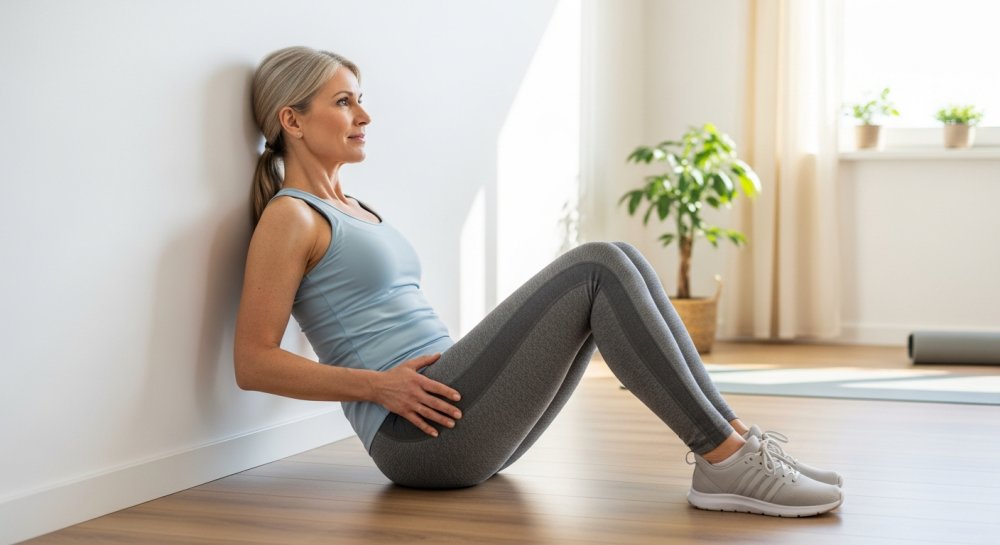
Wall sits: Stand with your back against a wall, then slide down until your knees form a 90-degree angle. Hold for 30 to 60 seconds, rest, and repeat.
Planks: Support your body weight on your forearms and toes, keeping your body in a straight line. Start with 20 to 30 seconds and gradually increase duration.
Hand-grip exercises: Squeeze a hand-grip strengthener or tennis ball firmly for several seconds, then release. Repeat 10 to 15 times per hand.
These exercises work by creating sustained muscle tension that compresses blood vessels. When you release the contraction, blood flow increases, which helps blood vessels become more flexible and responsive—a key factor in healthy blood pressure regulation.
The research also found that combining isometric exercises with traditional cardio and strength training produced superior results compared to any single exercise type alone. This multi-faceted approach addresses blood pressure through different physiological mechanisms.
For older adults concerned about joint stress from high-impact activities, isometric exercises offer particular advantages. They build strength without repetitive motion that can aggravate arthritis or other age-related conditions.
Before starting any new exercise program, especially for those with existing high blood pressure or heart conditions, consultation with a healthcare provider remains essential. They can help develop an individualized plan that accounts for current fitness level, medications, and overall health status.
The encouraging message from this research is that effective blood pressure management through exercise doesn’t require extreme effort or complicated routines. Simple, consistent movements performed regularly can deliver meaningful cardiovascular benefits—no running shoes required.
