Nutrition
How to Boost Your Protein Without Overhauling Your Meals

Health Points
- Adults over 40 benefit from increased protein to maintain muscle mass and energy levels
- Strategic additions to existing meals make protein goals achievable without diet overhauls
- Simple swaps and planning ahead transform everyday foods into protein powerhouses
Many Americans fall short of their protein targets without realizing it. For adults navigating midlife and beyond, meeting protein needs becomes increasingly important for preserving muscle mass, supporting energy levels, and maintaining overall vitality.
Registered dietitians emphasize that boosting protein intake doesn’t require drastic dietary changes. Instead, strategic additions and smart swaps throughout the day can help you reach your goals while keeping meals enjoyable and familiar.
The recommended dietary allowance stands at 0.8 grams of protein per kilogram of body weight, though many nutrition experts suggest higher amounts for active adults and those over 50. For a 150-pound person, this translates to roughly 55 grams daily at minimum, with optimal intake potentially reaching 80-100 grams depending on activity level and health goals.
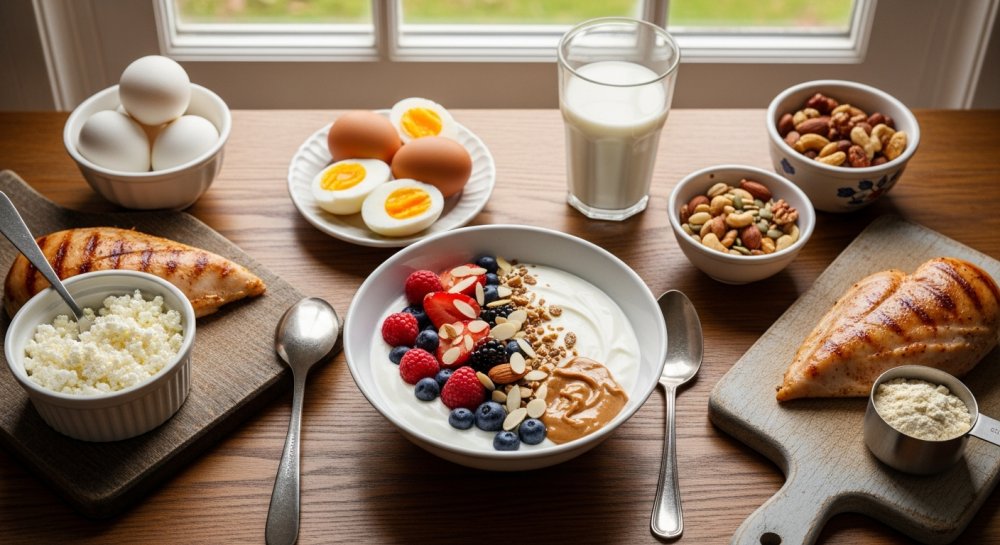
Starting your morning with a protein-rich breakfast sets the foundation for stable blood sugar and sustained energy. Greek yogurt delivers roughly double the protein of regular yogurt, packing 15-20 grams per cup. Pairing it with nuts or seeds adds both protein and healthy fats that keep you satisfied until lunch.
Eggs remain one of the most versatile and affordable protein sources, with each large egg providing about 6 grams. Adding an extra egg to your morning routine or incorporating hard-boiled eggs as snacks creates an easy protein boost without requiring additional meal preparation time.
Plant-based eaters can tap into legumes as protein champions. A single cup of lentils or chickpeas delivers 15-18 grams of protein along with fiber that supports digestive health. Tossing beans into salads, soups, or grain bowls transforms lighter meals into more substantial, protein-packed options.
Cottage cheese has experienced a well-deserved resurgence among health-conscious consumers. With 14 grams of protein per half-cup serving, it works equally well in savory applications with herbs and vegetables or sweet preparations with fruit and a drizzle of honey.
Nuts and nut butters offer concentrated protein in portable form. Two tablespoons of peanut or almond butter contribute 7-8 grams of protein. Spreading them on whole grain toast, stirring into oatmeal, or using as a dip for apple slices makes healthy eating convenient.
Choosing higher-protein versions of everyday staples requires minimal effort but yields significant returns. Protein-enriched pasta, made from chickpeas or lentils, can double or triple the protein content of traditional wheat pasta while maintaining familiar textures and flavors that the whole family enjoys.
Lean meats like chicken breast and turkey provide substantial protein with minimal saturated fat. A 3-ounce serving of chicken breast contains roughly 26 grams of protein. Batch-cooking chicken at the beginning of the week creates ready-to-use protein for quick salads, wraps, and stir-fries.
Fish and seafood deliver high-quality protein alongside beneficial omega-3 fatty acids. Salmon, tuna, and cod each offer 20-25 grams of protein per 3-ounce serving. Canned varieties provide budget-friendly options that keep well in the pantry for last-minute meals.
Dairy products beyond yogurt deserve attention for their protein contributions. A single cup of milk provides 8 grams of protein, while cheese adds 6-7 grams per ounce. Sprinkling cheese on vegetables or adding milk to smoothies increases protein without dramatically changing meal patterns.
Protein powder offers convenience for those struggling to meet targets through whole foods alone. Whey protein blends smoothly into shakes, while plant-based options derived from pea or rice protein suit various dietary preferences. Mixing powder into oatmeal, pancake batter, or yogurt disguises it in familiar foods.
Edamame and tofu provide complete plant proteins containing all essential amino acids. A cup of edamame delivers 17 grams of protein, making it an ideal snack or salad topper. Tofu absorbs flavors readily and contributes 10 grams of protein per half-cup serving.
Ancient grains like quinoa outperform traditional grains in protein content. One cup of cooked quinoa contains 8 grams of protein compared to rice’s 4-5 grams. Substituting quinoa in familiar dishes maintains meal structure while enhancing nutritional value.
Snacking strategically prevents protein gaps between meals. String cheese, beef jerky, roasted chickpeas, and protein bars offer portable options that travel well and satisfy hunger while contributing toward daily targets.
Planning meals around protein sources simplifies the process of meeting nutritional goals. Building each meal around a protein centerpiece—whether animal or plant-based—and adding complementary vegetables and grains creates balanced plates that support muscle maintenance, weight management, and sustained energy throughout your day.
Small, consistent changes compound over time. Adding an extra egg at breakfast, choosing Greek yogurt over regular, or tossing beans into your afternoon salad might seem modest individually, but together these adjustments can increase daily protein intake by 30-40 grams—enough to meet the needs of most adults seeking to optimize their nutrition as they age.
