Movement
Why Your Glutes May Have Stopped Working and Seven Exercises That Can Help

Health Points
- Gluteal amnesia, or “dead butt syndrome,” occurs when glute muscles weaken from prolonged sitting and hip flexor tightness
- The condition can lead to lower back pain, hip discomfort, and poor posture if left unaddressed
- Targeted exercises including glute bridges, clamshells, and lunges can reactivate dormant glute muscles in as little as a few weeks
For millions of Americans spending hours at desks each day, an unusual condition may be silently developing: gluteal amnesia. This phenomenon, often called “dead butt syndrome,” describes what happens when the body’s largest muscle group essentially forgets how to function properly.
The condition isn’t just about aesthetics. When glute muscles weaken and deactivate, the entire body’s movement patterns can be compromised, leading to compensatory issues throughout the lower back, hips, and legs.
Understanding Gluteal Amnesia
Dead butt syndrome develops when the gluteal muscles—particularly the gluteus medius and gluteus maximus—become inhibited and fail to activate during normal movement. Physical therapists and exercise specialists have observed this condition with increasing frequency as sedentary lifestyles become more common.
The primary culprit is prolonged sitting, which keeps hip flexors in a shortened position while glutes remain stretched and inactive. Over time, the nervous system essentially “forgets” to engage these muscles, even during activities that should naturally recruit them.
Beyond sitting, muscle imbalances and poor movement patterns can contribute to the problem. When surrounding muscles compensate for weak glutes, the condition often worsens, creating a cycle that’s difficult to break without intentional intervention.
Recognizing the Warning Signs
People with gluteal amnesia often experience lower back pain as other muscles work overtime to compensate for inactive glutes. Hip discomfort and tightness in the hip flexors are also common indicators.
Poor posture, particularly an anterior pelvic tilt, frequently accompanies the condition. Some people notice difficulty engaging their glutes during exercise, or feel that movements which should activate the buttocks instead rely heavily on hamstrings or lower back muscles.
Knee pain can also signal gluteal dysfunction, as weak glutes fail to properly stabilize the pelvis and control leg alignment during movement.
Seven Exercises for Glute Reactivation
1. Glute Bridges
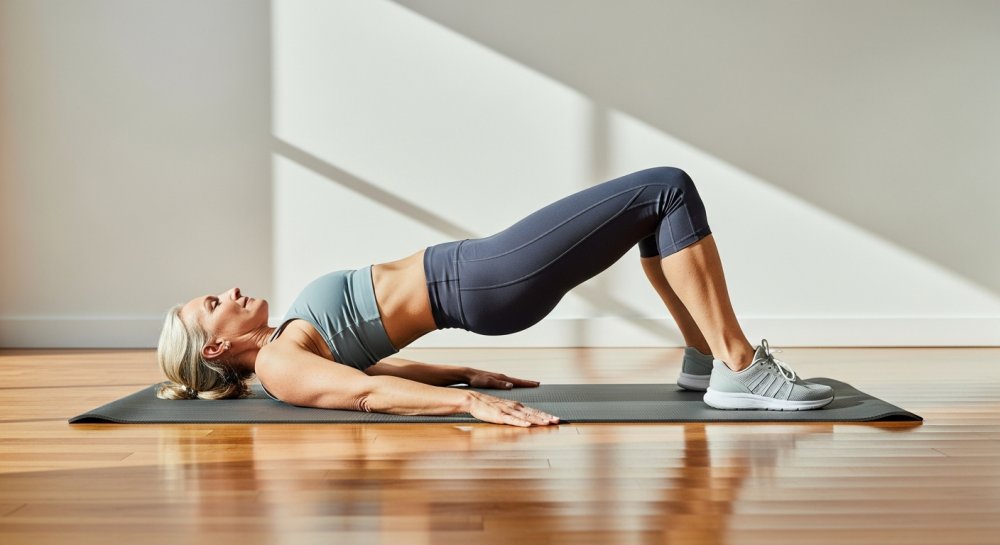
Lying on your back with knees bent and feet flat on the floor, lift your hips toward the ceiling while squeezing your glutes. Hold at the top for two seconds before lowering. This foundational exercise directly targets the gluteus maximus and helps re-establish the mind-muscle connection. Perform three sets of 12-15 repetitions.
2. Clamshells
Lying on your side with knees bent, keep feet together while lifting the top knee away from the bottom knee, creating a clamshell motion. This movement specifically activates the gluteus medius, crucial for hip stability. Complete three sets of 15 repetitions per side.
3. Fire Hydrants
Starting on hands and knees, lift one leg out to the side while maintaining a 90-degree bend at the knee. This exercise targets both the gluteus medius and minimus. Perform three sets of 12 repetitions on each side.
4. Single-Leg Glute Bridges
Similar to standard glute bridges but performed with one leg extended, this variation increases the challenge and addresses any strength imbalances between sides. Work up to three sets of 10 repetitions per leg.
5. Lateral Band Walks
With a resistance band around your thighs or ankles, take small steps sideways while maintaining a slight squat position. This functional exercise strengthens glutes while mimicking real-world movement patterns. Walk 10 steps in each direction for three sets.
6. Bulgarian Split Squats
With one foot elevated behind you on a bench or step, lower into a lunge position. This challenging movement recruits glutes while also improving balance and single-leg strength. Perform three sets of 8-10 repetitions per leg.
7. Donkey Kicks
From a hands-and-knees position, extend one leg back and up while keeping the knee bent at 90 degrees. Focus on squeezing the glute at the top of the movement. Complete three sets of 15 repetitions on each side.
Creating a Sustainable Routine
Consistency matters more than intensity when addressing gluteal amnesia. Starting with three sessions per week allows adequate recovery while establishing new neuromuscular patterns.
Begin with bodyweight versions of each exercise before adding resistance. The goal is proper muscle activation, not maximum load. Many people find that lighter weights with focused intention produce better results than heavy weights performed with compensation patterns.
Progressive overload should be applied gradually. Once bodyweight exercises feel manageable with good form, add resistance bands, then dumbbells or barbells as strength improves.
Lifestyle Modifications That Support Recovery
Exercise alone cannot overcome the effects of prolonged daily sitting. Setting hourly reminders to stand and move throughout the workday helps prevent glutes from remaining dormant for extended periods.
When sitting is unavoidable, maintaining proper posture—sitting on the sit bones rather than the tailbone, keeping feet flat on the floor, and avoiding slouching—reduces some of the negative impacts. Standing desks or convertible workstations offer another option for those able to modify their workspace.
Incorporating more walking into daily routines provides low-intensity glute activation throughout the day. Taking stairs instead of elevators and parking farther from destinations are simple strategies that accumulate meaningful activity.
When to Seek Professional Guidance
While many people can address mild gluteal amnesia through self-directed exercise, persistent pain or lack of progress may warrant professional evaluation. Physical therapists can assess movement patterns, identify specific imbalances, and create personalized treatment plans.
Those with existing injuries or chronic pain conditions should consult healthcare providers before beginning new exercise programs. Certain conditions may require modified approaches or additional interventions.
Most people notice improvements within three to four weeks of consistent practice. The glutes begin to activate more readily during daily activities, and compensatory pain often diminishes as proper movement patterns are restored.
Long-Term Maintenance and Prevention
Once glute function is restored, maintaining strength requires ongoing attention. Incorporating glute-focused exercises into regular fitness routines—even just twice weekly—helps preserve the progress made during the reactivation phase.
Varied movement throughout the day remains important for long-term glute health. Breaking up sitting time and engaging in activities that naturally recruit glutes—hiking, cycling, swimming—supports continued strength and function.
The body adapts to the demands placed upon it. By consciously choosing movement patterns that engage the glutes and limiting extended periods of inactivity, individuals can maintain healthy, functional gluteal muscles well into later decades.
Dead butt syndrome, while increasingly common in our sedentary culture, is neither inevitable nor permanent. With targeted exercises and lifestyle adjustments, the body’s largest muscle group can be reawakened to fulfill its essential role in movement, stability, and overall physical health.
