Lifestyle
The Memory Phenomenon That Makes You Question What Really Happened

Health Points
- The Mandela Effect occurs when large groups of people share identical false memories of past events, names, or facts
- Experts attribute these shared misrememberings to how our brains naturally fill gaps in memory and can be influenced by social reinforcement
- Common examples include misremembering the Berenstain Bears spelling, Monopoly Man’s monocle, and Nelson Mandela’s death timeline
Have you ever been absolutely certain about a childhood memory, only to discover that it never happened the way you recalled? You’re not alone—and there’s a name for this curious phenomenon that affects millions of people.
The Mandela Effect describes instances where groups of people collectively misremember the same facts, events, or details in identical ways. The term gained widespread attention when many individuals insisted they remembered Nelson Mandela dying in prison during the 1980s, complete with vivid recollections of news coverage and his widow’s funeral.
In reality, Mandela was released from prison in 1990 and passed away in 2013. Yet the shared false memory was so detailed and widespread that it sparked a deeper investigation into how our minds can play such elaborate tricks on us.
Memory researchers explain that our brains don’t function like video recorders, preserving perfect copies of our experiences. Instead, memories are reconstructed each time we recall them, making them vulnerable to distortion.
Our memories are not perfect recordings,
neuroscientists note. They’re reconstructive processes that can be influenced by suggestion, social reinforcement, and the way information is presented to us.
The phenomenon gained its name from author and researcher Fiona Broome, who discovered in 2009 that she wasn’t alone in her false memory of Mandela’s death. She created a website to document similar experiences, and thousands of people began sharing their own examples of collective misremembering.
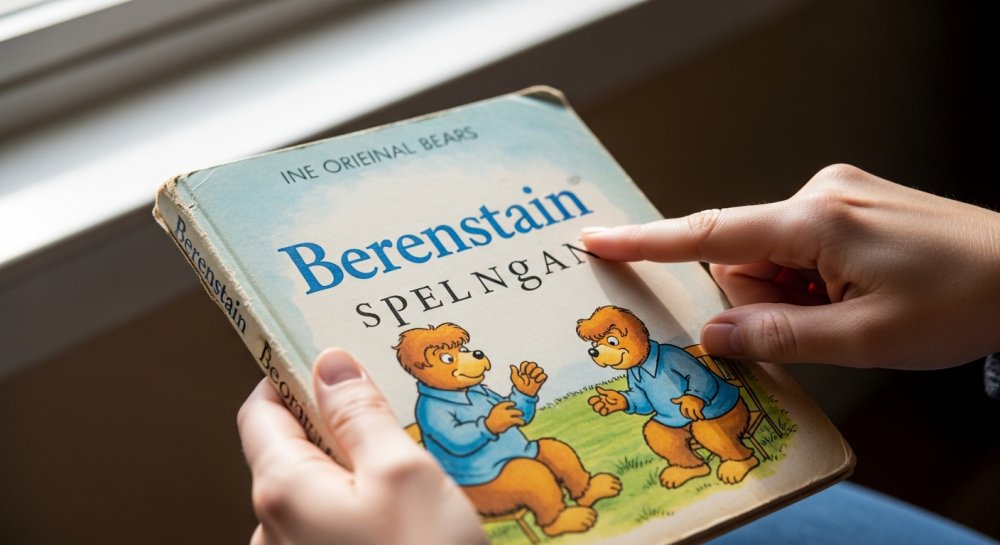
One of the most famous examples involves the beloved children’s book series about a family of bears. Many adults vividly remember the series being called the “Berenstein Bears,” with an “e” in the middle.
The actual spelling has always been “Berenstain Bears,” with an “a.” This minor difference has sparked intense debate online, with people insisting they clearly remember the alternative spelling from their childhood.
Another widespread example centers on the Monopoly board game mascot. Countless people recall Rich Uncle Pennybags wearing a monocle over one eye.
In truth, the character has never worn a monocle in any official Monopoly materials. Psychologists suggest this false memory may stem from confusion with Mr. Peanut, the Planters mascot who does wear a monocle, or from general associations between wealthy characters and monocles in popular culture.
The movie “Forrest Gump” provides another compelling instance. Many viewers remember Tom Hanks’ character saying, Life is like a box of chocolates.
The actual line from the 1994 film is slightly different: Life was like a box of chocolates.
The past tense creates a subtle but distinct variation from the commonly misremembered version.
Memory experts point to several psychological mechanisms that contribute to the Mandela Effect. Confabulation—the brain’s tendency to fill memory gaps with plausible information—plays a significant role.
Social reinforcement amplifies these false memories. When we hear others describe remembering an event the same incorrect way, it validates and strengthens our own misremembering.
The internet age has accelerated the spread of Mandela Effects. Online communities allow people to discover and reinforce shared false memories on a scale never before possible. A single viral post about a misremembered fact can reach millions within hours.
Some examples have even been traced to specific sources of confusion. The common belief that Curious George had a tail likely stems from associations with other monkey characters in children’s media, though the beloved character has always been tail-free as a chimpanzee.
While the Mandela Effect raises fascinating questions about memory and consciousness, mainstream cognitive scientists view it as evidence of normal—if imperfect—brain function rather than anything mysterious or supernatural. Our memories are shaped by expectations, cultural influences, and the fallible nature of human recall.
Understanding this phenomenon can actually strengthen our critical thinking skills. Recognizing that our memories aren’t infallible encourages us to verify important information rather than relying solely on what we think we remember.
For families, the Mandela Effect offers an interesting conversation starter about how memory works. Parents can use examples like the Berenstain Bears to teach children that even adults sometimes remember things incorrectly—and that’s a normal part of being human.
The phenomenon serves as a humbling reminder that confidence in our memories doesn’t guarantee accuracy. Even vivid, detailed recollections can be completely false when examined against objective evidence.
As researchers continue studying collective false memories, they’re uncovering valuable insights into how social dynamics, media exposure, and cognitive processes interact to shape what we believe about the past. These findings have implications for everything from eyewitness testimony in courtrooms to how we preserve family histories and cultural narratives.
