Movement
The Eight-Minute Kettlebell Routine Transforming Core Fitness After 40

Health Points
- Kettlebell training engages stabilizer muscles throughout the core, offering superior functional strength compared to isolated abdominal exercises
- Eight targeted movements can strengthen the entire midsection while improving balance, posture, and everyday mobility for active adults
- Progressive kettlebell training supports metabolic health and bone density, key wellness priorities for individuals over 40
Fitness professionals are championing a return to time-tested strength training methods that deliver measurable results without complicated equipment or gym memberships. Kettlebell exercises, rooted in centuries of athletic tradition, have emerged as a cornerstone of effective core training for health-conscious adults seeking sustainable wellness routines.
The beauty of kettlebell training lies in its efficiency and versatility. Unlike isolated movements that target only superficial abdominal muscles, kettlebell exercises engage the entire core complex—including deep stabilizers that support spinal health and functional movement patterns essential for daily life.
“The core isn’t just about aesthetics,” explains Dr. Michael Chen, a sports medicine physician who prescribes kettlebell routines to patients recovering from back injuries. “It’s the foundation of every movement we make, from lifting groceries to playing with grandchildren.”
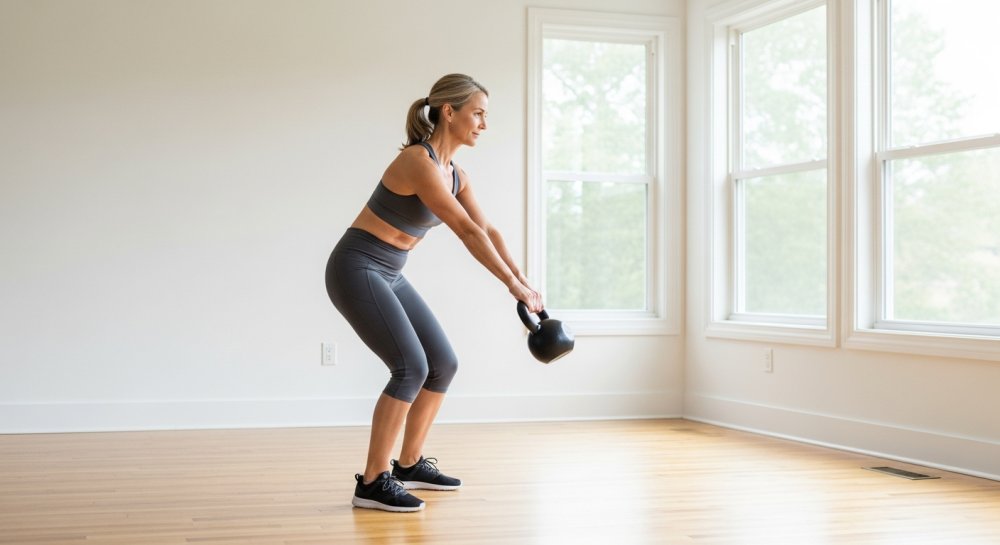
The eight foundational kettlebell movements address core strength from multiple angles. The kettlebell swing, often called the cornerstone exercise, generates power through the hips while demanding core stabilization throughout the dynamic motion. This full-body movement elevates heart rate while building the posterior chain—the interconnected muscles along the back of the body that often weaken with sedentary lifestyles.
The Turkish get-up, a complex multi-phase movement, challenges coordination and core control through a complete range of motion. Practitioners move from lying to standing while maintaining a kettlebell overhead, forcing every stabilizer muscle to activate. Physical therapists frequently incorporate this exercise into rehabilitation protocols because it reveals and corrects movement imbalances.
“I’ve seen clients transform their posture and eliminate chronic back pain within weeks of consistent kettlebell practice,” says Jennifer Rodriguez, a certified strength coach who specializes in training adults over 50. “The functional strength transfers directly to real-world activities.”
The kettlebell goblet squat places the weight at chest level, demanding upright posture and core engagement throughout the squatting motion. This positioning naturally reinforces proper movement mechanics while building lower body strength and core stability simultaneously. For individuals concerned about joint health, the goblet squat offers a knee-friendly alternative to barbell variations.
Single-arm kettlebell exercises introduce an additional stability challenge. The kettlebell windmill combines hip hinge mechanics with overhead stability, creating intense oblique activation while improving shoulder mobility. The offset loading forces the core to resist lateral flexion, building the kind of strength that protects against everyday injuries.
The kettlebell halo circles the weight around the head in a controlled arc, engaging shoulders and core while improving thoracic mobility—particularly valuable for desk workers experiencing upper back stiffness. This deceptively simple movement requires consistent core tension to maintain stable posture throughout the rotation.
Plank variations gain new dimension with kettlebell integration. The kettlebell drag pull combines plank stability with rowing mechanics, building anti-rotational strength while challenging the entire anterior core. Practitioners maintain a solid plank position while dragging a kettlebell from side to side, resisting the urge to shift or rotate.
“The anti-rotational component is crucial,” notes Dr. Sarah Williams, a physical therapist specializing in core rehabilitation. “Much of real-world core strength involves resisting unwanted movement, not creating it.”
The kettlebell Russian twist targets obliques through controlled rotation while maintaining hip stability. Seated with feet elevated, practitioners rotate the kettlebell from side to side, building rotational strength and endurance. Proper form emphasizes controlled movement rather than momentum-driven swinging.
The single-leg deadlift with kettlebell challenges balance, posterior chain strength, and core stability simultaneously. Standing on one leg while hinging forward demands intense stabilizer activation to maintain alignment and control. This exercise builds functional strength that translates directly to improved balance and fall prevention—critical considerations for long-term health and independence.
Progression principles remain paramount for sustainable results. Beginning with lighter weights allows mastery of movement patterns before adding load. Form quality supersedes weight lifted, particularly for exercises involving complex movement sequences. Most fitness professionals recommend starting with an 8-12 pound kettlebell for women and 12-18 pounds for men, adjusting based on individual fitness levels.
Consistent practice yields cumulative benefits beyond visible muscle development. Kettlebell training improves bone density through progressive loading, supports metabolic health through muscle building, and enhances coordination and body awareness. The compound nature of kettlebell movements delivers cardiovascular benefits alongside strength gains, maximizing training efficiency.
Safety considerations include proper warm-up protocols, gradual progression, and attention to form cues. Working with a qualified instructor for initial sessions ensures proper technique and reduces injury risk. Many practitioners find that investing in professional guidance accelerates progress and builds confidence in movement execution.
The accessibility of kettlebell training supports long-term adherence—a critical factor in sustained wellness outcomes. A single kettlebell and modest floor space enable effective workouts at home, eliminating common barriers like gym commutes and crowded facilities. This simplicity aligns with time-honored fitness principles emphasizing consistency over complexity.
For individuals navigating the wellness challenges of middle age and beyond, kettlebell training offers a practical path to functional strength, improved posture, and enhanced quality of life. The eight core-focused exercises provide a complete toolkit for building the foundational strength that supports active, independent living well into later decades.
