Nutrition
Undercooked chicken symptoms timeline every home cook needs

Health Points
- Undercooked chicken can carry harmful bacteria that trigger foodborne illness within hours.
- Most mild cases resolve with rest, fluids, and time under medical guidance.
- Proper cooking temperatures and kitchen hygiene remain the best defense.
Many people discover the mistake only after the first bite. A few chewy or pink-tinged pieces are enough to raise concern, yet the real issue is invisible pathogens that may already be present.
Symptoms such as nausea, stomach cramps, and diarrhea typically appear within six to forty-eight hours. The body’s response varies, but staying hydrated helps counteract fluid loss while symptoms run their course.
“Most healthy adults recover without prescription treatment,” says Dr. Lisa Moreno, an infectious-disease specialist. “Rest and oral rehydration solutions are usually sufficient.”
If vomiting persists beyond twenty-four hours or a fever climbs above 102 °F, prompt medical evaluation is advised. Blood in the stool or signs of dehydration also warrant professional care.
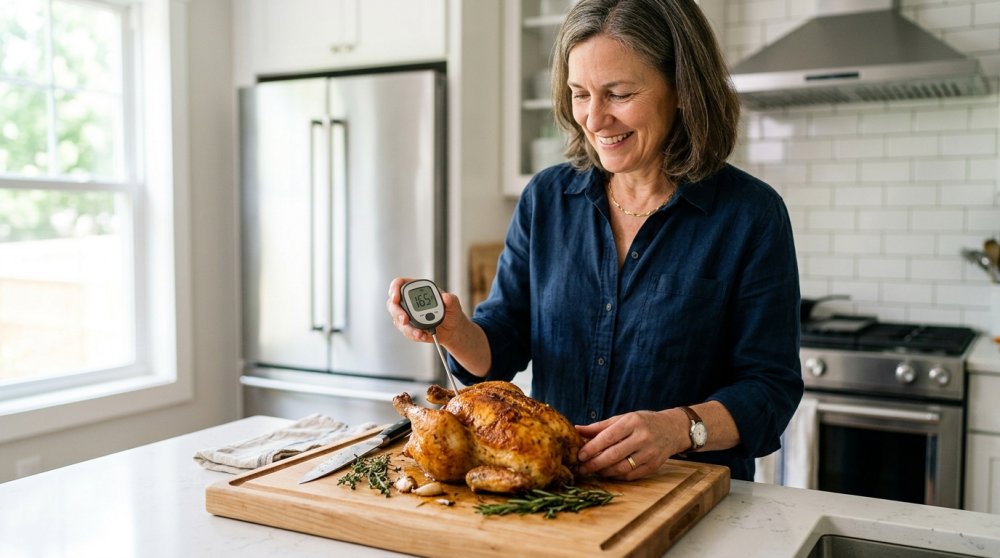
Prevention starts at the grocery store. Keep raw poultry sealed, refrigerate promptly, and cook to an internal temperature of 165 °F. A simple digital thermometer removes the guesswork.
Cutting boards and knives used for chicken should be washed with hot, soapy water before touching other foods. This single step sharply reduces the chance of cross-contamination.
“Color is not a reliable indicator of doneness,” notes registered dietitian Mark Ellison. “Only a calibrated thermometer confirms safety.”
Leftovers should cool quickly and be reheated to 165 °F as well. When in doubt, it is safer to discard questionable portions than risk another round of discomfort.
