Health
The Secret to Sleeping Through Summer Heat That Doctors Don’t Tell You

Health Points
- Optimal bedroom temperature for sleep ranges between 60-67°F, as cooler environments help trigger the body’s natural sleep mechanisms
- Strategic cooling methods—from lightweight bedding to pre-sleep showers—can significantly improve sleep quality during warm weather
- Heat-related sleep disruption affects both sleep duration and quality, potentially impacting overall health and daily functioning
Summer nights can transform restful sleep into a sweaty struggle, leaving many Americans tossing and turning until dawn. As temperatures climb, understanding how to maintain comfortable sleep conditions becomes essential for both health and daily productivity.
The connection between temperature and sleep quality runs deeper than simple comfort. Our bodies naturally cool down as part of the sleep process, and excessive heat interferes with this biological mechanism. When the bedroom becomes too warm, it disrupts the body’s ability to regulate temperature, leading to fragmented sleep and morning fatigue.
Sleep specialists emphasize that temperature control represents one of the most controllable factors in sleep quality. Unlike stress or schedule demands, bedroom climate remains largely within our direct influence. Making strategic adjustments can yield immediate improvements in how well we rest.
The ideal sleeping temperature falls between 60 and 67 degrees Fahrenheit. This range supports the body’s natural temperature drop during sleep cycles. Many households keep thermostats higher for economic reasons, but even modest adjustments toward this range can produce noticeable benefits.
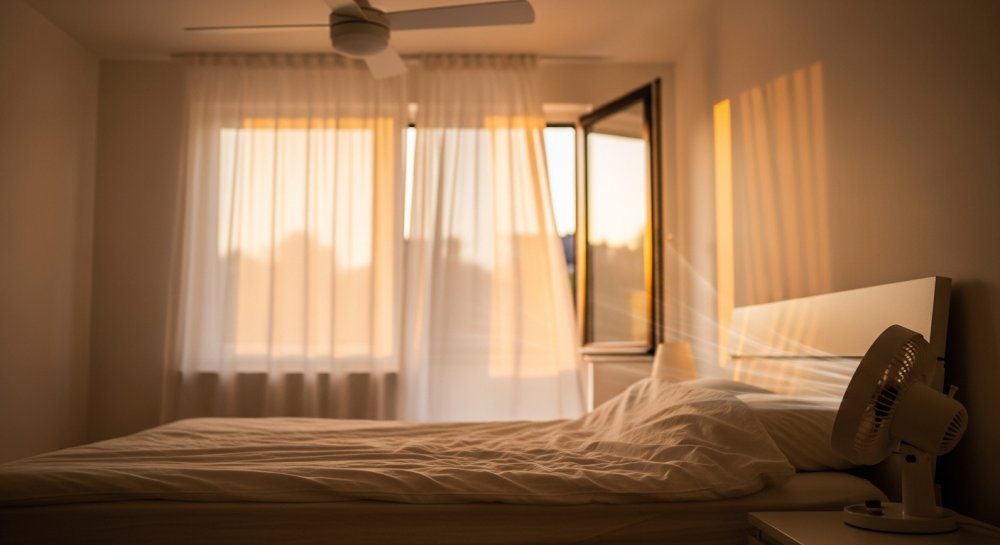
Air circulation plays a crucial role when air conditioning isn’t available or practical. Opening windows on opposite sides of a room creates cross-ventilation that moves hot air out while drawing cooler evening air inside. Strategic fan placement amplifies this effect, with one fan pulling hot air out while another brings fresh air in.
Bedding choices matter more during summer than any other season. Heavy comforters and synthetic materials trap heat against the body, preventing the natural cooling that sleep requires. Switching to lightweight cotton or linen sheets allows better air circulation and moisture wicking. Some families keep separate summer and winter bedding sets, recognizing that seasonal needs differ substantially.
A lukewarm shower before bed offers a counterintuitive benefit. While hot water seems relaxing, it raises core body temperature. A tepid shower, however, cools the skin surface and supports the body’s natural temperature decline. The evaporation of water from skin provides additional cooling that extends beyond the shower itself.
Cotton sleepwear outperforms synthetic alternatives in warm weather. Natural fibers breathe better and absorb moisture more effectively than polyester or nylon. Some sleep experts recommend minimal sleepwear or none at all, though personal and family preferences vary. The key principle remains reducing barriers between skin and air circulation.
Cooling pillows and mattress toppers have gained popularity as targeted solutions. These products use gel layers or special foams designed to dissipate heat rather than retain it. While representing an investment, they address one of the primary contact points between body and bedding where heat accumulates most.
Electronic devices generate surprising amounts of heat. Televisions, computers, and charging phones all emit warmth that contributes to bedroom temperature. Beyond the well-documented sleep benefits of removing screens from bedrooms, unplugging devices entirely reduces ambient heat and supports better rest.
Hydration status affects how well the body manages temperature regulation. Drinking adequate water throughout the day supports the physiological processes that cool us during sleep. However, drinking too much immediately before bed creates its own disruption through nighttime bathroom trips. Maintaining consistent hydration during daytime hours represents the balanced approach.
Room-darkening solutions serve dual purposes in summer. Blackout curtains or shades block light that disrupts circadian rhythms while also preventing afternoon sun from heating bedrooms before nighttime. Closing these coverings during the hottest part of the day keeps rooms noticeably cooler by evening.
The consequences of heat-disrupted sleep extend beyond grogginess. Poor sleep affects immune function, emotional regulation, and cognitive performance. For families, one person’s sleep struggles often impact household dynamics the following day. Addressing temperature issues benefits not just individual rest but family wellbeing.
Some traditional cooling methods retain value despite modern alternatives. Placing a bowl of ice in front of a fan creates a simple air conditioning effect. Freezing a hot water bottle during the day and using it as a cooling pack at night provides targeted relief. These low-cost solutions work particularly well for those on limited budgets or in temporary housing.
Timing matters when implementing cooling strategies. Starting preparations an hour before bed allows the bedroom to reach comfortable temperatures by sleep time. Last-minute efforts rarely provide sufficient cooling, especially in well-insulated modern homes that retain daytime heat effectively.
For those struggling despite environmental adjustments, underlying sleep disorders may require medical attention. Chronic insomnia, sleep apnea, and other conditions worsen in heat but stem from separate causes. Persistent sleep problems warrant consultation with healthcare providers rather than relying solely on temperature management.
As summer intensifies and heat waves become more common, mastering bedroom climate control represents practical self-care. Small changes in bedding, ventilation, and pre-sleep routines can transform difficult nights into restorative rest. Quality sleep remains foundational to health, making these adjustments worthwhile investments in overall wellbeing.
