Health
Two Skin Conditions Often Confused by Doctors

Health Points
- Eczema typically appears in body creases while psoriasis favors elbows, knees, and scalp
- Both conditions stem from immune system dysfunction but respond to different treatments
- Proper diagnosis requires examining texture, location, and family history patterns
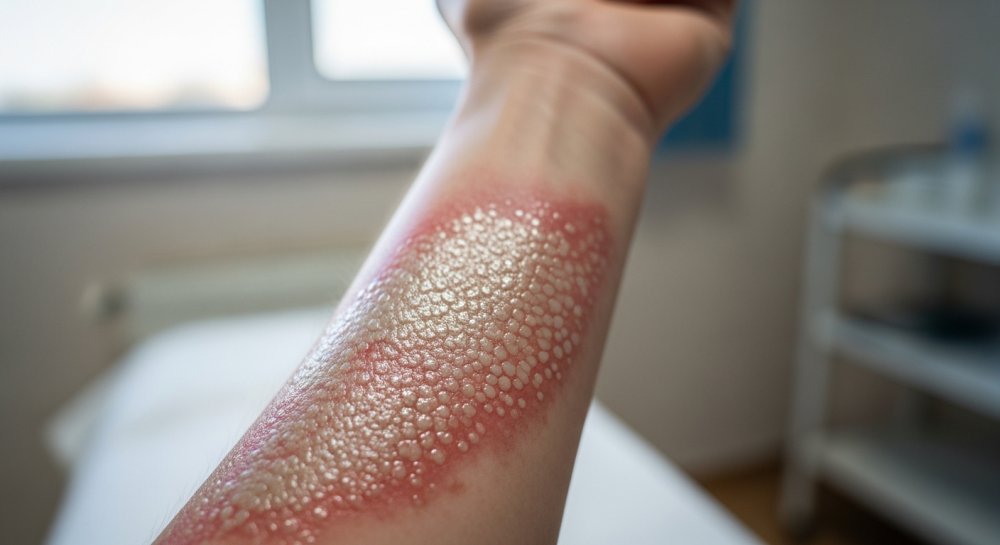
Millions of Americans struggle with chronic skin conditions that look remarkably similar at first glance. Two of the most commonly mistaken disorders — eczema and psoriasis — share symptoms like redness, itching, and inflamed patches, yet require entirely different treatment approaches.
The distinction matters more than many realize. Applying the wrong treatment can worsen symptoms and delay relief for months.
Eczema, medically known as atopic dermatitis, tends to develop during childhood and often appears in areas where skin folds. The condition creates dry, scaly patches that feel rough to the touch. Sufferers frequently report intense itching that worsens at night.
The disorder runs in families with histories of allergies, asthma, and hay fever. Environmental triggers like harsh soaps, certain fabrics, and stress commonly spark flare-ups.
Psoriasis follows a different pattern entirely. This autoimmune condition accelerates skin cell production, causing cells to build up rapidly on the surface. The result: thick, silvery scales over red, inflamed skin that may crack and bleed.
Unlike eczema’s preference for inner elbows and behind knees, psoriasis commonly targets the outer elbows, knees, scalp, and lower back. The plaques appear more defined with clearer borders than eczema’s diffuse patches.
Age of onset provides another clue. While eczema typically emerges in early childhood, psoriasis most often develops between ages 15 and 35, though it can appear at any age.
The texture tells a story too. Eczema creates rough, leathery skin from repeated scratching. Psoriasis produces raised plaques topped with silvery-white scales that flake off when scraped.
Treatment protocols diverge significantly between the two conditions. Eczema management focuses on moisturizing, avoiding triggers, and using topical steroids during flare-ups. Gentle skin care routines and identifying allergens play crucial roles.
Psoriasis treatment requires a more aggressive approach. Dermatologists may prescribe topical vitamin D analogues, light therapy, or systemic medications that calm the overactive immune response. Biologics — medications derived from living organisms — have revolutionized psoriasis care in recent years.
Both conditions can affect quality of life beyond physical discomfort. The visible nature of skin lesions often leads to self-consciousness and social anxiety. Mental health support should accompany medical treatment.
Climate and season influence both disorders, though differently. Many eczema patients find relief in humid environments, while dry air worsens symptoms. Psoriasis patients often improve with sun exposure and worsen during winter months when natural sunlight decreases.
Complicating matters further: some people develop both conditions simultaneously. A thorough dermatological examination, sometimes including a skin biopsy, may be necessary for definitive diagnosis.
Neither condition is contagious, despite persistent misconceptions. Education about these disorders helps reduce stigma that patients frequently face.
Recent research has uncovered genetic markers associated with both conditions. Scientists continue investigating why certain individuals develop these disorders while others don’t. Understanding the genetic component may lead to targeted therapies in coming years.
For anyone experiencing persistent skin symptoms, professional evaluation remains essential. What appears as simple dry skin may actually be a chronic condition requiring specialized care. Early diagnosis and proper treatment can prevent complications and improve comfort significantly.
Home remedies and over-the-counter treatments might provide temporary relief but rarely address underlying causes. Working with a dermatologist ensures appropriate long-term management strategies tailored to individual needs.
