Nutrition
The Protein-Packed Plant-Based Snacks Nutritionists Keep in Their Pantries

Health Points
- Plant-based protein snacks can deliver 10-20 grams of protein per serving, rivaling many animal-based options
- Combining protein-rich foods with healthy fats and fiber helps stabilize blood sugar and sustain energy levels throughout the day
- Registered dietitians recommend portioning high-calorie vegan snacks to avoid exceeding daily caloric needs while maximizing nutritional benefits
For adults over 40 looking to maintain muscle mass and energy levels, protein intake becomes increasingly important. Plant-based eating doesn’t mean sacrificing this essential nutrient—numerous vegan snack options now deliver impressive protein counts that rival traditional sources.
Registered dietitians emphasize that the recommended dietary allowance of 0.8 grams of protein per kilogram of body weight represents a minimum baseline. Many health experts now suggest higher intake for optimal health, particularly as we age.
“Meeting your protein needs through plant-based sources is absolutely achievable,” explains nutrition science research. “The key is selecting nutrient-dense options that provide complete amino acid profiles.”
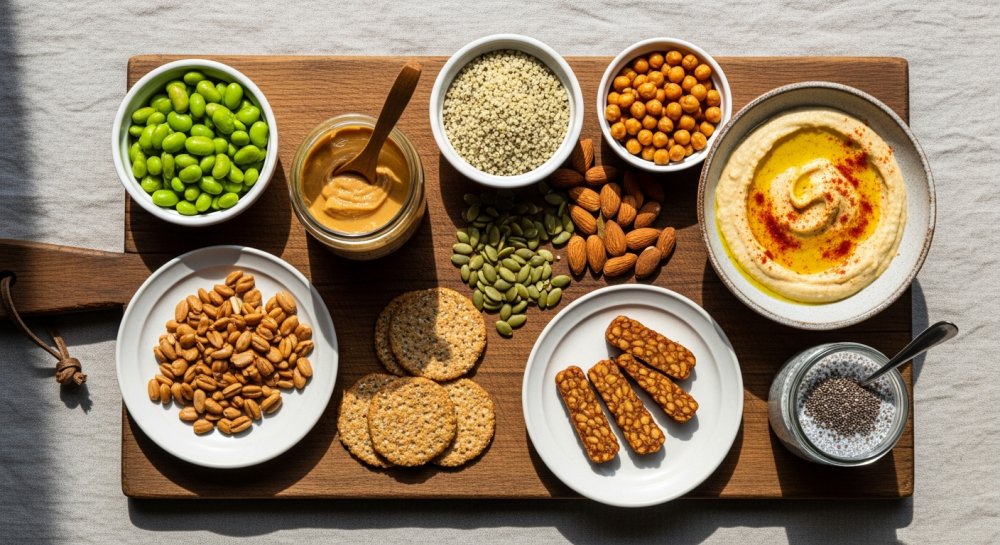
Roasted edamame leads the pack among portable plant proteins. A single cup delivers approximately 18 grams of protein along with heart-healthy fiber. These young soybeans offer a convenient grab-and-go option that requires no refrigeration once dried and roasted.
Seitan, made from wheat gluten, stands out with an impressive 21 grams of protein per 3-ounce serving. This meat alternative has been used in Asian cuisine for centuries and adapts well to various flavor profiles when prepared with herbs and spices.
Peanut butter remains a pantry staple for good reason—two tablespoons provide about 8 grams of protein. Pairing it with whole grain crackers or apple slices creates a balanced snack that combines protein with complex carbohydrates and fiber.
Hemp seeds offer a complete protein source with all nine essential amino acids. Three tablespoons contain roughly 10 grams of protein plus beneficial omega-3 fatty acids. Sprinkle them over yogurt alternatives or blend into smoothies for an easy nutritional boost.
Hummus delivers about 8 grams of protein per half-cup serving while providing satisfying texture and flavor variety. Made from chickpeas, tahini, and olive oil, this Mediterranean staple pairs perfectly with vegetable sticks or whole wheat pita.
Protein bars formulated for plant-based diets now commonly contain 10-20 grams of protein from sources like pea protein, brown rice protein, and nuts. Reading labels carefully helps identify options with minimal added sugars and artificial ingredients.
Lentil chips have emerged as a crunchy alternative to traditional potato chips. These legume-based snacks typically provide 4-5 grams of protein per ounce—significantly more than conventional chips.
Nutritionists caution that portion control matters even with healthy snacks. Many plant-based protein sources are calorie-dense due to their healthy fat content.
“A quarter-cup of almonds gives you about 6 grams of protein, but it also contains roughly 170 calories,” dietary guidance notes. “Being mindful of serving sizes helps you get the protein benefits without overshooting your daily calorie needs.”
Chia pudding prepared with plant-based milk creates a protein-rich dessert or snack option. Three tablespoons of chia seeds contain about 5 grams of protein and expand when soaked, creating a satisfying gel-like consistency.
Tempeh, another fermented soy product, provides approximately 15 grams of protein per half-cup serving. The fermentation process makes the nutrients more bioavailable and adds beneficial probiotics for digestive health.
Roasted chickpeas offer a crunchy, savory snack with about 15 grams of protein per cup. Simple oven-roasting with olive oil and seasonings transforms canned chickpeas into an addictive treat that stores well in airtight containers.
Nutritional yeast has gained popularity beyond vegan circles for its cheesy flavor and impressive nutrient profile. Two tablespoons provide roughly 8 grams of complete protein plus B vitamins often lacking in plant-based diets.
Pumpkin seeds pack 9 grams of protein per quarter-cup along with magnesium, zinc, and iron. These minerals become particularly important for women over 40 managing hormonal changes.
Black bean brownies demonstrate how legumes can elevate traditional treats. Using pureed black beans as a base adds approximately 8 grams of protein per serving while reducing refined flour content.
Energy bites made from dates, nuts, and protein powder create customizable snacks that travel well. Homemade versions allow control over sugar content and ingredient quality while delivering 5-8 grams of protein per ball.
Soy milk contains about 7 grams of protein per cup—comparable to dairy milk. Choosing fortified versions ensures adequate calcium and vitamin D intake, particularly important for bone health as we age.
Quinoa, though often served as a side dish, works well as a snack base. One cup of cooked quinoa provides 8 grams of complete protein and can be seasoned sweet or savory for variety.
Trail mix combining nuts, seeds, and dried fruit offers portable nutrition with variable protein content depending on the nut ratio. Prioritizing almonds, cashews, and pumpkin seeds maximizes the protein payoff.
Health experts emphasize that successful vegan eating requires intentional planning rather than simply eliminating animal products. Focusing on whole food sources rather than highly processed alternatives supports overall wellness goals while meeting protein requirements.
For those transitioning to more plant-based eating, starting with familiar formats—veggie burgers, protein bars, nut butters—can ease the adjustment while ensuring adequate nutrition. Over time, expanding to less processed whole food options often feels natural and sustainable.
