Nutrition
Seven Simple Grocery Switches That Could Transform Your Digestive Health

Health Points
- Americans consume only 10-15 grams of fiber daily, well below the recommended 25-35 grams needed for optimal health
- Simple food swaps at the grocery store can double or triple fiber intake without drastic diet changes
- Choosing whole grain alternatives and keeping fruit skins on can significantly boost digestive health and reduce disease risk
Most Americans are falling short on one of the most important nutrients for long-term health, and they might not even realize it. Dietary fiber, the unsung hero of digestive wellness and disease prevention, remains critically lacking in the typical American diet.
The average adult consumes a mere 10-15 grams of fiber daily, according to nutrition experts. That’s less than half the recommended amount of 25-35 grams needed to support optimal health.
“Fiber is essential for maintaining digestive health, regulating blood sugar levels, and reducing the risk of chronic diseases like heart disease and diabetes,” registered dietitians explain. “The good news is that you don’t need to overhaul your entire diet to make a significant difference.”
Strategic substitutions at the grocery store can help bridge this nutritional gap without requiring major lifestyle changes. These seven evidence-based swaps offer a practical approach to boosting fiber intake while maintaining familiar eating patterns.
Choose Whole Grain Bread Over White
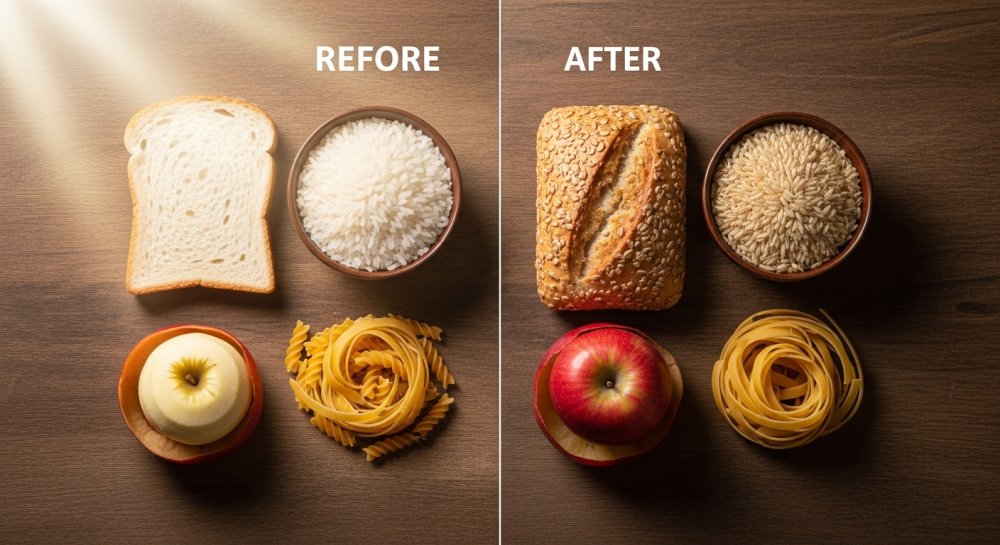
The bread aisle presents one of the easiest opportunities to increase daily fiber intake. Whole grain bread contains approximately 3-4 grams of fiber per slice, while white bread offers less than 1 gram.
This simple switch can add 4-6 grams of fiber to your daily total through sandwiches and toast alone. When shopping, look for “100% whole grain” or “100% whole wheat” as the first ingredient to ensure you’re getting genuine whole grain benefits rather than refined flour with added coloring.
Select Brown Rice Instead of White
Rice serves as a staple in many American households, making it another strategic swap point. Brown rice retains its fiber-rich bran layer, delivering about 3.5 grams of fiber per cooked cup compared to less than 1 gram in the same amount of white rice.
The nutty flavor and slightly chewy texture of brown rice complements both traditional and contemporary dishes. For those concerned about cooking time, many brands now offer quick-cooking brown rice varieties that prepare in under 20 minutes.
Keep Fruit and Vegetable Skins On
Much of produce’s fiber content resides in the skin and outer layers. Peeling apples, pears, potatoes, and cucumbers removes a substantial portion of their nutritional value.
An apple with skin provides about 4.5 grams of fiber, while a peeled apple drops to approximately 2 grams. Similarly, a medium potato with skin contains about 4 grams of fiber compared to 2.5 grams without.
“The skins are where many of the nutrients and fiber are concentrated,” nutritionists note. “As long as you wash your produce thoroughly, there’s no reason to remove this valuable part.”
Switch to Whole Grain Pasta
Traditional refined pasta offers minimal fiber—about 2 grams per cooked cup. Whole grain pasta, by contrast, provides 6-7 grams in the same serving.
Modern whole grain pasta varieties have improved significantly in taste and texture over earlier versions. Many families find that pairing whole grain pasta with flavorful sauces makes the transition seamless, particularly when introducing the change gradually by mixing half regular and half whole grain initially.
Choose Beans and Legumes Over Meat
While meat provides valuable protein, it contains zero fiber. Beans and legumes offer both protein and substantial fiber content, making them powerful nutritional performers.
A half-cup of black beans delivers 7-8 grams of fiber along with protein, while the same portion of lentils provides about 8 grams. Replacing meat with legumes even once or twice weekly can significantly boost fiber intake.
Canned varieties offer convenience without sacrificing nutrition. Rinsing canned beans reduces sodium content while preserving fiber and protein.
Select High-Fiber Breakfast Cereals
Morning cereal choices can set the tone for daily fiber intake. Many popular cereals contain less than 3 grams of fiber per serving, while high-fiber options deliver 5-14 grams in a single bowl.
Reading nutrition labels becomes crucial in the cereal aisle. Look for options listing whole grains as the primary ingredient and providing at least 5 grams of fiber per serving.
Adding fresh berries—which contribute additional fiber—creates a breakfast providing nearly one-third of daily fiber needs.
Opt for Whole Fruit Over Juice
Fruit juice, even 100% varieties, lacks the fiber found in whole fruit. The juicing process removes pulp and fiber while concentrating natural sugars.
An orange contains approximately 3 grams of fiber and takes longer to eat, promoting satiety. A glass of orange juice provides zero fiber and can be consumed quickly, offering less satisfaction despite similar calorie counts.
This principle applies across all fruit choices. Choosing an apple over apple juice, or snacking on grapes rather than drinking grape juice, multiplies fiber intake while providing more sustained energy.
The Broader Health Picture
These straightforward swaps address more than just fiber deficiency. Higher fiber intake associates with reduced risks of heart disease, type 2 diabetes, certain cancers, and digestive disorders.
Fiber helps maintain healthy cholesterol levels, stabilizes blood sugar, supports weight management, and promotes beneficial gut bacteria—all factors that become increasingly important after age 40.
“Small changes compound over time,” health experts emphasize. “You don’t need to make all seven swaps at once.”
Starting with one or two modifications allows your digestive system to adjust gradually. Many people find that as they increase fiber intake, they naturally gravitate toward more whole foods and feel satisfied with smaller portions.
The key lies in consistency rather than perfection. Even implementing three or four of these swaps regularly can bridge much of the fiber gap facing most Americans, supporting better health for years to come.
