Health
The Simple Kitchen Staples That Could Finally Bring Relief

Health Points
- Natural remedies like prune juice, flaxseed, and magnesium can help relieve constipation without medication
- Lifestyle changes including exercise, hydration, and establishing a bathroom routine support regular bowel movements
- Persistent constipation lasting more than three weeks warrants a consultation with your healthcare provider
For the millions of Americans dealing with occasional constipation, relief may be closer than you think—right in your kitchen cabinet or pantry.
According to gastroenterologists and nutrition experts, several evidence-based natural remedies can help restore regularity without immediately turning to over-the-counter medications. From time-tested prune juice to fiber-rich ground flaxseed, these gentle approaches work with your body’s natural processes.
“Constipation is incredibly common, especially as we age,” says Dr. Patricia Raymond, a gastroenterologist and fellow of the American College of Gastroenterology. “The good news is that for most people, simple dietary and lifestyle modifications can make a significant difference.”
The definition of constipation goes beyond just infrequent bowel movements. Medical professionals consider it constipation when you have fewer than three bowel movements per week, experience hard or lumpy stools, strain during bowel movements, or feel like you can’t completely empty your bowels.
Before reaching for medication, experts recommend trying these natural approaches:
Prune Power
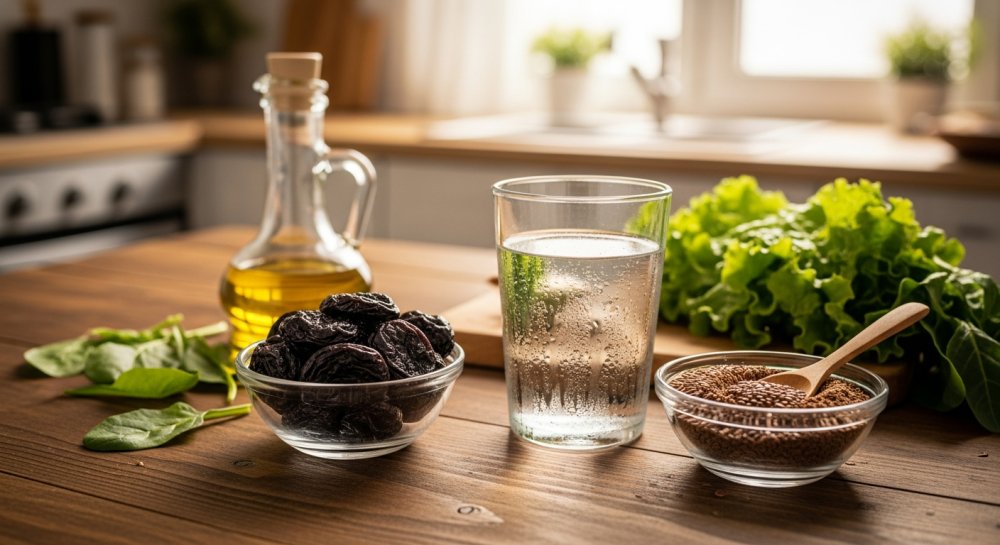
Prunes and prune juice have earned their reputation as nature’s laxative for good reason. These dried plums contain both soluble and insoluble fiber, plus sorbitol, a natural sugar alcohol that draws water into the colon.
“A single prune contains about one gram of fiber,” notes registered dietitian Samantha Cassetty. “Starting with four to five prunes daily can help many people achieve regularity.”
For those who prefer drinking to eating, prune juice offers similar benefits, though whole prunes provide more fiber.
Flaxseed and Fiber
Ground flaxseed serves double duty, providing both soluble and insoluble fiber while also offering omega-3 fatty acids. The key is using ground flaxseed rather than whole seeds, which can pass through your digestive system undigested.
“Start with one tablespoon of ground flaxseed sprinkled on yogurt, oatmeal, or salads,” recommends Dr. Will Bulsiewicz, a gastroenterologist and gut health expert. “You can gradually increase to two or three tablespoons daily if needed.”
Chia seeds offer similar benefits and can be easily incorporated into smoothies or made into chia pudding.
The Hydration Connection
Dehydration is one of the most common—and most overlooked—causes of constipation. When your body doesn’t have enough water, it pulls moisture from your stool, making it harder and more difficult to pass.
While individual needs vary, aiming for eight to ten glasses of water daily provides a good baseline for most adults. Coffee and tea can contribute to your fluid intake, though their mild diuretic effect means they shouldn’t be your only source of hydration.
Magnesium Matters
Magnesium citrate works as a gentle osmotic laxative, drawing water into the intestines to soften stool and promote bowel movements. This essential mineral also helps relax intestinal muscles.
“Magnesium supplements can be very effective, but start with a lower dose to see how your body responds,” advises Dr. Raymond.
Always consult your healthcare provider before starting any supplement, especially if you take other medications or have kidney issues.
Get Moving
Physical activity isn’t just good for your heart and waistline—it also helps keep your digestive system moving. Exercise stimulates intestinal muscle contractions and can reduce the time it takes for food to move through your colon.
“Even a 20-minute daily walk can make a noticeable difference,” says Dr. Bulsiewicz. “The movement helps stimulate the natural contractions of your intestinal muscles.”
You don’t need intense workouts; gentle activities like walking, swimming, or yoga can all support healthy digestion.
Establish a Routine
Your digestive system thrives on consistency. Try to use the bathroom at the same time each day, ideally after meals when your gastrocolic reflex is most active—this is the natural urge to have a bowel movement that occurs after eating.
“Don’t ignore the urge to go,” warns Dr. Raymond. “When you repeatedly delay bowel movements, your body may stop sending those signals as strongly.”
Take your time in the bathroom without rushing or straining. Using a small footstool to elevate your feet while sitting on the toilet can help position your body for easier elimination.
Olive Oil in the Morning
A tablespoon of olive oil taken on an empty stomach may help lubricate the digestive system and promote bowel movements. The healthy fats in olive oil can help soften stool and stimulate the digestive tract.
Some people prefer mixing the olive oil with a small amount of lemon juice for easier consumption.
Warm Liquids
Starting your day with warm water, herbal tea, or warm lemon water can help stimulate digestive activity. The warmth helps relax intestinal muscles and promote movement through your digestive tract.
When to See a Doctor
While occasional constipation responds well to natural remedies, certain situations require medical attention. Consult your healthcare provider if constipation persists for more than three weeks, you experience severe abdominal pain, you notice blood in your stool, or you have unexplained weight loss.
“Chronic constipation can sometimes signal underlying health conditions that need professional evaluation,” explains Dr. Raymond. “Don’t hesitate to discuss digestive issues with your doctor—we deal with these concerns every day.”
For those over 50, new-onset constipation or changes in bowel habits should always be evaluated by a healthcare professional, as these can sometimes indicate more serious conditions requiring screening.
The path to digestive regularity often requires patience and a willingness to experiment with different approaches. What works for one person may not work for another, so give each remedy at least a week before moving on to try something different.
By combining several of these natural strategies—better hydration, more fiber, regular exercise, and established bathroom routines—most people can find relief from occasional constipation without medication. The key is making these habits part of your daily routine rather than only trying them when problems arise.
