Nutrition
What Happens When You Soak Strawberries in Salt Water

Health Points
- Small fruit flies and their larvae naturally occur in fresh strawberries and pose no health risk when consumed
- Salt water soaking can draw out insects but may also affect berry texture and flavor
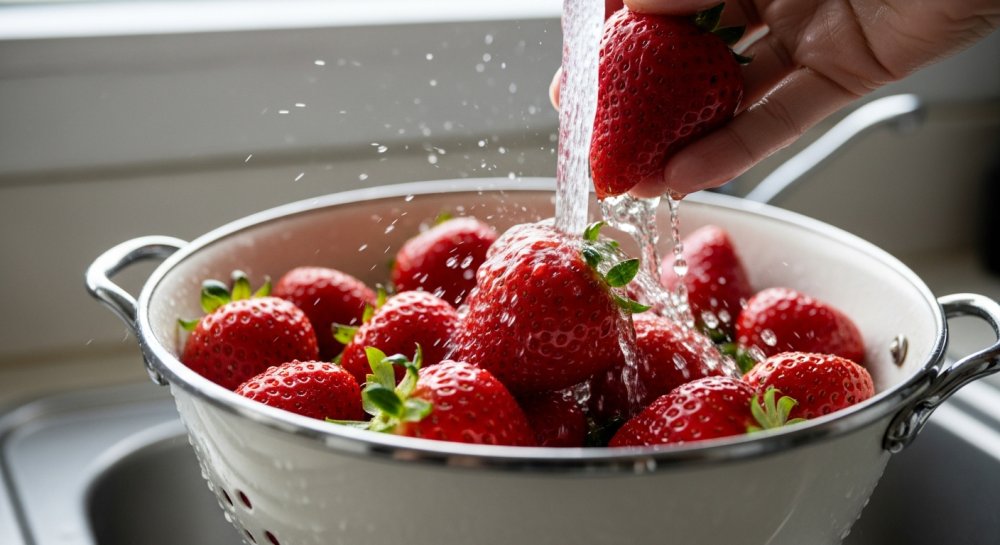
- Thorough rinsing under cold tap water remains the most effective cleaning method recommended by food safety experts
A viral social media trend has sparked concern among berry lovers nationwide, with videos showing tiny creatures emerging from strawberries soaked in salt water. But health experts say there’s no cause for alarm about these common garden visitors.
The phenomenon has prompted millions of Americans to question their fruit-washing habits. Food safety specialists confirm that what appears in these videos are typically fruit fly larvae or thrips—microscopic insects that naturally inhabit berry crops.
“These tiny organisms are completely harmless and have been part of our food supply since the beginning of agriculture,” explains Dr. Sarah Mitchell, a food science researcher at Cornell University. “The human digestive system easily processes these protein sources without any adverse effects.”
Commercial strawberry production involves rigorous quality standards, yet the U.S. Food and Drug Administration acknowledges that small amounts of natural defects—including insect fragments—are inevitable in fresh produce. Current regulations allow for minimal presence of these elements as they pose no health threat.
The salt water method, while effective at revealing hidden larvae, may not be the best approach for everyday berry preparation. Agricultural extension services note that soaking strawberries can compromise their texture and accelerate spoilage.
“We recommend a quick rinse under cold running water just before eating,” says Dr. Mitchell. “This removes surface debris and pesticide residues while preserving the berry’s quality and flavor.”
For those still concerned about potential hitchhikers, experts suggest purchasing organic strawberries or those from local farmers markets where growing practices can be discussed directly with producers. Frozen strawberries undergo processing that eliminates any larvae present.
The viral videos have inadvertently highlighted an important nutritional truth: strawberries remain one of the healthiest fruit choices for adults over 40. Rich in vitamin C, antioxidants, and fiber, they support heart health and cognitive function—benefits that far outweigh concerns about microscopic natural elements.
Dr. Mitchell emphasizes perspective when evaluating food purity. “Americans consume far more concerning substances through processed foods than they ever would from a fruit fly larva in fresh produce,” she notes. “The real health risk comes from avoiding nutrient-rich fruits and vegetables out of unnecessary fear.”
Rather than abandoning strawberries, nutritionists encourage consumers to focus on the bigger picture of dietary wellness. A single cup of strawberries provides more than 100 percent of the daily recommended vitamin C intake while delivering only 50 calories.
For households committed to maximum produce cleanliness, food safety experts recommend buying strawberries frequently in smaller quantities, storing them properly in the refrigerator, and washing only the amount needed for immediate consumption. This approach maintains freshness while minimizing any unwanted additions.

Marcus Max Gunkel
May 24, 2026 at 7:57 am
What this article fails to mention is that strawberries absorb more pesticides than any other fruit or vegetable in the produce department. While consumption of minute traces or even whole small insects such as fruit flies me not harm you, the pesticides used to kill these critters will. Not only are the present on the surface of strawberries, but the berry itself absorbs them into the fruit.