Mindfulness
The Sound Wave Technique Changing How We Think About Mental Wellness

Health Points
- Binaural beats create a perceived third tone when two slightly different frequencies play in each ear, potentially influencing brain wave patterns
- Research suggests these audio patterns may support relaxation, focus, and creativity, though more large-scale studies are needed
- Safe and accessible through headphones, binaural beats offer a low-cost wellness tool worth exploring alongside traditional health practices
For those exploring natural approaches to mental wellness, a unique audio technique has been quietly gaining attention among health-conscious adults. Binaural beats—specialized sound patterns that create an auditory illusion—are now being studied for their potential to support mood, focus, and creative thinking.
The concept is surprisingly simple. When slightly different sound frequencies play in each ear through headphones, the brain perceives a third tone that doesn’t actually exist in the external environment.
This perceived beat occurs at a frequency equal to the difference between the two tones. For example, if one ear hears 200 Hz and the other hears 210 Hz, the brain processes a 10 Hz beat.
Health researchers have found this phenomenon may influence brain wave activity in measurable ways. Different frequencies of binaural beats appear to correspond with various mental states—from deep relaxation to heightened alertness.
Delta waves (1-4 Hz) are associated with deep sleep and restorative rest. Theta waves (4-8 Hz) connect to meditation, creativity, and the borderline between waking and sleeping.
Alpha waves (8-14 Hz) relate to relaxed awareness and calm focus. Beta waves (14-30 Hz) correspond to active thinking and concentration, while gamma waves (30-100 Hz) link to high-level cognitive processing.
The science behind binaural beats rests on a principle called “brainwave entrainment”—the idea that external rhythmic stimuli can influence internal neural rhythms. When exposed to binaural beats, the theory suggests, brain waves may begin to sync with the frequency of the perceived beat.
Several studies have explored potential benefits. A 2020 research review published in *Psychological Research* found that binaural beats in the beta and gamma frequencies may enhance attention and memory in healthy adults.
Other research has examined mood effects. A 2019 study in the *International Journal of Nursing Practice* observed that nurses who listened to binaural beats reported reduced stress and improved mood after their shifts.
For creative pursuits, theta-frequency binaural beats have shown promise. These frequencies appear to support the relaxed-yet-focused mental state often described by artists, writers, and problem-solvers during their most productive moments.
Dr. Andrew Huberman, a neuroscientist at Stanford University, has discussed binaural beats in the context of neuroplasticity and focus. While noting that evidence remains preliminary, he acknowledges the technique’s potential as a low-cost, accessible wellness tool.
“The brain is remarkably responsive to rhythmic input,” Huberman has noted in his research communications. “While we need more robust clinical trials, the existing data suggests binaural beats may offer genuine cognitive benefits for some individuals.”
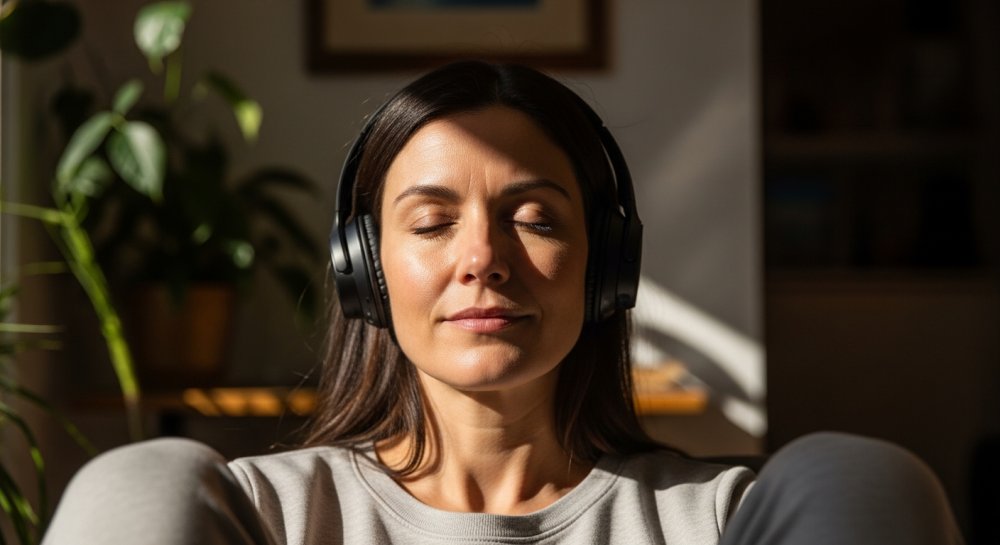
Using binaural beats requires only headphones and a quiet environment. Numerous apps and streaming platforms offer specialized tracks targeting different outcomes—from sleep support to study sessions.
Most practitioners recommend starting with 15-30 minute sessions. Consistency appears more important than duration, with many users reporting gradual improvements over weeks rather than immediate dramatic changes.
The approach is generally considered safe for healthy adults. However, individuals with epilepsy or seizure disorders should consult healthcare providers before using binaural beats, as rhythmic stimuli can potentially trigger seizures in susceptible individuals.
Those with hearing impairments in one ear may not experience the full effect, since the technique requires slightly different sounds in each ear. Additionally, binaural beats work only through headphones or earbuds—speakers won’t produce the necessary stereo separation.
Health experts emphasize that binaural beats should complement, not replace, established wellness practices. Regular exercise, quality sleep, nutritious eating, and meaningful social connections remain the foundation of mental and physical health.
For individuals already maintaining these healthy habits, binaural beats may offer an additional tool for fine-tuning mental states throughout the day. Morning beta-frequency sessions might support alertness and focus, while evening delta-frequency tracks could support the transition to restful sleep.
The accessibility of this technique appeals to many in the 40-and-older demographic seeking evidence-based wellness approaches that fit easily into daily routines. Unlike supplements or complex equipment, binaural beats require minimal investment and no special training.
As research continues, scientists are working to identify which frequencies benefit which outcomes most reliably. Future studies will likely explore personalized approaches, recognizing that individual brains may respond differently to the same audio patterns.
For now, binaural beats represent an intriguing intersection of ancient wellness wisdom and modern neuroscience. The technique offers a simple, accessible way to explore the connection between sound, brain activity, and mental well-being.
Those interested in trying binaural beats should approach the practice with realistic expectations. While research shows promise, individual results vary, and dramatic overnight transformations are unlikely.
The most consistent benefits appear among those who use binaural beats regularly as part of a broader commitment to health and wellness—a reminder that sustainable well-being comes from multiple supportive practices working together.
