Nutrition
Seven Everyday Foods That Outrank Eggs in Vitamin D

Health Points
- Sunlight remains the primary source of vitamin D, yet many adults over 40 struggle to meet daily needs through diet alone.
- Seven common foods deliver more vitamin D per serving than a single large egg.
- Traditional, nutrient-dense choices such as fatty fish and fortified dairy continue to offer reliable support for bone and immune health.
Health authorities continue to remind adults that vitamin D supports bone strength and immune function. Many people over 40 find it difficult to maintain adequate levels, especially during winter months or when sun exposure is limited. Dietary choices therefore become an important part of the equation.
Nutritionists point out that one large egg provides roughly 41 international units of vitamin D. Several everyday foods surpass that amount without requiring unusual ingredients or elaborate preparation. The list begins with familiar items found in most grocery stores and ends with options that fit comfortably into family meals.
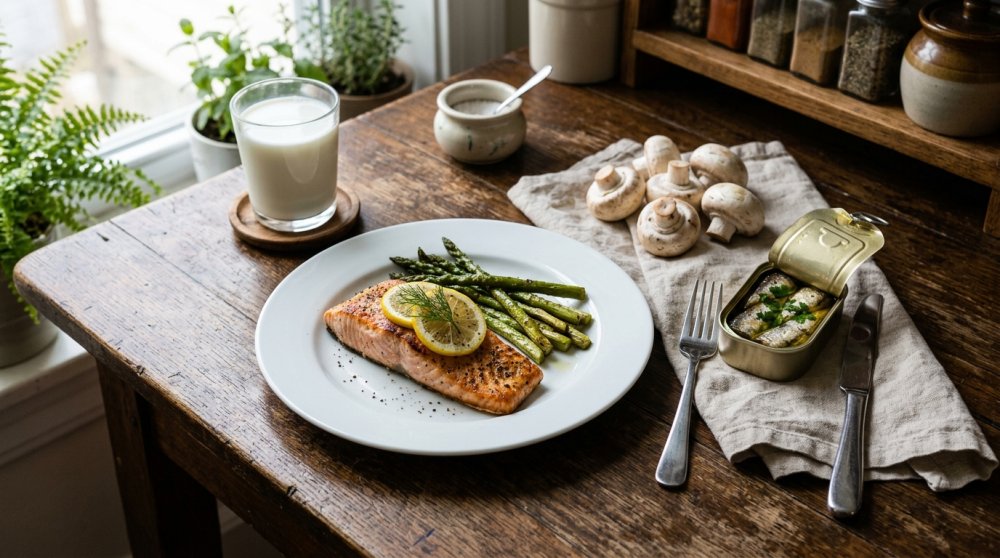
“Fatty fish remain the richest natural source,” notes a registered dietitian who works with mid-life patients. “A three-ounce serving of cooked salmon supplies more than 400 international units, giving adults a meaningful boost in a single meal.”
Canned sardines and tuna follow closely behind, each offering well above the vitamin D found in eggs. A three-ounce portion of sardines delivers about 250 international units, while light canned tuna provides roughly 50. Both choices pair easily with salads or whole-grain crackers for a quick lunch.
Fortified dairy products also earn a place on the list. An eight-ounce glass of fortified whole milk supplies close to 100 international units, while many yogurts marketed to adults now contain similar amounts. Families who prefer traditional meals can incorporate these staples without changing established routines.
“Consistency matters more than perfection,” the dietitian adds. “Choosing one or two of these foods several times a week helps maintain healthy levels without turning every meal into a calculation.”
Mushrooms exposed to ultraviolet light represent a newer option. When producers treat white button or portobello mushrooms with brief UV exposure, vitamin D content rises dramatically, sometimes reaching several hundred international units per serving. The process mimics the effect of sunlight on human skin and preserves the mushrooms’ familiar taste and texture.
Fortified orange juice and fortified plant milks round out the seven-food list. Each eight-ounce serving typically supplies 100 international units, offering an alternative for those who limit dairy. Labels should be checked, because fortification levels vary by brand.
Health experts emphasize that food sources work best alongside sensible sun exposure and, when necessary, physician-guided supplementation. Adults concerned about vitamin D status are encouraged to discuss testing with their primary-care provider before making major dietary changes.
