Health
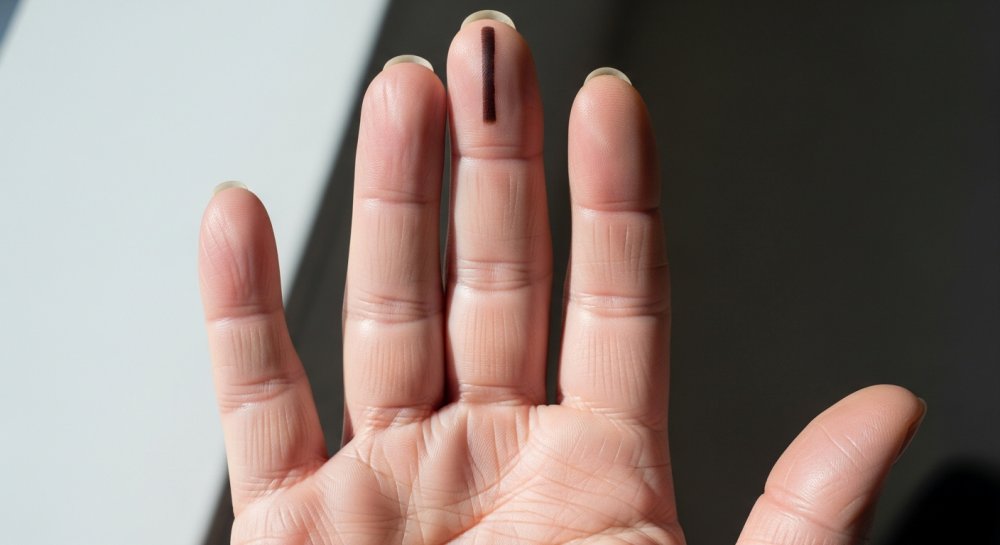
The Dark Stripe on Your Nail That Could Signal Danger

Health Points
- Nail melanoma appears as a dark vertical stripe and accounts for less than 5% of melanoma cases
- The Hutchinson sign—pigmentation spreading to the cuticle—is a key warning indicator requiring immediate medical evaluation
- Early detection is critical as nail melanoma carries higher mortality rates than other melanoma types
A dark streak beneath your fingernail might seem like a simple bruise, but dermatologists warn it could be something far more serious. Nail melanoma, a rare but aggressive form of skin cancer, often hides in plain sight on our hands and feet.
This uncommon cancer develops in the nail matrix—the tissue beneath the nail that produces keratin. Unlike typical melanoma that appears on sun-exposed skin, nail melanoma presents unique challenges for detection and diagnosis.
“Most people don’t think to check their nails for signs of skin cancer,” explains Dr. Adam Friedman, professor and chair of dermatology at George Washington University. “That’s why we often catch these cases later than we’d like.”
The most recognizable symptom is a vertical brown or black stripe running from the cuticle to the tip of the nail, known medically as longitudinal melanonychia. While many dark nail streaks have benign causes—including fungal infections, trauma, or simple pigmentation—the persistent presence of a new, widening, or irregularly colored band warrants immediate medical attention.
The Hutchinson sign represents the most alarming indicator. This occurs when the pigmentation extends beyond the nail itself onto the surrounding skin, particularly the cuticle or nail fold.
“When you see pigment spreading to the cuticle or the skin around the nail, that’s a red flag,” notes Dr. Shari Lipner, associate professor of dermatology at Weill Cornell Medicine. “That’s not something you want to ignore or chalk up to normal aging.”
Nail melanoma accounts for less than 5% of all melanoma cases, yet it carries a disproportionately higher mortality rate. The average five-year survival rate hovers around 60%—significantly lower than the 93% survival rate for melanoma detected on other body sites.
This cancer doesn’t discriminate by age but shows a higher prevalence among individuals over 50. It appears equally on fingers and toes, though thumb and big toe involvement is most common.
Certain populations face elevated risk. People with darker skin tones develop nail melanoma more frequently than other melanoma types—it represents up to 75% of melanomas in African American patients. Those with a personal or family history of melanoma, previous nail trauma, or weakened immune systems should maintain heightened vigilance.
“For people of color, this is the most common type of melanoma they’ll encounter,” emphasizes Dr. Andrew Alexis, vice chair for diversity and inclusion at Weill Cornell Medicine’s dermatology department. “Regular nail checks should be part of everyone’s self-examination routine.”
Diagnosis typically requires a nail biopsy, where a dermatologist removes a small sample of tissue from beneath the nail for laboratory analysis. The procedure, while uncomfortable, provides definitive answers when visual examination proves insufficient.
Treatment depends on cancer stage and extent. Early-stage cases may only require surgical removal of the affected area.
More advanced melanoma necessitates amputation of the fingertip or toe, followed by chemotherapy, radiation, or immunotherapy if the cancer has spread beyond the nail unit.
Prevention strategies mirror those for other skin cancers. Protect your hands and feet with broad-spectrum sunscreen when spending extended periods outdoors.
Avoid excessive UV exposure from nail salon lamps by applying sunscreen before manicures or wearing UV-protective gloves with the fingertips cut off. Regular self-examinations of all nails—both fingers and toes—create opportunities for early detection.
Dermatologists recommend the ABCDEF criteria specifically modified for nail melanoma: Age (50-70 years peak incidence), Brown-Black band, Change in size or growth rate, Digit most commonly involved (thumb or big toe), Extension of pigment onto surrounding skin, and Family or personal history of melanoma.
The key message remains simple but vital: any new, changing, or concerning mark on or around your nails deserves professional evaluation. What seems like a minor cosmetic issue could represent a life-threatening condition requiring immediate intervention.
“Don’t wait for it to hurt or for the nail to fall off,” warns Dr. Friedman. “By the time nail melanoma causes significant symptoms, it’s often already advanced. Trust your instincts and get it checked.”
Your nails provide valuable windows into your overall health. Taking a few minutes each month to examine them carefully could make the difference between catching cancer early and facing a far more challenging battle down the road.
