Nutrition
The Snacks Health Editors Keep in Their Desk Drawers

Health Points
- High-protein snacks help maintain energy levels and support muscle health throughout the day
- Convenient protein options include Greek yogurt, cottage cheese, hard-boiled eggs, and plant-based alternatives
- Health professionals recommend pairing protein with fiber and healthy fats for sustained nutrition
When mid-afternoon hunger strikes, health-conscious professionals know the right snack can make all the difference. Rather than reaching for sugary options that lead to energy crashes, savvy health editors have discovered protein-rich alternatives that sustain them through demanding workdays.
The importance of protein extends beyond muscle building. This essential macronutrient plays a crucial role in maintaining stable blood sugar levels, supporting immune function, and promoting feelings of fullness between meals. For adults over 40, adequate protein intake becomes increasingly important for preserving muscle mass and supporting overall vitality.
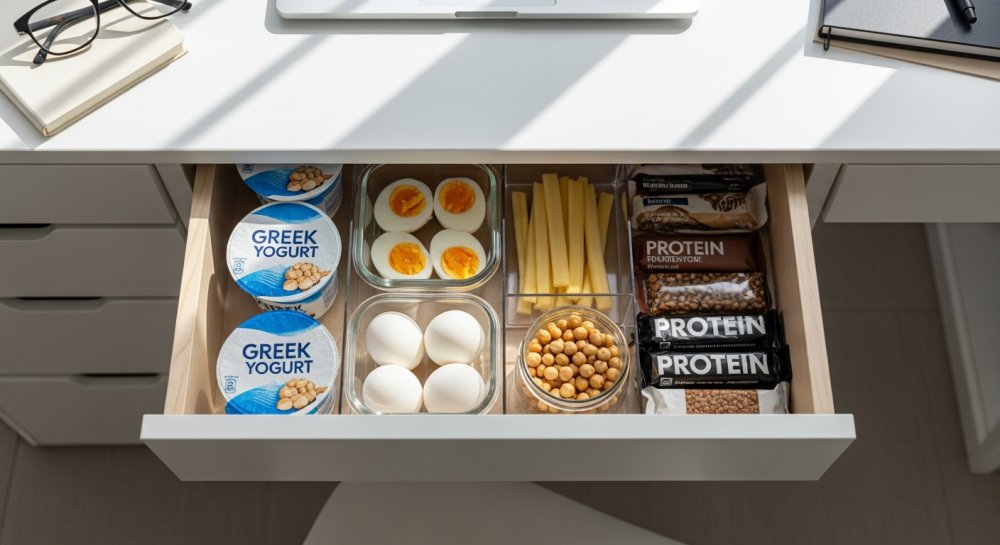
Greek yogurt has emerged as a consistent favorite among nutrition-minded editors. With approximately 15-20 grams of protein per serving, this creamy option provides nearly double the protein of regular yogurt. The tangy taste pairs well with fresh berries or a drizzle of honey, creating a satisfying snack that feels more like a treat than a health food.
Cottage cheese, once dismissed as bland diet food, has experienced a remarkable renaissance. Modern brands offer improved textures and creative flavor combinations that appeal to contemporary palates. A half-cup serving delivers roughly 14 grams of protein along with calcium and other essential nutrients that support bone health—a particular concern for aging adults.
Hard-boiled eggs remain the ultimate convenience food for busy professionals. Prepared in advance and stored in the refrigerator, they provide about 6 grams of protein each along with vitamins D and B12. Their portability makes them ideal for those who need reliable nutrition on the go.
Nut butters spread on whole-grain crackers or apple slices offer another protein-packed option. Almond butter, peanut butter, and cashew butter each provide roughly 7-8 grams of protein per two-tablespoon serving. The combination of protein, healthy fats, and fiber creates lasting satisfaction that prevents mindless snacking later in the day.
For those seeking plant-based alternatives, roasted chickpeas and edamame have gained popularity. A half-cup of edamame contains about 9 grams of protein, while roasted chickpeas provide approximately 6 grams per quarter-cup serving. Both options deliver fiber alongside protein, supporting digestive health and promoting feelings of fullness.
String cheese and other portion-controlled cheese options appeal to those who prefer savory snacks. With roughly 7-8 grams of protein per ounce, cheese provides convenient nutrition without requiring preparation. The individually wrapped portions help with mindful eating and portion control.
Protein bars have evolved significantly from their chalky predecessors. Today’s options feature clean ingredient lists and taste profiles that rival candy bars. Health editors recommend selecting bars with at least 10 grams of protein, minimal added sugars, and recognizable ingredients rather than chemical additives.
Beef jerky and turkey jerky offer portable protein for meat-eaters. These shelf-stable snacks typically provide 9-12 grams of protein per ounce. When selecting jerky, health-conscious consumers should examine sodium content and choose options without excessive additives or preservatives.
The timing of protein consumption matters as much as the amount. Nutrition experts suggest spacing protein intake throughout the day rather than concentrating it all at dinner. Mid-morning and mid-afternoon snacks present ideal opportunities to incorporate these protein-rich options.
For individuals managing weight, protein snacks offer particular advantages. Research indicates that protein increases satiety hormones while reducing hunger hormones, potentially decreasing overall calorie intake. This metabolic advantage makes protein-focused snacking a smart strategy for those maintaining healthy weights as they age.
The convenience factor cannot be overstated. Health editors who maintain demanding schedules emphasize the importance of keeping protein snacks readily available. Desk drawers, office refrigerators, and gym bags stocked with these options prevent the temptation to visit vending machines or fast-food establishments when hunger strikes.
Budget considerations also influence snack choices. While some protein options carry premium price tags, many affordable alternatives exist. Buying plain Greek yogurt in larger containers rather than individual servings, preparing hard-boiled eggs at home, and purchasing nuts in bulk all reduce costs while maintaining nutritional quality.
Food safety deserves attention when storing protein snacks. Perishable items like yogurt, cottage cheese, and hard-boiled eggs require refrigeration and should not sit at room temperature for extended periods. Insulated lunch bags with ice packs help maintain safe temperatures for those without access to refrigeration.
Personal preferences and dietary restrictions naturally influence individual choices. Those with lactose intolerance might favor eggs and nut butters over dairy options. Vegetarians and vegans can select from numerous plant-based protein sources including nuts, seeds, legumes, and specialty products designed for their dietary approaches.
The social aspect of snacking has changed as health awareness has grown. What once might have prompted embarrassment—pulling out cottage cheese or hard-boiled eggs at work—now often sparks conversations about wellness and nutrition. This cultural shift reflects broader societal recognition of the connection between food choices and long-term health.
Quality matters when selecting protein snacks. Reading labels helps identify products with minimal processing, reasonable sodium levels, and absent or limited added sugars. Organic and grass-fed options, while more expensive, appeal to those prioritizing food quality and ethical sourcing.
Hydration complements protein snacking effectively. Drinking adequate water throughout the day supports protein metabolism and helps maintain energy levels. Many people mistake thirst for hunger, making hydration an important component of any snacking strategy.
The variety available in today’s marketplace means no one needs to eat the same protein snack every day. Rotating among different options prevents boredom while ensuring a diverse nutrient intake. This approach makes maintaining healthy eating habits more sustainable over the long term.
As health editors demonstrate through their personal choices, incorporating protein-rich snacks into daily routines requires minimal effort yet delivers substantial benefits. These simple nutritional strategies support energy, focus, and overall wellness—outcomes that matter increasingly as we navigate the demands of modern life while prioritizing our health.
