Health
The Hidden Blood Pressure Error Your Doctor Wishes You’d Stop Making

Health Points
- Sitting incorrectly during blood pressure readings can falsely elevate numbers by 3.5 to 6.5 mmHg, potentially leading to unnecessary medication
- Medical experts recommend five minutes of quiet rest, proper arm positioning, and avoiding caffeine before measurements to ensure accuracy
- Simple mistakes like crossing your legs, talking during readings, or using the wrong cuff size can significantly distort results
For millions of Americans monitoring their cardiovascular health at home, a seemingly harmless habit could be sabotaging their blood pressure readings—and they’d never know it. Health professionals are raising the alarm about common measurement mistakes that can transform accurate readings into misleading numbers, potentially affecting treatment decisions and medication dosages.
The stakes are higher than many realize. Blood pressure monitoring has become a cornerstone of preventive health care, especially for Americans over 40 who face increased cardiovascular risks. Yet the difference between sitting properly and slouching in a chair can add up to 6.5 mmHg to systolic readings—enough to push someone from normal into the pre-hypertension category.
“The most critical error people make is not preparing their body properly before taking a measurement,” explains Dr. Sarah Mitchell, a cardiologist at Johns Hopkins Medicine.
“Your blood pressure fluctuates constantly based on your physical state, and if you don’t control for those variables, you’re essentially measuring random noise instead of your true baseline.”
The American Heart Association’s latest guidelines emphasize that proper technique matters as much as the device itself. Starting with rest, experts recommend sitting quietly for at least five minutes before inflating the cuff. This allows your cardiovascular system to settle into its resting state, free from the immediate effects of physical activity or stress.
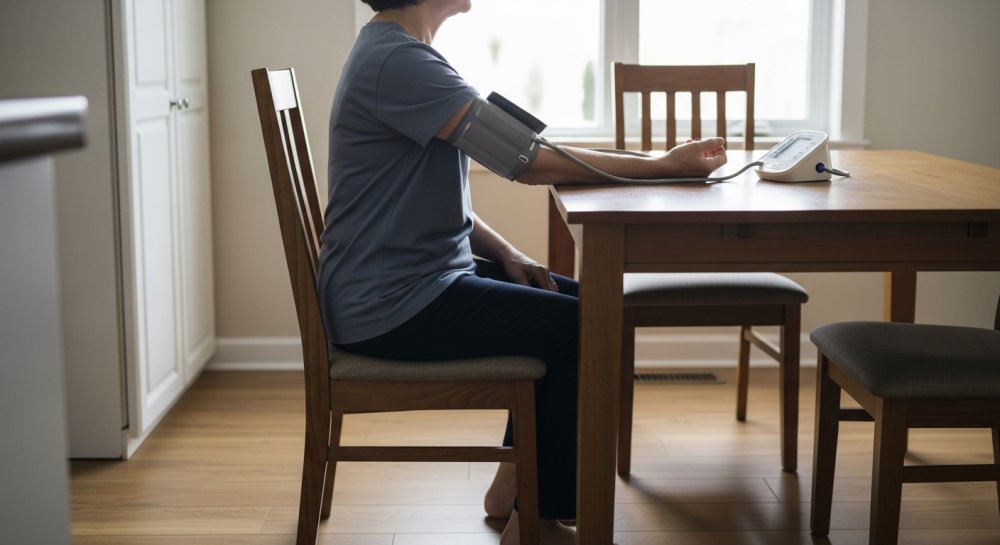
Arm positioning represents another frequent stumbling block. The measurement arm should rest on a flat surface at heart level—not dangling at your side or propped up on your lap. When your arm hangs below heart level, gravity increases the pressure in your arteries, artificially elevating the reading. Conversely, holding your arm above your heart can produce deceptively low numbers.
Leg position matters more than most people assume. Crossing your legs while taking a blood pressure reading can raise systolic pressure by 2 to 8 mmHg, according to research published in the Journal of Hypertension. The compression of blood vessels in the crossed leg temporarily increases resistance in your circulatory system, mimicking the effect of actual hypertension.
Back support isn’t just about comfort—it’s about accuracy. Slouching or sitting without back support activates core muscles to maintain balance, which elevates blood pressure through increased muscle tension. Medical guidelines specify that your back should rest firmly against a chair back, with both feet flat on the floor.
“We see patients come in alarmed about high readings they took at home, and when we review their technique, they were sitting on a stool or perched on the edge of their bed,” notes Dr. Robert Chen, a family medicine physician in Phoenix.
“Once we correct their positioning, their numbers often drop back into normal range.”
Talking during measurement ranks among the most underestimated factors. Casual conversation can increase systolic blood pressure by 10 to 15 mmHg—a substantial margin that could be the difference between normal and Stage 1 hypertension. The act of speaking requires coordinated muscle contractions and altered breathing patterns, both of which temporarily affect cardiovascular dynamics.
Cuff size deserves careful attention, particularly for those with larger or smaller-than-average arm circumferences. A cuff that’s too small compresses the artery inadequately, producing falsely elevated readings. A cuff that’s too large does the opposite. Most home blood pressure monitors come with standard cuffs designed for arm circumferences between 9 and 13 inches, but many manufacturers sell alternative sizes for those who fall outside that range.
Bladder fullness—an often-overlooked factor—can add 10 to 15 mmHg to systolic readings. The pressure from a full bladder creates internal stress that affects your circulatory system. Medical professionals recommend emptying your bladder before taking measurements, though few patients think to do so unless specifically instructed.
Caffeine consumption within 30 minutes of measurement presents another common pitfall. Coffee, tea, energy drinks, and even chocolate can temporarily elevate blood pressure through caffeine’s stimulant effects on your nervous system. The impact varies by individual tolerance, but research suggests increases of 5 to 10 mmHg are typical for those who aren’t regular caffeine consumers.
Temperature extremes in your measurement environment can also skew results. Cold exposure causes blood vessels to constrict, raising blood pressure, while heat causes dilation and potentially lower readings. Taking measurements in a comfortable, climate-controlled room helps ensure consistency.
Multiple measurements represent best practice, yet many people take a single reading and record it as gospel. Blood pressure naturally varies from beat to beat. The American Heart Association recommends taking at least two readings, one minute apart, and recording the average. If the first two readings differ by more than 5 mmHg, a third measurement should be taken.
“Consistency is everything when you’re tracking blood pressure over time,” emphasizes Dr. Lisa Patel, a preventive cardiologist in Seattle.
“Take your measurements at the same time each day, using the same arm, in the same position, under the same conditions. That’s how you establish a reliable baseline.”
Time of day significantly impacts readings as well. Blood pressure typically follows a circadian pattern, lowest during sleep and highest in mid-morning. For this reason, medical guidelines suggest taking measurements at consistent times—often once in the morning before medication and once in the evening before dinner.
Device maintenance rarely crosses people’s minds, but accuracy degrades over time. Home blood pressure monitors should be calibrated annually by comparing their readings against a manual sphygmomanometer in a clinical setting. Batteries should be fresh, as low power can affect the device’s ability to inflate and measure properly.
For Americans committed to managing their cardiovascular health through vigilant monitoring, these technical details make the difference between reliable data and misleading numbers. In an era when home health monitoring has become central to chronic disease management, proper technique transforms a simple device into a powerful tool for preventing heart attacks and strokes.
The broader message from the medical community remains clear: blood pressure monitoring works, but only when done correctly. The convenience of home measurement systems delivers maximum benefit when paired with attention to methodology—a small investment of time and care that pays dividends in more accurate health information and better treatment outcomes.
