Movement
Ten Chest Exercises That Transform Upper Body Strength After 40

Health Points
- Chest exercises strengthen the pectoralis major and minor muscles while improving posture and upper body stability
- Regular chest training reduces injury risk during daily activities and enhances functional movement patterns
- A balanced approach targeting all chest muscle regions delivers optimal strength and mobility benefits
Building and maintaining chest strength becomes increasingly important as we age, particularly for adults over 40 who want to preserve mobility and independence. The chest muscles—primarily the pectoralis major and minor—play crucial roles in everyday movements from lifting groceries to pushing open heavy doors.
Fitness professionals emphasize that chest training offers benefits extending far beyond appearance. A strong chest supports proper posture, protects shoulder joints, and enables confident movement throughout daily life.
The pectoralis major, the larger of the two primary chest muscles, handles movements that bring your arms across your body and rotate them inward. The pectoralis minor, positioned beneath it, stabilizes the shoulder blade. Together, these muscles create a foundation for upper body function.
Regular chest exercises deliver measurable advantages for the 40-plus population. Strengthening these muscles improves posture by counteracting the forward shoulder slump that often develops from desk work and technology use. Enhanced chest strength also reduces injury risk during lifting and pushing movements common in daily routines.
The most effective chest training programs target three distinct muscle regions: the upper chest near the collarbone, the middle chest across the center of the torso, and the lower chest near the ribcage. A comprehensive approach ensures balanced development and functional strength.
Push-Ups
The classic push-up remains one of the most effective bodyweight exercises for chest development. This movement engages the entire chest while recruiting core muscles for stability. Starting in a plank position with hands slightly wider than shoulder-width, lower your body until your chest nearly touches the floor, then press back up.
Modifications make push-ups accessible for all fitness levels. Beginners can perform them with hands elevated on a bench or counter, while advanced exercisers can add resistance bands or elevate their feet.
Bench Press
The barbell bench press targets the middle chest with exceptional effectiveness. Lying on a flat bench with feet planted firmly on the floor, grip the bar slightly wider than shoulder-width. Lower the bar to mid-chest with controlled motion, then press upward until arms are fully extended.
This compound movement allows progressive overload, making it ideal for building strength over time. Always use a spotter or safety bars when training with challenging weights.
Incline Dumbbell Press
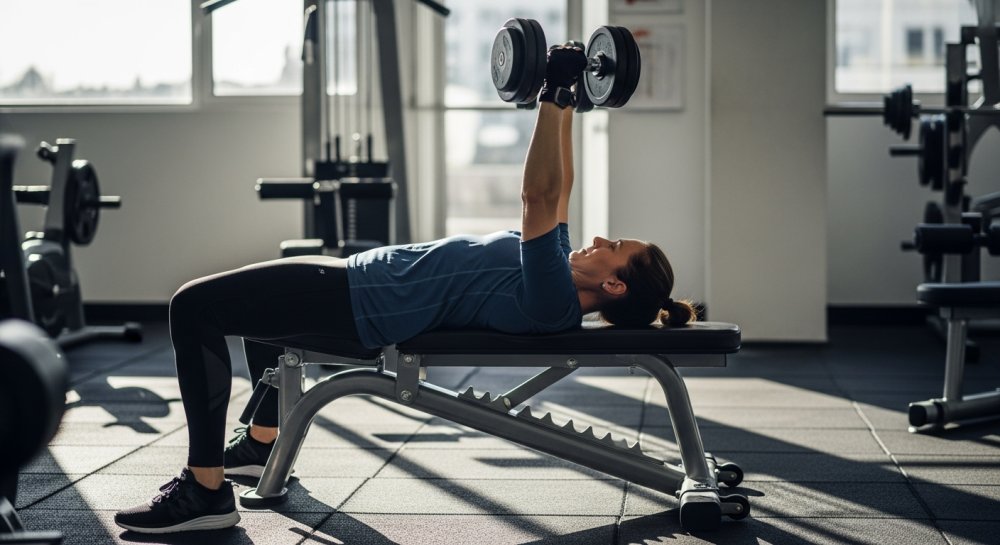
Setting a bench to a 30-45 degree angle shifts emphasis to the upper chest, an area that often receives insufficient attention. Hold dumbbells at shoulder height with palms facing forward, then press them upward until arms are extended. Lower with control back to the starting position.
The incline variation proves particularly valuable for creating balanced chest development and improving the appearance of the upper torso.
Cable Chest Fly
Cable machines provide constant tension throughout the movement, making chest flies exceptionally effective for muscle engagement. Standing centered between cable towers set at shoulder height, grasp handles in each hand with arms extended to the sides. Bring your hands together in front of your chest, squeezing the pectoral muscles at the peak of the movement.
This exercise emphasizes the inner chest while minimizing shoulder strain compared to dumbbell variations.
Decline Press
The decline bench press specifically targets lower chest fibers. With feet secured at the elevated end of a decline bench, lower the barbell or dumbbells to the lower chest, then press upward. This angle allows many people to handle heavier weights than flat pressing.
Lower chest development contributes to a complete, powerful appearance and supports functional pressing movements.
Dips
Chest dips deliver intense stimulation using primarily bodyweight resistance. Gripping parallel bars, support your body with arms extended. Lean forward slightly and lower yourself until your upper arms are roughly parallel to the floor, then press back to the starting position.
Leaning forward emphasizes chest involvement, while staying upright shifts focus to the triceps. Resistance bands can assist those building strength, while weight belts add challenge for advanced exercisers.
Dumbbell Pullover
Though often overlooked, the dumbbell pullover provides unique benefits by stretching the chest while also engaging the back muscles. Lying perpendicular across a bench with only your upper back supported, hold a single dumbbell with both hands above your chest. Lower the weight in an arc behind your head, feeling a stretch across your chest, then return to starting position.
This movement improves flexibility and expands the ribcage, contributing to better breathing capacity.
Chest Press Machine
Machine chest presses offer a controlled movement pattern ideal for beginners or those training without a spotter. The fixed pathway allows focus on pushing effort without balance concerns. Adjust the seat so handles align with mid-chest, then press forward until arms are extended.
Many fitness centers offer various chest press machines, each providing slightly different angles and muscle emphasis.
Floor Press
The floor press variation limits range of motion, making it joint-friendly for those with shoulder concerns. Lying on the floor with knees bent and feet flat, press dumbbells or a barbell from chest height until arms are extended. Your elbows touch the floor at the bottom of each repetition, providing a natural stopping point.
This shortened range of motion allows some people to train productively even with minor shoulder limitations.
Resistance Band Chest Press
Resistance bands provide variable tension that increases as you extend, creating unique muscle stimulation. Anchor a band behind you at chest height, grasp handles in each hand, and press forward until arms are fully extended. The portability of bands makes them perfect for travel or home workouts.
Band training also accommodates every fitness level through simple equipment changes, making progression straightforward.
Building a chest workout routine requires thoughtful exercise selection and appropriate volume. Most adults over 40 benefit from two chest training sessions weekly, allowing adequate recovery between workouts. Each session might include three to five exercises covering different chest regions.
For general strength and health, perform two to three sets of eight to twelve repetitions per exercise. Focus on controlled movement quality rather than maximum weight, particularly when learning new exercises. Rest periods of 60 to 90 seconds between sets allow sufficient recovery for subsequent efforts.
Progressive overload—gradually increasing demands over time—drives continued improvement. This might involve adding weight, increasing repetitions, or improving movement tempo. Tracking workouts helps ensure steady progress and prevents stagnation.
Proper form protects against injury while maximizing exercise effectiveness. Keep shoulder blades retracted and depressed during pressing movements to protect shoulder joints. Maintain neutral spine alignment, avoiding excessive arching during bench press variations. Lower weights with control, taking two to three seconds for the eccentric portion of each repetition.
Breathing technique matters significantly during chest exercises. Inhale during the lowering phase and exhale forcefully during the pressing phase. This pattern stabilizes the core and supports maximal force production.
Warming up prepares muscles and joints for productive training. Begin with five to ten minutes of light cardio to increase blood flow, then perform dynamic stretches targeting the chest and shoulders. Complete one or two sets of your first exercise with lighter weights before progressing to working sets.
Recovery supports growth and prevents overtraining. Allow at least 48 hours between chest workouts targeting the same muscle groups. Adequate protein intake—roughly 0.7 to 1 gram per pound of body weight daily—provides building blocks for muscle repair and growth.
Balanced training prevents muscular imbalances that compromise posture and function. Complement chest work with equal attention to back training, creating a stable, resilient upper body. This approach supports long-term joint health and maintains the postural alignment necessary for pain-free movement.
Those new to strength training benefit from professional guidance. A qualified personal trainer can teach proper form, design appropriate programs, and provide accountability. Many fitness facilities offer introductory training sessions that help beginners start safely.
Listen to your body throughout your fitness journey. Mild muscle soreness following workouts indicates productive training, but sharp pain signals a problem requiring attention. Joint discomfort suggests form issues or exercise selection that doesn’t suit your individual structure.
Consistency delivers results over time. While dramatic transformations require months of dedicated effort, noticeable improvements in strength and function often appear within four to six weeks of regular training. Patience and persistence separate those who achieve lasting results from those who abandon their goals.
The benefits of chest training extend throughout daily life, from improved posture that projects confidence to functional strength that maintains independence. For adults committed to healthy aging, regular chest exercises represent an investment in long-term vitality and quality of life.
