Nutrition
Protein-Rich Cheeses That Fit Modern Nutrition Plans

Health Points
- Cheese can supply 7–10 grams of complete protein per ounce while delivering calcium and other essential nutrients.
- Choosing varieties lower in sodium and saturated fat helps align cheese intake with current dietary guidance.
- Portion awareness and pairing cheese with fiber-rich foods supports balanced meals and steady energy.
Cheese has long been valued for its satisfying taste and versatility, and many adults are rediscovering its role in a nutrient-focused diet. Several varieties now stand out because they deliver meaningful protein without excessive calories.
Nutrition experts note that one ounce of Parmesan, for instance, offers roughly ten grams of protein along with notable calcium content. That combination can help meet daily protein targets while supporting bone health over the long term.
“Cheese is no longer viewed as an occasional indulgence; it can be part of a consistent eating pattern when portions are managed,” says registered dietitian Maria Torres.
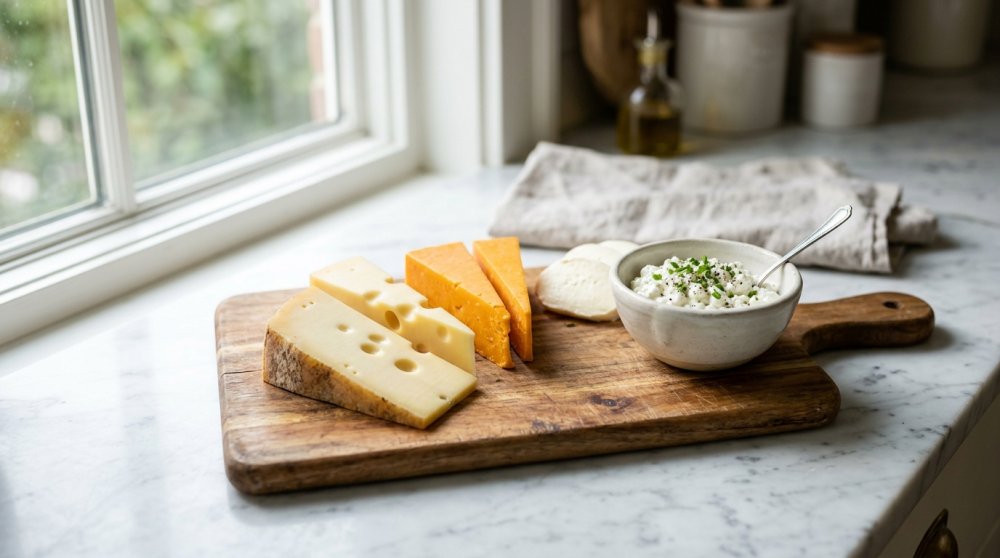
Other strong performers include Swiss, cheddar, and mozzarella, each providing seven to eight grams of protein per serving. Cottage cheese, often categorized separately, can reach 14 grams per half-cup, making it a convenient option for snacks or breakfast bowls.
Selecting lower-sodium versions and enjoying cheese alongside vegetables or whole-grain crackers keeps meals balanced. This approach maintains flavor while supporting heart-healthy habits that many adults prioritize after age forty.
“We encourage clients to read labels and choose products with shorter ingredient lists,” adds Torres. “That single habit often leads to better overall nutrient intake.”
